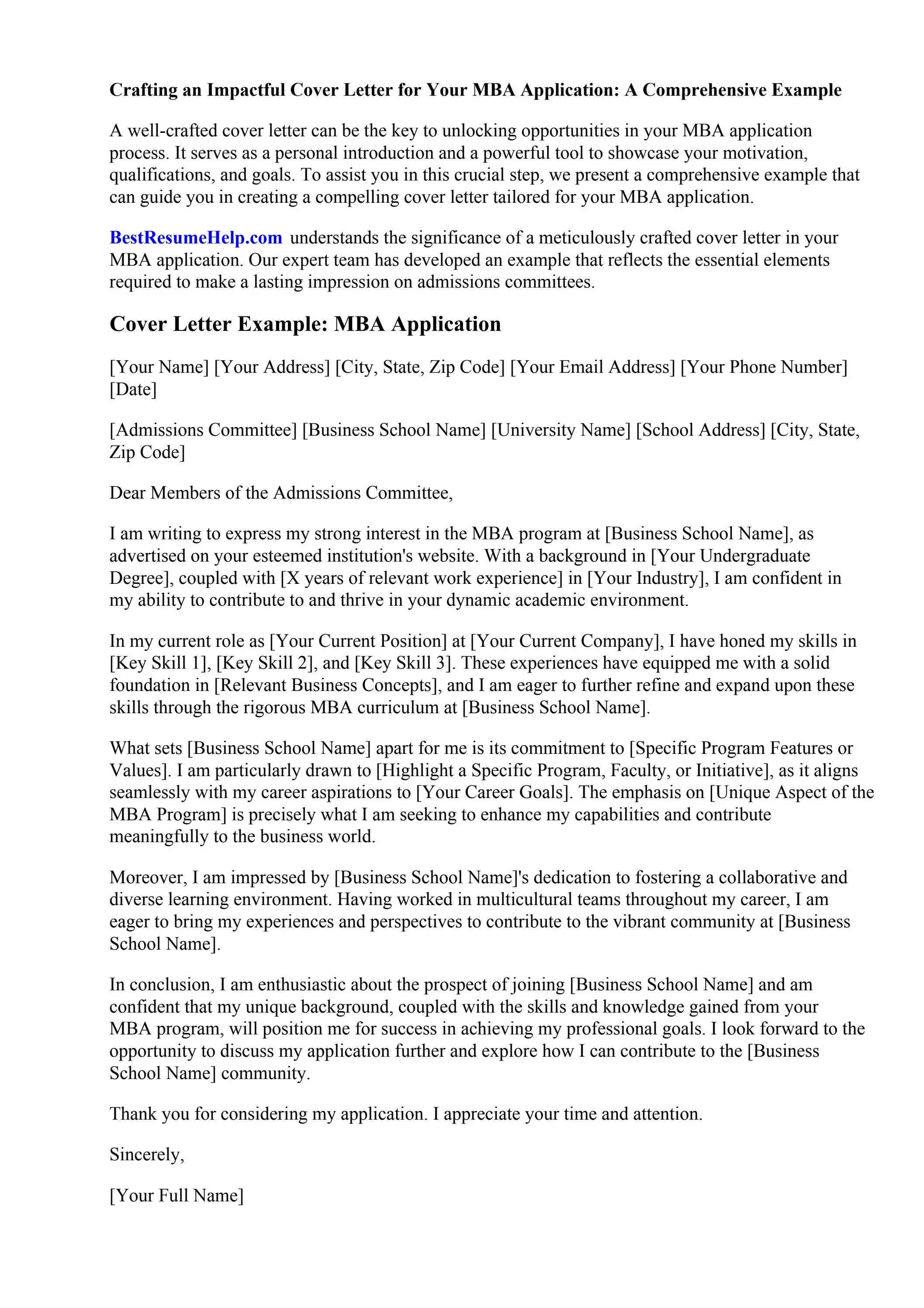
Understanding the MBA Cover Letter’s Importance
An MBA cover letter is more than just a formality, it’s your first real opportunity to make a strong impression on potential employers. It provides a space to introduce yourself, showcase your skills, and explain why you’re the perfect fit for the role and company. Unlike a resume, which provides a snapshot of your experience, a cover letter allows you to tell a story, connecting your past achievements to the future goals the hiring manager envisions. In a competitive job market, a well-crafted MBA cover letter can be the key to unlocking interviews and securing your dream job. It shows initiative and the willingness to go the extra mile, a quality that is highly valued by recruiters and hiring managers. Furthermore, a cover letter gives you the chance to address specific requirements and demonstrate your understanding of the company’s needs and values.
Key Components of a Powerful MBA Cover Letter
A successful MBA cover letter is comprised of several key elements. Each component works together to create a cohesive narrative that highlights your qualifications and enthusiasm. These include a professional header with your contact information, a well-crafted opening paragraph that grabs the reader’s attention, clear articulation of your academic achievements and relevant skills, quantifiable examples of your accomplishments, a demonstration of your goals and how they align with the company, a display of your knowledge of the company, and a strong closing with a call to action. By mastering these components, you can create a cover letter that not only meets but exceeds the expectations of employers, significantly boosting your chances of landing an interview and job offer. Remember, a compelling cover letter demonstrates your ability to communicate effectively, a critical skill for any MBA graduate.
Header Contact Information

Your header is the first thing a recruiter sees, so it is essential to make a professional and clear first impression. Start by including your full name, followed by your address, phone number, and a professional email address. Ensure your email address is appropriate; avoid using nicknames or unprofessional handles. The header should be neatly formatted, typically aligned to the left or right, maintaining consistency with the rest of your letter. Always double-check all contact information for accuracy, as even a small error can prevent employers from reaching you. A well-organized header demonstrates your attention to detail and professionalism, setting a positive tone for the rest of your application. Consider using a font and size consistent with your resume and other application materials to ensure a cohesive look.
Date and Recipient Details
Following your header, you’ll need to include the date, followed by the recipient’s information. Always include the current date to show that your application is current. When addressing the letter, try to find the name of the hiring manager; this personalization makes your letter more engaging. If you can’t find a specific name, use a professional title like ‘Hiring Manager’. Include the company’s name and address beneath the date. This attention to detail demonstrates your commitment and research. Making sure you have correct details shows your effort in the application, which will impress the employer. Use a professional tone, and double-check all the details for accuracy to avoid any embarrassing mistakes.
Crafting a Compelling Opening Paragraph
The opening paragraph is your chance to grab the reader’s attention. Start with a strong statement that clearly states your purpose for writing the letter—mentioning the specific role you are applying for and where you found the posting. Briefly highlight one or two key accomplishments or skills that directly relate to the job requirements to immediately show your suitability for the position. Avoid generic openings; instead, tailor your introduction to the specific job and company. This shows that you’ve done your research and understand the company’s needs. By making a strong first impression, you encourage the recruiter to continue reading and learn more about your qualifications and passion for the opportunity. This initial paragraph sets the tone for the entire letter and is crucial for making a positive impact.
Highlighting Your MBA and Academic Achievements

Your MBA is a significant accomplishment, and your cover letter should clearly showcase your academic credentials. Mention your MBA program, including the university and any specializations or areas of focus that align with the job requirements. If you graduated with honors or received any academic awards, be sure to include those as well. If you have completed any relevant coursework or projects, briefly describe them and explain how they demonstrate your skills and knowledge. Also, highlight any leadership roles or participation in extracurricular activities that showcase your abilities to lead, work in teams, and manage projects. The goal is to connect your MBA education to the specific needs of the role and the company, thus demonstrating that your academic background has prepared you for success in the position. This part of your cover letter is critical for showing your academic and professional capabilities.
Showcasing Relevant Skills and Experience
Beyond your academic achievements, highlight the skills and experience that align with the job description. Tailor your letter to the specific requirements outlined in the job posting, emphasizing skills such as leadership, problem-solving, strategic thinking, and communication. Provide examples of how you’ve used these skills in previous roles or projects. If the job requires specific software proficiency or technical skills, be sure to mention those as well. Focus on your most relevant experiences and accomplishments, using action verbs to describe your contributions and responsibilities. Explain how your background makes you a good fit for the role. By linking your skills to the job requirements, you demonstrate a clear understanding of what the company needs and how you can contribute to its success. Be sure to provide enough detail to show how you gained and used the skills the employer is looking for.
Quantifying Your Accomplishments
Quantifying your accomplishments is a powerful way to showcase your impact and differentiate yourself from other candidates. Instead of just saying you ‘improved sales,’ provide specific numbers, such as ‘increased sales by 15% in one quarter.’ Use metrics to demonstrate your achievements, such as the amount of money you saved, the efficiency you improved, or the number of people you led. Whenever possible, use data to support your claims and show the results of your actions. This adds credibility and demonstrates the value you would bring to the role. Quantifiable achievements make your accomplishments more tangible and easier for the hiring manager to understand the value you bring to the table. This makes your application more compelling and convincing.
Connecting Your Goals to the Role and Company

In your cover letter, clearly articulate how your career goals align with the role and the company’s mission. Show that you have researched the company, understand its values, and are genuinely interested in contributing to its success. Explain how this specific role fits into your overall career aspirations and how you believe you can grow and develop within the company. Make sure to talk about the company’s values. Briefly discuss how your skills and experiences make you a good fit for the position and highlight how you can use them to achieve the company’s goals. A well-articulated alignment of your goals shows that you are committed to your career and that you have a clear vision for your future, making you an attractive candidate for the employer.
Demonstrating Your Knowledge of the Company
Demonstrate your understanding of the company by referencing its products, services, recent news, or values. Research the company thoroughly to find information about its mission, vision, and culture. This shows your interest and initiative. Mention specific company initiatives or projects that resonate with you, and explain how your skills and experience can help them achieve those goals. Tailor your cover letter to showcase your familiarity with the company and its position in the industry. This demonstrates your understanding of the market and highlights your genuine interest in the organization. Being knowledgeable about the company sets you apart from other applicants and proves you have put the time and effort into preparing your application, which makes you more likely to make a strong impression on the hiring manager.
Writing a Strong Closing and Call to Action
Your closing paragraph should reiterate your interest in the position and your value to the company. Reiterate your key qualifications briefly and show your excitement about the opportunity. Include a clear call to action. It should encourage the reader to contact you for an interview. Thank the reader for their time and consideration, and indicate your availability for an interview. Reiterate your contact information for convenience, including your phone number and email address. A strong closing leaves a lasting positive impression and encourages the recruiter to take the next step. It’s the final opportunity to make your case and make sure the hiring manager remembers you and is prompted to take the next step.
Formatting and Proofreading Your Cover Letter

Formatting and proofreading are essential for a professional and polished cover letter. Use a readable font, such as Times New Roman, Arial, or Calibri, and a font size between 10 and 12 points. Maintain consistent formatting throughout the letter. Use clear spacing and margins to make the letter easy to read. Proofread your cover letter carefully for any grammar, spelling, or punctuation errors. Ask a friend or career counselor to review it as well, as they may catch mistakes you have missed. A cover letter that is free from errors demonstrates your attention to detail and commitment to excellence. Proofreading is one of the most important steps in the application process.
Using Keywords for Applicant Tracking Systems (ATS)
Many companies use Applicant Tracking Systems (ATS) to scan and filter resumes and cover letters. To ensure your application gets noticed, incorporate keywords from the job description into your cover letter. Carefully review the job posting and identify the key skills, qualifications, and requirements mentioned by the company. Naturally integrate these keywords into your cover letter, where appropriate. Avoid keyword stuffing; instead, use keywords where they fit naturally in your writing. This can help your application get past the initial screening and make it to the hiring manager. Research the company and industry-specific terminology to ensure you are using the correct keywords. Using relevant keywords increases the chances of your application being seen.
Tailoring Your Letter to the Specific Job
Customization is key. Instead of using a generic cover letter, tailor each letter to the specific job and company. Carefully review the job description and customize your letter to address the specific requirements and qualifications outlined. Highlight the skills and experiences most relevant to the position and the company’s needs. Show that you understand the company’s culture and the role’s responsibilities. Demonstrate your specific interest in the role and the company. This personalization will show the hiring manager you are enthusiastic about the position. Tailoring your cover letter significantly increases your chances of standing out from other candidates and making a positive impression. Generic cover letters are easy to spot and will not make a strong impression.
Reviewing MBA Cover Letter Examples

Reviewing MBA cover letter examples can be an excellent way to understand the structure, tone, and content of a successful cover letter. Look for examples that are relevant to your industry and the types of positions you are applying for. Analyze how the examples highlight skills, experience, and accomplishments. Pay attention to how they present their qualifications and enthusiasm. Look for examples online or use a career counselor for feedback on your own cover letter. Use examples as a guide to structure and create your own cover letter. Remember that the goal is to create a personalized cover letter. Use the examples as a starting point and tailor your cover letter to reflect your experiences and personality, making sure it uniquely reflects your career journey.
Common Mistakes to Avoid
Avoid making common mistakes that can undermine your application. Be sure to proofread your letter carefully for any spelling or grammatical errors. Avoid a generic or impersonal tone. Do not send the same cover letter to multiple positions without tailoring it to each one. Do not include information that is irrelevant to the role or company. Avoid exaggerating your skills or accomplishments, and be honest in your portrayal. It is also crucial to avoid negativity or complaining about previous employers. By avoiding these common pitfalls, you’ll demonstrate professionalism and make a positive impression. By avoiding these errors, you enhance your chances of getting the job.
By following these guidelines, you can create a powerful MBA cover letter that will help you stand out to recruiters and land your dream job. Remember to tailor your cover letter to each job application, showcase your skills and accomplishments, and demonstrate your enthusiasm for the opportunity. A well-written cover letter is an essential tool in your job search. It demonstrates your professionalism, attention to detail, and ability to communicate effectively. Take your time to craft a compelling cover letter, and you’ll significantly increase your chances of landing an interview and advancing your career.