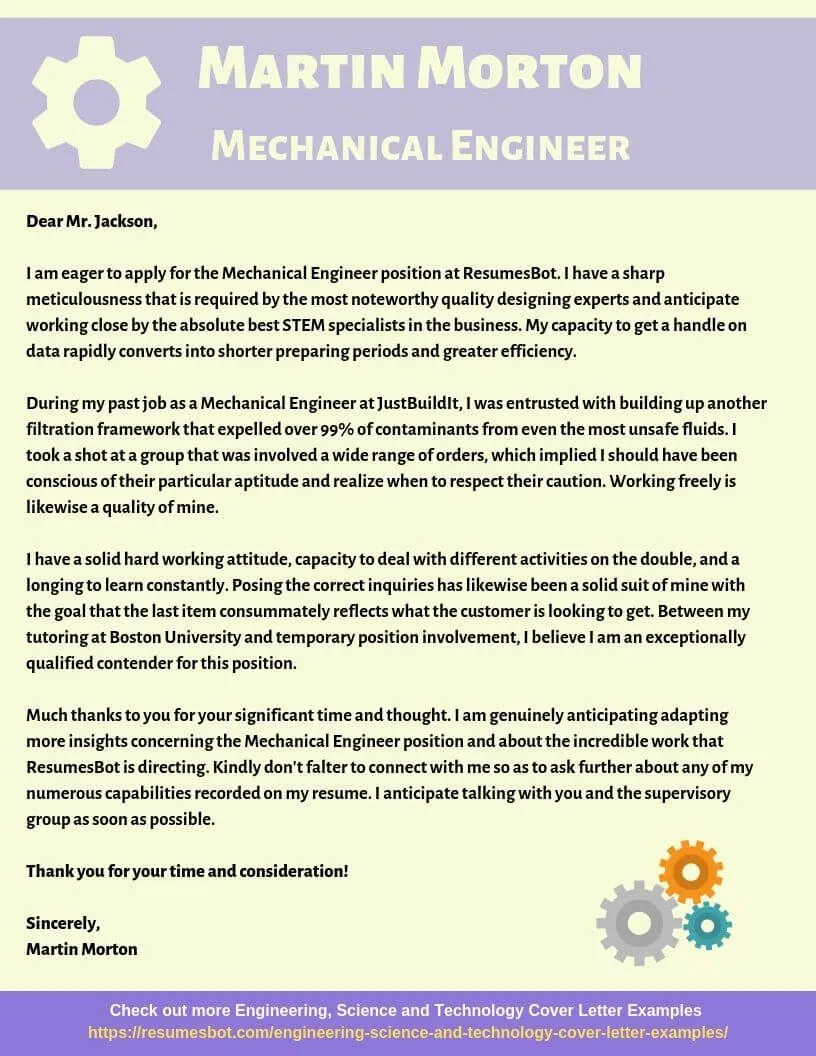
What is a Mechanical Engineer Cover Letter
A mechanical engineer cover letter is a crucial document that accompanies your resume when applying for mechanical engineering positions. It serves as an introduction to your qualifications, skills, and experience, allowing you to make a strong first impression on potential employers. Unlike a resume, which provides a factual overview of your background, a cover letter provides an opportunity to showcase your personality, enthusiasm, and specific reasons for your interest in the role and the company. It is your chance to sell yourself and demonstrate why you are the perfect fit for the job.
Why a Cover Letter is Important for Mechanical Engineers
In the competitive field of mechanical engineering, a well-crafted cover letter can significantly increase your chances of landing an interview. It allows you to elaborate on your achievements, explain your career goals, and demonstrate how your skills align with the specific requirements of the job. Many hiring managers use cover letters to assess a candidate’s communication skills, attention to detail, and overall suitability for the role. A strong cover letter can distinguish you from other applicants, especially if your resume is similar to others.
Moreover, a cover letter allows you to address any potential gaps or weaknesses in your resume. For instance, if you are a recent graduate with limited work experience, you can use your cover letter to highlight relevant coursework, projects, or internships that demonstrate your abilities. Similarly, if you are transitioning into a new area of mechanical engineering, you can explain your motivations and how your skills are transferable.
Highlighting Your Skills and Experience

Your cover letter is the perfect place to highlight your key skills and experiences, aligning them directly with the job description. Focus on the most relevant aspects of your background, providing specific examples of your accomplishments and how you’ve applied your engineering knowledge. Quantify your achievements whenever possible; for example, instead of saying “Improved efficiency,” say “Improved efficiency by 15% through redesign of the system.” Use keywords from the job description to demonstrate that you have the necessary qualifications. Your cover letter is your opportunity to paint a vivid picture of your capabilities and demonstrate the value you can bring to the organization.
Key Sections of a Mechanical Engineer Cover Letter
Contact Information
At the top of your cover letter, include your full name, address, phone number, and professional email address. This information ensures that the hiring manager can easily contact you. Make sure your email address is professional and appropriate; avoid using nicknames or unprofessional language.
Professional Greeting

Address your cover letter to a specific person whenever possible. Research the hiring manager’s name and title using LinkedIn or the company website. A personalized greeting, such as “Dear Mr. Smith,” demonstrates your attention to detail and genuine interest in the position. If you cannot find the hiring manager’s name, use a general greeting like “Dear Hiring Manager.”
Opening Paragraph
The opening paragraph should immediately capture the reader’s attention and state the purpose of your letter. Clearly mention the position you are applying for and where you found the job posting. Briefly summarize your most relevant qualifications and express your enthusiasm for the opportunity. Avoid generic openings; instead, make it clear why you are interested in this specific role and company. Show your proactive approach and understanding of the company’s mission and goals.
Body Paragraphs
The body of your cover letter is where you provide specific details about your skills, experience, and accomplishments. Use these paragraphs to elaborate on the information presented in your resume, providing concrete examples of how you have applied your skills in previous roles or projects. Explain how your experience aligns with the job requirements, using keywords from the job description to demonstrate your qualifications. Focus on quantifiable results and achievements, showcasing the value you brought to your previous employers. Use concise, clear language, and organize your thoughts logically to make it easy for the reader to follow your narrative.
- Describe your relevant technical skills (e.g., CAD software, FEA analysis).
- Provide examples of successful projects and their outcomes.
- Highlight any awards, certifications, or special training.
- Mention any relevant coursework or research (for recent graduates).
Closing Paragraph

The closing paragraph should reiterate your interest in the position and express your eagerness to discuss your qualifications further. Thank the hiring manager for their time and consideration. Include a call to action, such as “I am available for an interview at your earliest convenience” or “I look forward to hearing from you soon.” Reiterate your contact information and maintain a professional tone throughout the closing.
Formatting Your Mechanical Engineer Cover Letter
Choosing the Right Font and Font Size
Choose a professional and easy-to-read font such as Times New Roman, Arial, or Calibri. Use a font size between 10 and 12 points for the body text. Ensure that the font is consistent throughout the entire document. Consistency in formatting enhances readability and projects professionalism.
Margins and Spacing

Use standard 1-inch margins on all sides of your cover letter. Double-space between paragraphs to improve readability. Proper spacing makes the document visually appealing and prevents it from appearing cluttered.
Proofreading and Editing
Proofread your cover letter carefully for any typos, grammatical errors, or spelling mistakes. Errors can damage your credibility and make you appear unprofessional. Consider using grammar and spell-checking tools, but always review the document yourself. Ask a friend, colleague, or career advisor to review your cover letter for clarity and accuracy before submitting it.
Sample Cover Letter for Mechanical Engineers
Example 1 Recent Graduate

This example demonstrates how to structure a cover letter for a recent mechanical engineering graduate. It focuses on highlighting relevant coursework, projects, and internships to showcase the candidate’s skills and enthusiasm.
Example 2 Experienced Engineer
This example offers a template suitable for an experienced mechanical engineer. It emphasizes accomplishments, specific projects, and a strong understanding of the job requirements.
Tips for Customizing Your Cover Letter
Researching the Company

Before writing your cover letter, research the company thoroughly. Understand their mission, values, and recent projects. Tailor your cover letter to demonstrate your knowledge of the company and why you want to work there. Highlight how your skills and experience align with their goals. Showing that you are familiar with the company’s work is crucial.
Tailoring to the Job Description
Carefully review the job description and identify the key requirements, skills, and qualifications the employer is seeking. Customize your cover letter to directly address these requirements. Use keywords from the job description throughout your letter to demonstrate your relevance and understanding of the role. Show that you have what the employer is looking for.
Highlighting Relevant Projects
If you have worked on any projects, highlight them in your cover letter. Provide specific details about your role, the challenges you faced, and the results you achieved. Quantify your accomplishments whenever possible. For example, say “Redesigned a cooling system, reducing energy consumption by 20%” instead of “Improved the cooling system.” This adds value and demonstrates your ability to deliver.
Common Mistakes to Avoid
Generic Cover Letters
Avoid sending generic cover letters that could be used for any job. Tailor each cover letter to the specific role and company. Hiring managers can easily spot generic letters and will likely dismiss your application. Personalize your letter to demonstrate your genuine interest and understanding of the company’s needs.
Typos and Grammatical Errors
Always proofread your cover letter carefully for typos, grammatical errors, and spelling mistakes. Errors can make you appear unprofessional and can be an instant disqualifier. Have someone else review your letter to catch any mistakes you might have missed.
Focusing on “I” instead of “You”
Focus on the employer’s needs and how you can contribute to their success, rather than solely on your own accomplishments. Show how your skills and experience align with the company’s goals. By focusing on how you can benefit the company, you will demonstrate that you are the right candidate for the job.
Conclusion
A well-crafted cover letter is a powerful tool that can significantly enhance your chances of securing a mechanical engineering position. By following these guidelines, you can create a cover letter that effectively highlights your skills, experience, and enthusiasm, making a strong impression on potential employers. Remember to customize your cover letter for each job application and always proofread carefully. Good luck with your job search!