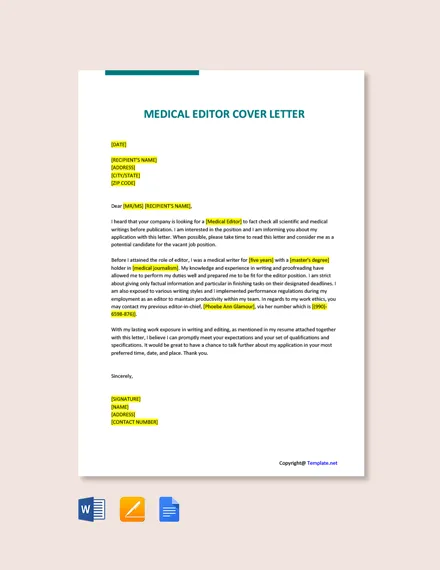
What is a Medical Cover Letter?
A medical cover letter is a crucial document that accompanies your resume when applying for medical positions. It serves as your first introduction to a potential employer, providing an opportunity to showcase your personality, skills, and qualifications beyond what’s listed on your resume. Unlike a resume, which offers a brief overview, a cover letter allows you to expand on your experiences and explain why you’re the ideal candidate for the specific role. A well-crafted medical cover letter can significantly increase your chances of landing an interview and ultimately, securing your desired job.
Why is a Medical Cover Letter Important?
In the competitive healthcare industry, a medical cover letter is essential for several reasons. Firstly, it allows you to highlight your genuine interest in the position and the organization. It enables you to demonstrate your understanding of the role’s requirements and how your skills align with them. Furthermore, a cover letter helps you to stand out from other applicants by showcasing your unique qualities and experiences. It also provides an opportunity to address any potential gaps in your resume or explain career transitions. A strong cover letter can create a positive first impression and set you apart from other qualified candidates.
Key Components of a Medical Cover Letter

A well-structured medical cover letter typically includes several key components that work together to present you in the best possible light. These components ensure that you provide all necessary information while keeping the letter concise and focused. By including each of these parts, you will create a professional and effective cover letter that grabs the attention of recruiters and hiring managers. We will explore the essential parts of a successful medical cover letter below, ensuring you leave a lasting positive impression.
Header and Contact Information
The header of your medical cover letter should include your name, address, phone number, and email address. Ensure this information is accurate and up-to-date. This is the first point of contact and makes it easy for the employer to reach you. Use a professional font and format the header neatly. A clear and easily readable header enhances your cover letter’s professional appearance. Maintaining a clean and organized header will help the reader find your contact details quickly and efficiently, showing that you pay attention to detail.
Recipient’s Information
Following your contact information, include the recipient’s details. Ideally, address the cover letter to a specific person, such as the hiring manager or the department head. Researching the company and identifying the correct contact person shows that you are thorough and interested. If you can’t find a specific name, use a professional title like “Hiring Manager.” Include the recipient’s title, the company’s name, and the company’s address. Proper salutation indicates respect and professionalism, making a positive first impression.
Professional Greeting

Start your medical cover letter with a professional greeting. Use “Dear Mr./Ms./Dr. [Last Name],” if you know the recipient’s name. If not, a greeting such as “Dear Hiring Manager” is appropriate. Avoid generic greetings like “To Whom It May Concern,” as they can appear impersonal. The greeting sets the tone for your letter and should be respectful and formal. A well-chosen greeting shows that you have taken the time to address the recipient properly, making your letter more engaging and professional from the start.
Body Paragraph 1 Showcase Your Passion
The first paragraph should grab the reader’s attention and state your purpose for writing. Express your enthusiasm for the position and the organization. Briefly mention where you saw the job posting and why you’re interested in the role. Demonstrate your passion for medicine and healthcare. This paragraph sets the tone for the rest of your letter. Showing genuine enthusiasm makes your letter more engaging and shows the reader why you would be an asset to their organization. A strong opening paragraph shows you’re excited and motivated.
Highlight Your Qualifications and Skills
In the following paragraphs, highlight your relevant skills and qualifications. Reference the job description and explain how your skills align with the requirements. Provide specific examples of how you’ve used these skills in previous roles or experiences. Tailor your letter to match the job description and showcase the skills that the employer is specifically looking for. This demonstrates that you have read the job description and are a strong candidate for the role. It emphasizes your ability to perform the required tasks and highlights your suitability for the position.
Emphasize Relevant Experience

Go into detail about your professional experience. Describe the responsibilities you held in previous positions and the achievements you made. Use action verbs to describe your accomplishments. Focus on the experiences that are most relevant to the job you are applying for. Provide concrete examples of how your experience has prepared you for this role. Emphasizing relevant experience helps the employer understand your potential contributions. This information shows what you bring to the table and what makes you a great fit for the organization.
Body Paragraph 2 Demonstrate Your Value
Use this section to show how you can contribute to the organization. Explain how your skills and experience can benefit the employer. Focus on what makes you unique and what you can bring to the team. Show your understanding of the organization’s mission and values and how you align with them. Highlighting your unique qualities and how you can contribute to the organization’s success makes your cover letter more persuasive. This will show the employer how you can solve their problems or address their needs.
Quantify Your Achievements
Whenever possible, quantify your achievements using numbers and data. Use specific metrics to demonstrate your impact in previous roles. For example, mention the percentage by which you improved patient satisfaction scores, reduced costs, or increased efficiency. Quantifying your achievements provides concrete evidence of your capabilities and demonstrates your ability to deliver results. By adding specific numbers, you add credibility to your claims, making your accomplishments more impactful and showing the value you bring to the table. This data helps the employer understand the scope of your abilities.
Tailor Your Letter to the Job

Customize your cover letter for each job application. Avoid using a generic template; instead, carefully review the job description and tailor your letter to match the specific requirements. Highlight the skills and experiences that are most relevant to the position. Research the organization and incorporate information about their mission, values, and recent initiatives. Personalizing your cover letter demonstrates your genuine interest and shows that you have invested time and effort in your application. Tailoring your letter will increase your chances of getting an interview because it demonstrates your commitment and attention to detail.
Body Paragraph 3 Close Strong
In the final paragraph, wrap up your cover letter with a strong closing statement. Summarize your key qualifications and reiterate your interest in the position. Show your enthusiasm for the opportunity and express your confidence in your ability to make a positive contribution. This is your final chance to leave a lasting impression and show your value to the employer. A well-crafted closing paragraph is vital for reinforcing your qualifications and making a memorable impression.
Express Your Enthusiasm
Reiterate your enthusiasm for the role and the organization. Show genuine excitement about the opportunity to contribute to their team. Express your belief that your skills and experience align well with the job requirements. Demonstrating your excitement and passion can significantly improve your application. If you genuinely want the job, you’ll be more likely to convince the employer that you’re the right fit. Conveying your enthusiasm ensures that you leave a lasting positive impression.
Call to Action

End with a clear call to action. State your availability for an interview and express your willingness to discuss your qualifications further. Provide your contact information again, just in case it gets separated from the header. This ensures the employer knows the next step and how to contact you. A concise call to action makes it easy for the employer to take action and move your application forward. Offering to discuss further demonstrates your dedication and ensures you are ready for the interview process.
Formal Closing
Use a professional closing, such as “Sincerely,” “Respectfully,” or “Best regards,” followed by your full name. Ensure your signature is neat and legible if you’re printing and mailing the letter. The closing should be formal and polite, reflecting the professional nature of the healthcare industry. A suitable closing sets a positive tone and completes the letter in a polished manner, ensuring the employer views you as professional and considerate. It provides a good and memorable final impression.
Proofreading and Formatting
Before submitting your medical cover letter, proofread it carefully to ensure there are no errors in grammar, spelling, or punctuation. A polished and error-free cover letter demonstrates your attention to detail and professionalism. Incorrect formatting, typos, or grammatical mistakes can detract from your message and make a negative impression. Make sure the information is clear and easy to read. Poorly written letters can damage your chances of getting an interview. Careful proofreading ensures your professionalism shines through.
Proofread for Errors

Proofread your cover letter multiple times. Read it aloud to catch any awkward phrasing or mistakes. Use grammar and spell-checking tools, but don’t rely on them completely. Ask a friend or colleague to review your letter for a second opinion. Proofreading is essential for presenting a professional image. The reader should be able to focus on your qualifications, not be distracted by mistakes. Making sure your cover letter is free of errors showcases your attention to detail and your desire to excel in the profession. Proofreading helps to avoid making a negative first impression.
Formatting Tips
Use a professional font, such as Times New Roman, Arial, or Calibri, in a readable size (11 or 12 points). Maintain consistent formatting throughout the letter, including spacing, margins, and alignment. Keep the letter concise and well-organized, typically no more than one page. Ensure your letter has a clean and professional appearance. A well-formatted letter makes it easier for the reader to find the information they need. Proper formatting makes a positive impression. It demonstrates that you are organized and pay attention to detail.