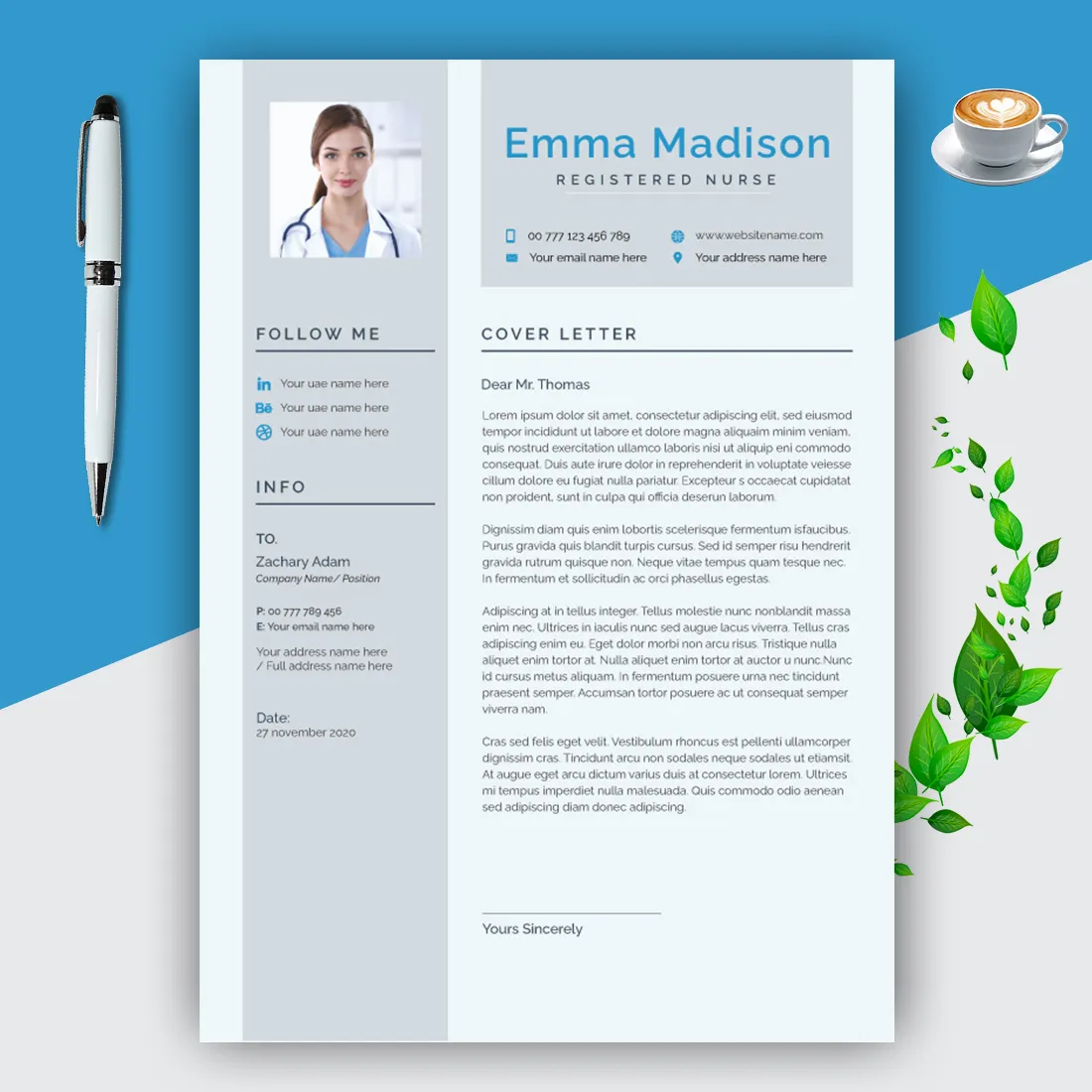
In the competitive world of nursing, a well-crafted cover letter is your first opportunity to make a lasting impression. More than just a formality, a compelling nurse cover letter can significantly boost your chances of landing an interview. It’s your chance to tell your story, showcase your passion for nursing, and demonstrate why you’re the ideal candidate for the role. This comprehensive guide will provide you with the essential knowledge and strategies to create a nurse cover letter that impresses.
Understanding the Importance of a Nurse Cover Letter
A nurse cover letter serves several critical purposes. It’s not merely a repetition of your resume; instead, it provides context and depth. It allows you to elaborate on your experiences, connect your skills to the specific job requirements, and express your genuine interest in the position and the healthcare facility. It is also your first impression and a chance to show your personality.
Why a Cover Letter Matters for Nurses
A cover letter for nurses is important because of these reasons: Personalization: Demonstrates that you have taken the time to understand the specific needs of the employer. Highlighting Skills: It allows you to expand on the skills listed on your resume. Showcasing Passion: Demonstrates your enthusiasm for nursing. Addressing Concerns: Allows you to explain any gaps in employment.
Highlighting Your Unique Skills and Experience

A cover letter is your platform to shine by highlighting the unique skills and experience that set you apart. Don’t just list your responsibilities; instead, focus on the impact you made. Think about situations where you demonstrated critical thinking, problem-solving abilities, or leadership skills. Include examples of how you improved patient outcomes, streamlined processes, or contributed to a positive work environment. This personalized approach showcases that you are more than just a list of qualifications; you’re a valuable asset to the team.
Key Components of a Winning Nurse Cover Letter
A strong nurse cover letter consists of several key components, each designed to make a positive impact. Paying close attention to each of these elements will increase your chances of getting a positive response. These are the main components: Header, Salutation, Opening Paragraph, Body Paragraphs, Closing Paragraph.
Header Essentials Contact Information and Date
The header sets the foundation for your cover letter. Include your full name, address, phone number, and professional email address. The date should be the date you are sending the letter. Always ensure your contact information is current and easily accessible. In the header, also include the name of the hiring manager and their job title. If you can’t find the hiring manager’s name, search on LinkedIn or contact the hospital directly.
The Salutation Addressing the Hiring Manager

Addressing the hiring manager by name is a crucial first step. It shows you’ve done your research and are taking the application process seriously. If the name is unavailable, use a professional greeting such as “Dear Hiring Manager.” Avoid generic greetings such as “To Whom It May Concern” as they can come across as impersonal. The salutation should reflect your understanding of the organization.
Crafting a Compelling Opening Paragraph
Your opening paragraph is your chance to grab the reader’s attention. Clearly state the position you’re applying for and where you found the job listing. Briefly mention your most relevant qualifications and express your enthusiasm for the opportunity. The goal is to create an immediate connection and make the reader want to learn more about you. Keep it concise, impactful, and tailored to the specific role. Avoid clichés and focus on what makes you unique.
Showcasing Your Nursing Skills and Achievements
The body of your cover letter is where you showcase your skills and achievements in detail. Use specific examples to illustrate your abilities. For instance, if you excel at patient care, provide an instance where you went above and beyond to provide exceptional care. If you have experience in a specialized area of nursing, be sure to highlight it. This part should be focused, with each paragraph addressing a specific skill or achievement directly related to the job requirements. Tailor the skills you describe to fit the job description.
Quantifying Your Accomplishments with Numbers

Whenever possible, quantify your accomplishments. This adds credibility and impact to your claims. Instead of stating you “improved patient satisfaction,” say “Improved patient satisfaction scores by 15% within six months through implementation of a new patient education program.” Numbers provide concrete evidence of your abilities and make your achievements more memorable. Use statistics, percentages, or other measurable data to demonstrate your effectiveness.
Tailoring Your Cover Letter to the Job Description
Customize your cover letter for each job application. Review the job description carefully and identify the key requirements. Highlight the skills and experiences that align with those requirements. Using keywords from the job description ensures your letter is relevant and shows the hiring manager you’ve taken the time to understand the role. Generic cover letters often fail because they don’t address the specific needs of the employer.
Researching the Hospital or Clinic
Before you write your cover letter, research the hospital or clinic where you are applying. Understand their mission, values, and the types of patients they serve. This knowledge allows you to personalize your letter, demonstrating your interest in the organization. You can also align your skills and experiences with their specific needs. Visiting their website or social media pages can give you insights into their culture and priorities. This can make your application more focused and relevant.
Matching Skills and Requirements

The most important part is to identify the key skills and qualifications required in the job description. Then, in your cover letter, connect your experience and accomplishments directly to these requirements. This ensures that your cover letter is not only relevant but also showcases why you are the ideal candidate. Prioritize the most important skills and explain, with examples, how you have demonstrated those skills in the past.
Highlighting Relevant Certifications and Licenses
Nursing certifications and licenses are critical. Be sure to include all relevant licenses and certifications. Highlight them prominently in your cover letter, particularly those required for the position. For example, if the job requires BLS, ACLS, or a specific state license, clearly state that you are certified and licensed. Also, include the certification expiration dates. This provides further evidence of your readiness and qualifications for the role.
Writing a Strong Closing Paragraph
Your closing paragraph should reiterate your interest and summarize your qualifications. Restate your enthusiasm for the position and hospital. Emphasize that you are a great fit for the role and the culture of the healthcare facility. Clearly state your availability for an interview and express your gratitude for their time and consideration. End the cover letter professionally, with a simple “Sincerely” or “Respectfully,” followed by your name.
Expressing Enthusiasm and Availability

Expressing enthusiasm is key to securing an interview. Show genuine excitement about the opportunity. Indicate you are available and ready for an interview at their earliest convenience. This signals your commitment and interest in the role. Avoid generic phrases, instead, use specific details about what excites you about the position or the hospital.
The Call to Action Requesting an Interview
Include a clear call to action. Clearly state that you are requesting an interview. Provide your contact information, making it easy for the hiring manager to get in touch with you. This shows confidence and demonstrates your proactive approach. This final step is key to transitioning from your letter to the next stage of the application process. Make sure the call to action is polite but direct.
Formatting and Proofreading Your Cover Letter
Impeccable formatting and proofreading are essential for a professional cover letter. Before submitting it, carefully review your letter. Pay close attention to the formatting. Ensure the content is easy to read and visually appealing.
Font Selection and Readability

Choose a professional and easy-to-read font, such as Times New Roman, Arial, or Calibri. Use a font size between 10 and 12 points. Ensure your text is well-spaced with clear margins. Also, keep paragraphs concise and use bullet points to highlight important information. Consistent formatting makes your cover letter more appealing to the reader. A well-formatted letter is easier to read and projects a positive impression.
Proofreading for Grammar and Spelling Errors
Proofreading is the most important aspect of your cover letter. Grammatical errors and spelling mistakes can damage your chances of being considered for the job. Use a grammar and spelling checker to find mistakes. Have a friend or mentor review your cover letter. This will allow someone else to catch any issues you may have missed. Thorough proofreading ensures your cover letter is polished and professional. These simple errors can make the difference between getting an interview and your application being rejected.
Cover Letter Examples and Templates for Nurses
Using cover letter examples and templates can save you time and provide a solid structure for your letter. These templates offer a starting point and help you understand the layout and style of a successful cover letter. Make sure to personalize any template you use. Tailor the content to your specific skills, experience, and the job requirements. Avoid using a generic template; instead, adjust it to match the job description and the organization’s values.
Registered Nurse (RN) Cover Letter Example

RN cover letters should highlight your clinical experience, patient care skills, and any specializations. Example: “With five years of experience in a busy emergency room, I excel in providing rapid, effective care to patients of all ages. My certifications in ACLS and PALS, combined with my strong ability to remain calm under pressure, make me a strong candidate for this position.” Be sure to include relevant certifications.
Licensed Practical Nurse (LPN) Cover Letter Example
LPN cover letters must emphasize your patient care skills, ability to follow instructions, and teamwork abilities. Example: “As a dedicated LPN, I am experienced in administering medications, providing direct patient care, and assisting with medical procedures. My experience in a skilled nursing facility, combined with my excellent communication skills, makes me a great fit for this role.” Focus on your patient care abilities.
Tips for Different Nursing Specialties
Each nursing specialty has its own requirements, so customize your cover letter to reflect the requirements of the specific area. For example, for a critical care nursing position, be sure to highlight your experience with ICU patients, ventilators, and other advanced equipment. For a pediatric nurse position, emphasize your ability to care for children, as well as your communication skills with parents and families. Highlight the skills most relevant to each specialty.
New Nurse Cover Letter Advice
For new nurses, emphasize your education, clinical rotations, and any volunteer experience. Highlight the skills you gained during your education and the experience you have. Emphasize your passion for nursing, your eagerness to learn, and your ability to work as part of a team. Be sure to provide an example of a time where you successfully cared for a patient.
Experienced Nurse Cover Letter Advice
Experienced nurses should emphasize their experience and achievements. Highlight your expertise in specific areas, your leadership skills, and any certifications you have. Give specific examples of situations where you have improved patient care, reduced costs, or improved team performance. Always be sure to quantify your accomplishments.
Common Mistakes to Avoid in Your Cover Letter
Avoiding common mistakes is essential for a successful cover letter. Be aware of the pitfalls and ensure your letter is as effective as possible. Some mistakes can eliminate a candidate.
Ignoring the Job Description
Failing to tailor your cover letter to the job description is a critical error. Always read the job requirements and customize your cover letter to align with the specific skills and experiences they are looking for. Ensure you use keywords from the job description and address each of the requirements. A generic cover letter that does not address the employer’s needs is likely to be rejected.
Using Generic Language
Avoid using generic and vague language. Instead, use specific examples and concrete details to showcase your skills and accomplishments. Instead of saying “I have excellent communication skills,” provide an example of how you have effectively communicated with patients, families, or colleagues. Avoid statements that lack substance; instead, use anecdotes.
Focusing Solely on Yourself
While it is important to highlight your skills and achievements, focusing solely on yourself is another mistake. Be sure to mention your value to the organization. Highlight how you can contribute to the team. Also, demonstrate your understanding of the healthcare facility’s mission and values. Connect your skills and experiences to the employer’s needs to showcase what you can offer.
How to Follow Up on Your Application
After submitting your cover letter and resume, follow up to show your continued interest. Send a brief email or make a phone call to the hiring manager. Express your continued interest, and reiterate your qualifications. This is a great way to stand out from the competition. Be sure to thank them for their time and consideration. Be polite and professional, and respectful of the employer’s time. Follow up with a concise message.
Writing a nurse cover letter that impresses requires careful planning, attention to detail, and a genuine passion for nursing. By following these guidelines, you can create a compelling letter that showcases your skills, highlights your achievements, and increases your chances of landing your dream job. Good luck with your job search!