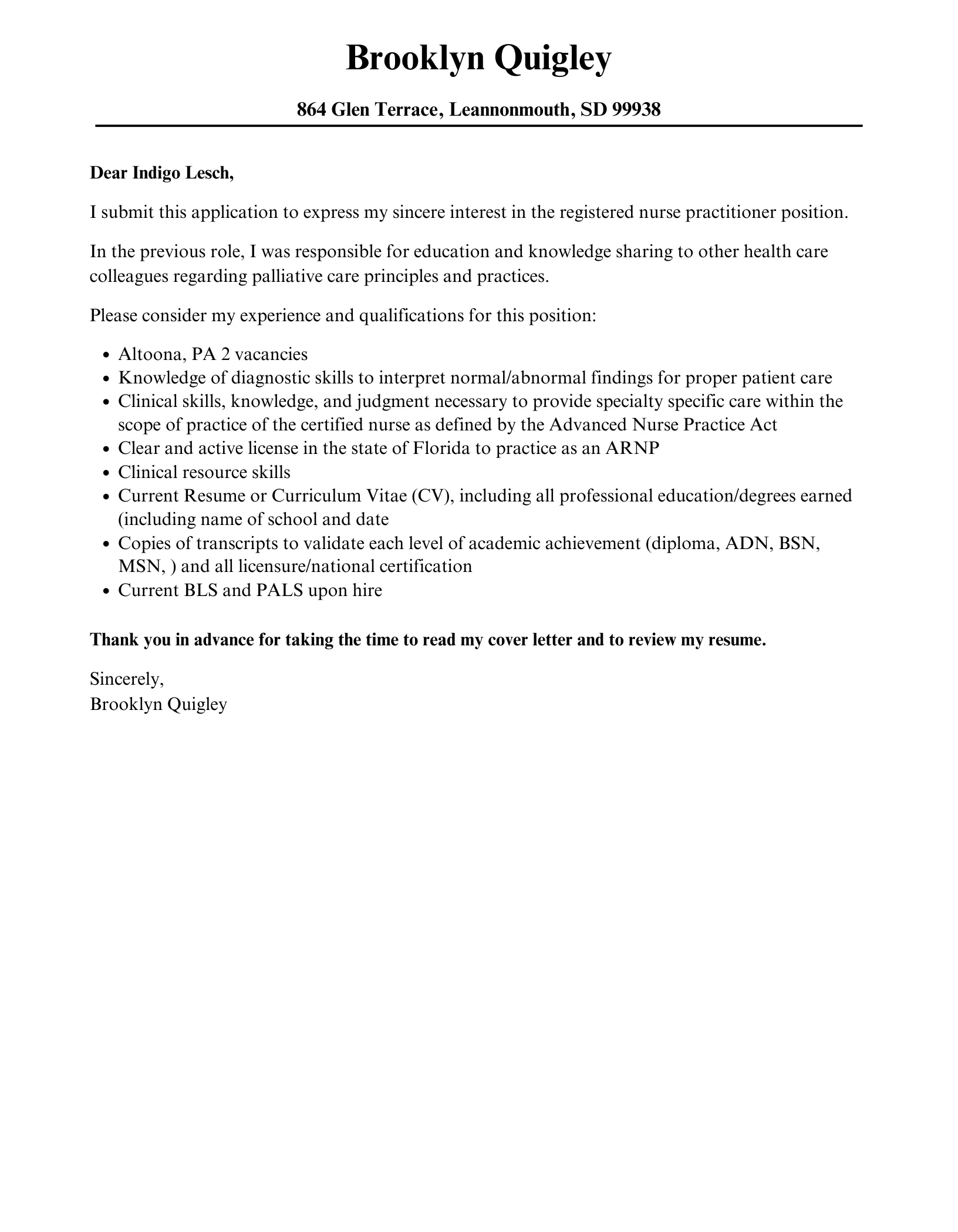
Why a Nurse Practitioner Cover Letter Matters
In the competitive field of healthcare, a well-crafted nurse practitioner cover letter can be the key to unlocking your dream job. It’s more than just a formality; it’s your first opportunity to make a strong impression on a potential employer. Unlike a resume, which provides a factual overview of your skills and experience, a cover letter allows you to showcase your personality, express your enthusiasm, and explain why you are the perfect fit for the specific role. A compelling cover letter can highlight your unique qualifications, demonstrate your understanding of the position, and ultimately, convince the hiring manager to invite you for an interview. This document acts as a powerful tool to set yourself apart from other applicants and increase your chances of success.
Key Components of a Nurse Practitioner Cover Letter
A successful nurse practitioner cover letter comprises several key elements, each playing a vital role in conveying your qualifications and suitability for the position. From a professional header to a persuasive closing, every component should work in harmony to present you as the ideal candidate. This section will delve into each essential part, providing insights into how to effectively structure your letter and what information to include. By understanding these components, you can create a cover letter that not only impresses the hiring manager but also significantly increases your chances of getting an interview and landing the job.
Header and Contact Information

Your header sets the tone for your entire cover letter, so it’s crucial to get it right. Begin with your full name, professional title (Nurse Practitioner, NP), and contact information. Include your phone number, email address, and, if you have one, your LinkedIn profile URL. Underneath your information, add the date, followed by the hiring manager’s name and title, if available, and the clinic or hospital’s name and address. If the hiring manager’s name is not available, research the organization to determine the correct person to address your letter to. This attention to detail demonstrates your professionalism and initiative.
Addressing the Hiring Manager
Addressing the hiring manager by name immediately personalizes your cover letter. If you know the hiring manager’s name, use it; for example, “Dear Dr. Smith.” If you are unsure of the hiring manager’s name, research the organization to determine the correct person to address your letter to. If this is not possible, a general greeting like “Dear Hiring Manager” is acceptable, but it’s always best to personalize your greeting whenever possible. Addressing the letter appropriately conveys respect and shows that you have taken the time to research the potential employer, which leaves a positive impression.
Opening Paragraph How to Grab Attention
Your opening paragraph is your first opportunity to grab the hiring manager’s attention and make a strong initial impression. Start with a clear and concise statement of your purpose: why you are writing and what position you are applying for. You can briefly mention where you saw the job posting. Then, include a compelling hook that highlights your most relevant qualifications or a key accomplishment. For example, you might state your years of experience, a specific skill, or a successful patient outcome. The goal is to immediately demonstrate your value and pique the hiring manager’s interest in reading the rest of your letter.
Highlighting Your Skills and Experience

The body of your cover letter is where you provide detailed information about your skills, experience, and accomplishments. This is the section where you demonstrate how your qualifications align with the requirements of the job. Focus on highlighting the skills and experiences most relevant to the position. Use specific examples to illustrate your abilities and how you have applied them in previous roles. Tailor each cover letter to the specific job description, emphasizing the skills and experiences the employer is seeking. When describing your experience, use the STAR method (Situation, Task, Action, Result) to provide context, detail, and quantifiable achievements.
Showcasing Relevant Certifications and Licenses
As a nurse practitioner, your certifications and licenses are critical credentials that validate your expertise and ability to practice. In your cover letter, clearly list your relevant certifications, such as those from the American Nurses Credentialing Center (ANCC) or the American Academy of Nurse Practitioners Certification Board (AANPCB). Also, be sure to mention your state licenses and any additional credentials, such as certifications in specific medical specialties. Include license numbers and expiration dates to provide complete and accurate information. Highlighting your credentials demonstrates your commitment to professional standards and compliance, which helps build credibility with potential employers.
Quantifying Achievements
Quantifying your achievements is a highly effective way to demonstrate the impact of your skills and experience. Instead of simply stating that you are a skilled nurse practitioner, use numbers and data to back up your claims. For example, instead of saying “Improved patient outcomes”, you could state “Improved patient outcomes by 15% through implementation of evidence-based practices”. Provide specific examples of your successes and quantify your achievements whenever possible. This not only shows the hiring manager the value you can bring but also makes your accomplishments more tangible and memorable.
Demonstrating Passion for Nursing

A cover letter is an excellent opportunity to express your passion for nursing and your commitment to patient care. Share your enthusiasm for the profession and your genuine interest in the specific role and organization. Describe your motivations for becoming a nurse practitioner and what drives your dedication to providing high-quality care. You can discuss your patient care philosophy, your areas of interest within nursing, or any specific initiatives you are excited about. Demonstrating your passion helps build a personal connection with the hiring manager and makes you a more attractive candidate. This shows them you aren’t just looking for a job but are genuinely invested in making a positive difference in patient lives.
Tailoring Your Letter to the Job
Customization is key to a successful cover letter. Never use a generic template; instead, always tailor your cover letter to the specific job you are applying for. Carefully read the job description and identify the key skills, experiences, and qualifications the employer is seeking. Then, in your cover letter, highlight how your skills and experiences match these requirements. Address the specific needs of the employer and demonstrate that you understand the responsibilities of the position. This demonstrates your attention to detail and shows that you have taken the time to consider the role and organization carefully.
Researching the Employer
Before writing your cover letter, invest time in researching the potential employer. Visit the organization’s website, read about their mission and values, and understand their services and patient population. Learn about the organization’s recent achievements, any initiatives they are involved in, and their reputation within the healthcare community. This knowledge will allow you to tailor your cover letter to the organization’s specific needs and demonstrate that you have a genuine interest in joining their team. You can also use this information to identify common ground or highlight how your values align with theirs.
Using Keywords from the Job Description

Use keywords from the job description strategically throughout your cover letter. The hiring manager or an applicant tracking system (ATS) often screens applications for specific keywords. Review the job description and identify key skills, qualifications, and responsibilities. Then, incorporate these keywords naturally into your cover letter, especially when describing your skills, experience, and accomplishments. This ensures that your application is noticed and that you are perceived as a strong match for the role. But remember, don’t overdo it; the cover letter should read naturally and not appear forced or stuffed with keywords.
Formatting and Tone for Professionalism
The format and tone of your cover letter are critical to conveying professionalism. Maintain a professional and respectful tone throughout the letter. Use a clear and concise writing style, avoiding jargon and overly complex language. Ensure your formatting is clean and easy to read. Choose a professional font like Times New Roman, Arial, or Calibri, and use a font size between 10 and 12 points. Use standard one-inch margins, and ensure your letter is single-spaced with a space between paragraphs. Proofread your letter carefully to eliminate any typos, grammatical errors, or inconsistencies. This demonstrates your attention to detail and your commitment to presenting yourself in the best possible light.
Maintaining a Professional Tone
The tone of your cover letter should be professional, courteous, and enthusiastic. Use formal language and avoid slang, contractions, and overly casual expressions. Focus on showcasing your professional qualifications and your commitment to the nursing profession. Demonstrate your respect for the hiring manager and the organization. Be positive and enthusiastic about the opportunity, but avoid sounding overly eager or desperate. Maintain a balance between showcasing your personality and adhering to professional communication standards. Your goal is to create a positive impression that reflects well on you and your abilities.
Avoiding Common Mistakes

To increase your chances of success, it’s crucial to avoid common mistakes that can undermine your application. One of the biggest errors is sending a generic cover letter that isn’t tailored to the specific job or organization. Other mistakes include typos and grammatical errors, which reflect poorly on your attention to detail. Avoid using clichés or generic phrases that don’t provide any specific information about your qualifications. Don’t include irrelevant information, such as personal details that aren’t relevant to the job. Ensure your letter is well-structured and easy to read, and always proofread it carefully before submitting it. Avoiding these mistakes will significantly enhance the impact of your cover letter.
Proofreading and Editing
Proofreading and editing are essential steps in preparing your cover letter. Before submitting your letter, carefully proofread it for any typos, grammatical errors, or formatting inconsistencies. It’s helpful to read the letter aloud to catch any awkward phrasing or unclear sentences. Ask a trusted friend, family member, or career counselor to review your cover letter and provide feedback. Having a second pair of eyes can help identify areas where you can improve your writing and ensure your letter is polished and error-free. A well-proofread and edited cover letter demonstrates your attention to detail and enhances your credibility.
Closing Your Cover Letter
Your closing paragraph should leave a lasting positive impression and encourage the hiring manager to take action. Express your gratitude for their time and consideration. Reiterate your interest in the position and your enthusiasm for the opportunity. Include a call to action, such as inviting the hiring manager to contact you for an interview or providing your availability. Sign off with a professional closing, such as “Sincerely,” “Respectfully,” or “Best regards,” followed by your full name. A strong closing paragraph can significantly increase your chances of moving forward in the hiring process.
Expressing Gratitude

Expressing gratitude is a crucial component of a professional closing. Thank the hiring manager for taking the time to review your application and consider you for the position. This demonstrates respect and courtesy, and it leaves a positive impression. Expressing your appreciation shows that you value their time and recognize the effort they put into the hiring process. It’s a simple gesture, but it can significantly impact the overall perception of your application and make you stand out from other candidates.
Call to Action
End your cover letter with a clear call to action to encourage the hiring manager to take the next step in the hiring process. Indicate your willingness to participate in an interview and reiterate your interest in the position. Provide your availability for an interview or suggest that they contact you to schedule a meeting. A call to action prompts the hiring manager to take action and increases your chances of getting an interview. For instance, you could say: “I am eager to discuss my qualifications further and am available for an interview at your earliest convenience. Thank you for your time and consideration.”
Final Thoughts
Writing a compelling nurse practitioner cover letter is a strategic process that can significantly impact your job search success. By following the guidelines outlined in this guide, you can create a cover letter that highlights your skills, experience, and passion for the role. Remember to customize each letter to the specific job description, showcase your achievements, and maintain a professional tone throughout. A well-crafted cover letter will increase your chances of getting an interview and ultimately landing your dream job. Good luck with your job search!