Understanding the Nursing Assistant Role
Before diving into the specifics of crafting a compelling cover letter, it’s crucial to understand the core responsibilities of a Nursing Assistant (NA). NAs are essential members of the healthcare team, providing direct patient care under the supervision of nurses. Their duties encompass a wide range of tasks, from assisting with daily living activities like bathing and feeding to monitoring vital signs and reporting any changes in a patient’s condition. They often serve as the primary point of contact for patients, offering emotional support and fostering a comfortable environment. The role demands compassion, patience, and a strong work ethic, as NAs work closely with individuals who may be vulnerable or in need of significant assistance. Understanding these responsibilities is the first step in showcasing your qualifications and demonstrating your suitability for the position in your cover letter.
Key Components of a Strong Cover Letter
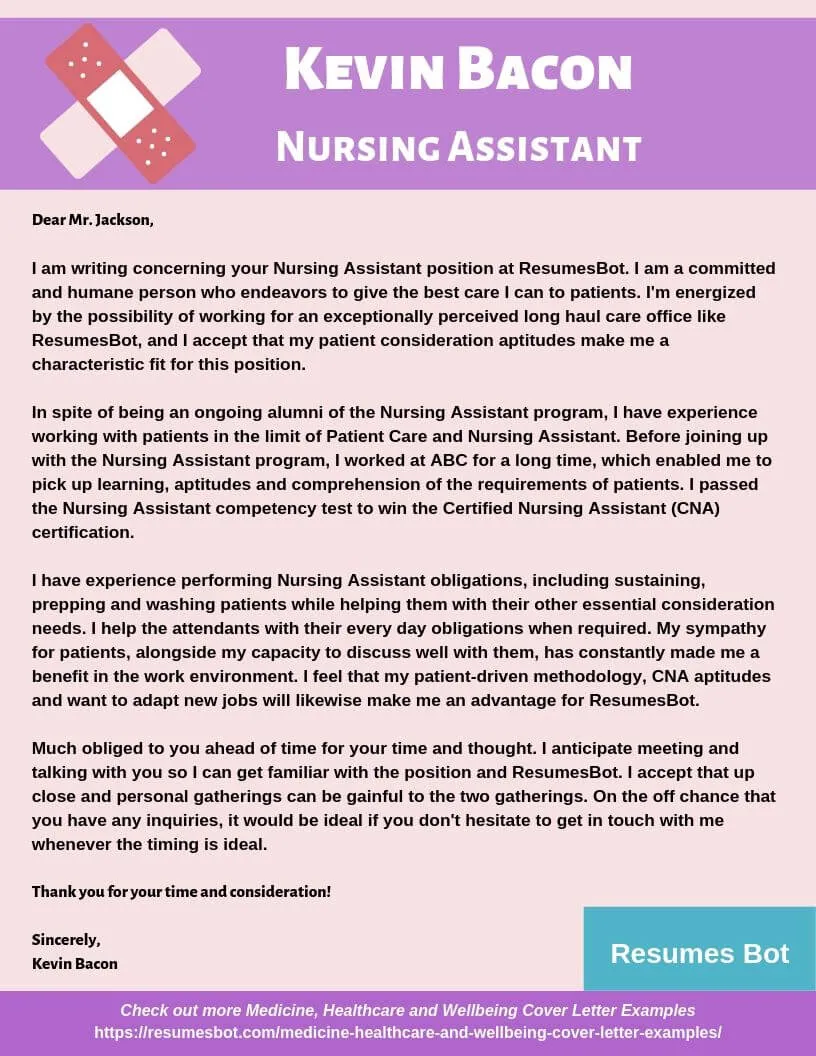
A well-crafted cover letter is more than just a formality it’s your opportunity to make a positive first impression and highlight why you’re the ideal candidate for the Nursing Assistant role. Every successful cover letter shares some fundamental characteristics. Firstly, it should be concise and well-structured, with a clear introduction that immediately states the position you’re applying for and how you learned about it. Secondly, the body of the letter should showcase your most relevant skills and experiences, linking them directly to the requirements outlined in the job description. Thirdly, it must demonstrate your understanding of the healthcare setting and your genuine interest in providing patient care. Finally, the conclusion should reiterate your enthusiasm, express your gratitude for their consideration, and include a call to action, such as stating your availability for an interview. A cover letter that is properly formatted and free of grammatical errors demonstrates your attention to detail, which is critical in healthcare.
Highlighting Relevant Skills and Experience

Your cover letter is the perfect place to showcase the skills and experiences that make you a standout candidate for a Nursing Assistant position. Begin by carefully reviewing the job description and identifying the key skills and qualifications the employer is seeking. Some of the most sought-after skills include patient care, communication, empathy, teamwork, and the ability to handle sensitive situations. When describing your experience, quantify your achievements whenever possible. Instead of simply stating that you assisted patients, provide specific examples. For instance, mention the number of patients you cared for, the types of procedures you assisted with, or any special recognition you received. Also, be sure to highlight any certifications or training you have completed, such as CPR or First Aid certifications, which are highly valuable in the healthcare field. By providing concrete examples of your skills and experience, you create a compelling narrative that demonstrates your competence and suitability for the role.
Formatting and Structure of Your Cover Letter
The format and structure of your cover letter contribute significantly to its overall impact. A well-formatted letter is easier to read and projects a professional image. Begin with a clear header that includes your contact information (name, phone number, email address) and the date. Following this, add the employer’s name, title, and address. Next, use a professional salutation, such as Dear Mr./Ms./Mx. [Last Name], or if you’re unsure of the hiring manager’s name, use a general greeting like ‘Dear Hiring Manager’. The body of your letter should be divided into three to four paragraphs, with each paragraph focusing on a specific aspect of your qualifications or experience. Use a clean, easy-to-read font, such as Arial or Times New Roman, and maintain consistent formatting throughout the document. Keep each paragraph concise, typically around 4-6 sentences. Finally, conclude your letter with a professional closing, such as ‘Sincerely’ or ‘Respectfully’, followed by your typed name. Remember to proofread and format the letter to ensure no errors.
Tailoring Your Cover Letter to the Job Description
One of the most effective strategies for creating a winning cover letter is to tailor it specifically to each job you apply for. Generic cover letters often fail to capture the attention of hiring managers because they lack the specific details that demonstrate a genuine interest in the position. Carefully review the job description and identify the key requirements, skills, and responsibilities outlined. Then, in your cover letter, use this information to customize your letter by highlighting the most relevant aspects of your experience and qualifications. For instance, if the job description emphasizes experience in assisting patients with mobility issues, make sure to highlight your experience in this area. This shows that you have the skills to successfully fulfill the specific demands of the role. By demonstrating that you’ve taken the time to understand the job requirements and align your qualifications accordingly, you greatly increase your chances of getting selected for an interview.
Using Action Verbs to Showcase Your Abilities

Action verbs can significantly enhance the impact of your cover letter by vividly illustrating your skills and accomplishments. Instead of using passive language, employ strong action verbs to describe your experiences and responsibilities. For example, instead of writing ‘responsible for assisting patients,’ you could say ‘Assisted patients with daily living activities, ensuring their comfort and well-being.’ Other examples of impactful action verbs include ‘coordinated,’ ‘managed,’ ‘implemented,’ ’trained,’ ’evaluated,’ ‘communicated,’ and ‘collaborated.’ By using action verbs, you bring your experience to life and provide concrete evidence of your abilities. This approach helps the hiring manager quickly understand your capabilities and visualize your potential contributions to the team. The strategic use of action verbs not only makes your letter more engaging but also highlights your proactiveness and efficiency in your previous roles.
Proofreading and Editing Your Cover Letter
Before submitting your cover letter, it’s absolutely essential to proofread and edit it meticulously. Errors in grammar, spelling, and punctuation can undermine your credibility and make a negative impression on the hiring manager. Proofreading is more than just a quick scan; it requires a focused effort to catch any mistakes. Read your cover letter several times, each time focusing on a different aspect. One time, look for spelling errors; another, review the grammar and sentence structure. It’s often helpful to read your letter aloud or have someone else review it for you. Consider using grammar and spell-check tools, but don’t rely on them entirely, as they might miss subtle errors or context-related issues. Ensure that all the information is accurate, including dates, names, and contact details. A polished, error-free cover letter demonstrates your attention to detail, professionalism, and commitment to quality – all qualities highly valued in a Nursing Assistant.
Finalizing and Submitting Your Cover Letter
Once you are satisfied with your cover letter after proofreading and editing, it’s time to finalize and submit your application. Ensure your cover letter is in a professional format, such as a PDF, unless the job application instructions specify otherwise. When submitting your cover letter, make sure it’s addressed to the correct person and that it accompanies your resume. In your cover letter, include a clear call to action, expressing your interest in an interview and making it easy for the hiring manager to contact you. Verify all the contact information provided, including your phone number and email address, to make certain that the potential employer can contact you to set up an interview. Be sure to send your application before the deadline and follow any submission instructions carefully. After submitting your cover letter, consider sending a thank-you note to the hiring manager or the contact person. If you are not contacted within a reasonable timeframe, consider following up with a polite email to express your continued interest in the position.