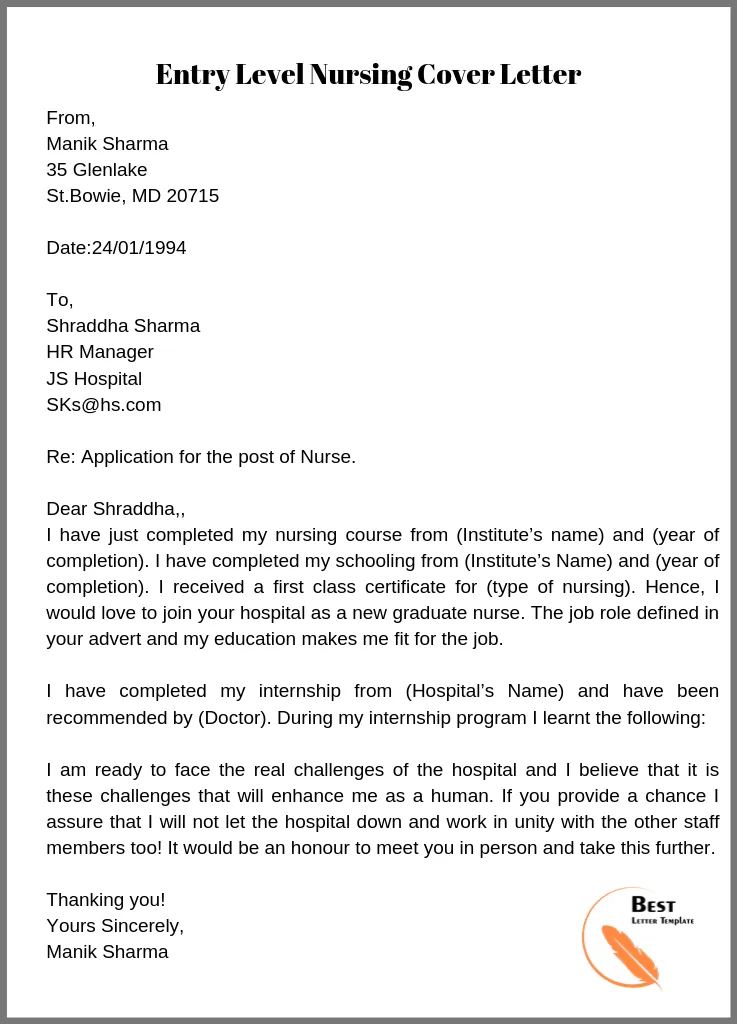
Nursing Cover Letter Format Overview
A well-crafted nursing cover letter is your first opportunity to make a positive impression on a potential employer. It serves as a crucial introduction, allowing you to highlight your qualifications, skills, and experience in a way that a resume alone cannot. A strong cover letter format, adhering to professional standards, demonstrates your attention to detail and commitment to the nursing profession. This guide provides the top 5 tips to help you create a compelling cover letter that will help you secure your desired nursing position. Proper formatting and content are key to standing out from the competition.
Header Essentials
The header of your nursing cover letter is essential for providing immediate and important information. It should include your full name, address, phone number, and email address. This information should be clearly and professionally presented. This ensures that the hiring manager can easily contact you. A clean and organized header sets a professional tone right from the start, signaling your attention to detail.
Contact Information

Your contact information should be the first thing a recruiter sees. Make sure to use a professional-sounding email address (e.g., firstname.lastname@email.com) rather than a casual one. Double-check that your phone number is correct and that you have a professional voicemail greeting. This initial presentation is vital for establishing credibility and facilitating easy contact.
Date and Recipient Details
Following your contact information, include the date and the recipient’s details. Address the letter to the hiring manager, if possible; if you cannot find their name, use a general title like “Hiring Manager.” Include the name of the healthcare facility or hospital, along with its address. This section demonstrates your attention to detail and your professionalism in preparing the cover letter. Make sure the date is current.
Salutation
The salutation sets the tone for your entire letter. Start with a formal greeting, such as “Dear Mr./Ms./Dr. [Last Name],” if you know the hiring manager’s name. If you are unsure of the name, use “Dear Hiring Manager” or “Dear [Department Name] Hiring Committee.” Avoid generic greetings like “To Whom It May Concern.” This personal touch shows respect and initiative. A well-chosen salutation indicates you’ve taken the time to research the role and the organization.
Body Paragraph 1: Introduction

Your introductory paragraph should immediately grab the reader’s attention. State the specific position you are applying for and where you saw the job posting. Briefly mention your core qualifications and experience, highlighting what makes you a strong candidate. Express your enthusiasm for the opportunity and the organization. This opening should quickly inform the reader of your intentions and why they should continue reading. Make sure the opening is concise and to the point.
Highlight Your Key Qualifications
In your introduction, briefly mention the most relevant qualifications. This could include your nursing degree, certifications, and years of experience. If the job description emphasizes specific skills, make sure to include those. Aim to give the reader a clear picture of your capabilities right from the start. This will encourage the reader to continue and to learn more about you and your skills.
Tailor to the Job Description
Customize your cover letter for each job application. Review the job description carefully and align your qualifications with the requirements. Use keywords and phrases from the job posting to show that you understand the role and the organization’s needs. Highlighting how your skills and experience match the specific needs of the role makes you a more relevant candidate. This shows you are not just sending a generic application.
Body Paragraph 2: Skills and Experience

This is the core of your cover letter, where you showcase your skills and experience in detail. Provide specific examples of your accomplishments and how you have contributed to patient care and team environments. Discuss your experience with relevant medical equipment, procedures, and patient populations. This section should demonstrate your ability to excel in the role. The goal is to convince the employer you’re the right fit.
Quantify Accomplishments
Whenever possible, quantify your achievements using numbers and data. For example, instead of saying “Improved patient satisfaction,” say “Increased patient satisfaction scores by 15%.” This approach adds credibility to your claims and demonstrates your impact. Providing quantifiable results makes your accomplishments more concrete and easier for the reader to understand the value you bring.
Use Action Verbs
Start your sentences with strong action verbs to describe your accomplishments and responsibilities. Examples include “managed,” “coordinated,” “implemented,” “improved,” and “trained.” This approach makes your writing more dynamic and engaging. Action verbs help to showcase your skills and experience in a more impactful way, making your cover letter more memorable.
Body Paragraph 3: Why This Role/Organization

In this paragraph, explain why you are interested in the specific role and organization. Show that you have researched the healthcare facility and understand its mission, values, and culture. Explain how your personal and professional goals align with the opportunity. This section demonstrates your genuine interest and commitment, making you a more desirable candidate. Show why you are a great fit with their culture.
Express Enthusiasm
Convey your enthusiasm for the nursing position. Clearly state why you are excited about the opportunity and what you hope to achieve in the role. Demonstrate your passion for patient care and the healthcare environment. Your enthusiasm can set you apart from other applicants. Let the employer know you are eager to contribute to their team.
Demonstrate Research
Research the healthcare facility or hospital. Understand its mission, values, and recent accomplishments. Mention any specific programs or initiatives that resonate with you. This shows that you are committed to the organization and that you have taken the time to learn about its work. Demonstrate you have done your homework and share the relevant points.
Call to Action and Closing

Conclude your cover letter with a clear call to action. Reiterate your interest in the position and express your desire for an interview. Thank the reader for their time and consideration. Use a professional and formal closing, such as “Sincerely” or “Respectfully.” This is your last chance to leave a positive impression.
Reiterate Interest
In your closing, reiterate your interest in the position and emphasize your key qualifications once more. Remind the reader why you are a strong candidate and why you are excited about the opportunity. Clearly state your availability for an interview and how you can be contacted. This restatement will increase the likelihood of a response.
Formal Closing and Signature
Use a formal closing, such as “Sincerely” or “Respectfully,” followed by your typed name. If you are submitting a hard copy, leave space for your signature above your typed name. This is the final step in demonstrating your professionalism and attention to detail. Make sure it is clear and professional.
Proofreading and Formatting

Before submitting your cover letter, carefully proofread it for any grammatical errors, typos, or formatting inconsistencies. A polished cover letter demonstrates your professionalism and attention to detail. Ask a friend or colleague to review your letter to ensure accuracy. Take extra care in formatting, as this is a visual representation of your professionalism.
Readability and Clarity
Ensure that your cover letter is easy to read and understand. Use clear and concise language, avoiding jargon or overly complex sentences. Break up large blocks of text into shorter paragraphs. The goal is to communicate your message effectively and make it easy for the hiring manager to grasp your qualifications and enthusiasm. Make sure it is clear and easy to read.
Formatting Best Practices
Use a standard font, such as Times New Roman, Arial, or Calibri, in a readable size (11 or 12 points). Maintain consistent formatting throughout the document, including margins, spacing, and bullet points. Use a professional layout that is easy on the eyes. A well-formatted cover letter makes a positive impression and shows that you care about the details. Avoid any overly creative designs and maintain a professional appearance.