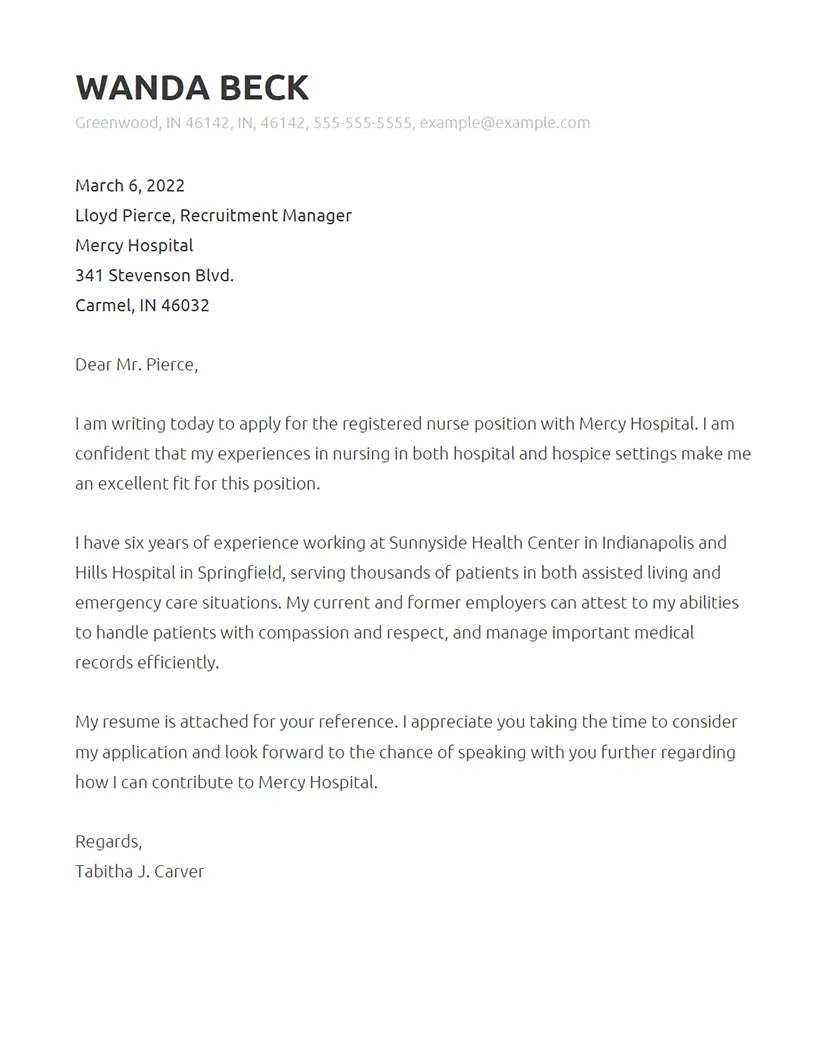
A nursing cover letter is your first impression with a potential employer. It is a crucial document that introduces you, highlights your qualifications, and expresses your interest in a specific nursing position. This guide will provide you with the essential knowledge and strategies to craft a compelling nursing cover letter that effectively showcases your skills and increases your chances of landing your dream job. The primary goal of a nursing cover letter is to grab the hiring manager’s attention, demonstrate your understanding of the job requirements, and clearly articulate why you are the perfect fit for the role. A well-written cover letter can significantly boost your application and differentiate you from other candidates. It is an opportunity to tell your story, showcasing not just your experience but also your passion for nursing and your commitment to patient care.
What is a Nursing Cover Letter
A nursing cover letter is a formal document that accompanies your resume when applying for a nursing position. It provides a concise overview of your qualifications, skills, and experience, while also expressing your enthusiasm for the specific role and the healthcare organization. Unlike a resume, which is a factual summary of your professional history, a cover letter allows you to explain why you are interested in the position and why your specific skills and experiences make you an ideal candidate. A strong nursing cover letter is tailored to each job application and demonstrates your understanding of the employer’s needs and expectations.
Why a Nursing Cover Letter is Essential
A well-crafted nursing cover letter is essential because it serves multiple important purposes. First, it provides an opportunity to showcase your personality and communication skills, which are vital in nursing. Second, it allows you to highlight specific achievements and skills that directly align with the job requirements, going beyond the basic information in your resume. Third, it demonstrates your genuine interest in the position and the organization, setting you apart from applicants who may only submit a resume. A cover letter is your chance to make a positive first impression and convince the hiring manager that you are worth interviewing. Therefore, a generic, uninspired cover letter can be a significant disadvantage.
Highlighting Your Nursing Skills

When writing your nursing cover letter, it’s crucial to emphasize your key skills. Focus on skills that are most relevant to the job description, such as clinical expertise, patient assessment, medication administration, and critical thinking. If the job description emphasizes teamwork, highlight your collaborative abilities and experience working with multidisciplinary teams. Include specific examples of how you have utilized these skills in previous roles and the positive outcomes you achieved. Make sure your skills match the keywords on the job description to get noticed by the hiring manager. Make your skills easy to understand and use action verbs to portray your capabilities.
Showcasing Your Experience
Your cover letter should also showcase your nursing experience. Instead of simply listing your past job titles, describe your responsibilities and accomplishments in each role. Use the STAR method (Situation, Task, Action, Result) to provide concrete examples of how you have addressed challenges and achieved positive outcomes. For instance, if you managed a patient’s complex medical condition, explain the situation, the task you undertook, the specific actions you took, and the positive result. By quantifying your achievements and illustrating your problem-solving skills, you make a compelling case for your qualifications. This helps the hiring manager understand the value you can bring to their organization. Always showcase the roles that are most relevant to the nursing job.
Tailoring Your Letter to the Job
One of the most important steps in writing a successful nursing cover letter is tailoring it to each job application. This involves carefully reviewing the job description and identifying the key skills, experience, and qualifications the employer is seeking. Then, use your cover letter to demonstrate how your skills and experience align with these requirements. Avoid using a generic cover letter for every application; instead, customize each letter to address the specific needs and preferences of the employer. Mention the specific department, unit, or healthcare setting if mentioned. This attention to detail shows the hiring manager that you are genuinely interested in the position and have taken the time to understand their requirements. Use the job description keywords.
Key Components of a Nursing Cover Letter

Header
Your header should include your contact information (name, phone number, email address, and optionally, your LinkedIn profile URL), as well as the date and the employer’s contact information (name, title, and address). Ensure your contact information is accurate and up-to-date. Use a professional format and make sure it is easy to read. The header sets the tone of professionalism and provides essential contact details for the hiring manager to reach you.
Opening Paragraph
The opening paragraph is your chance to grab the hiring manager’s attention. State the specific position you are applying for, and mention where you found the job posting (e.g., online job board, referral). Briefly mention your most relevant qualifications or a compelling achievement that highlights your suitability for the role. Show your enthusiasm for the opportunity. Your opening should be concise, engaging, and set the stage for the rest of the letter. Avoid generic phrases and aim to make a strong, positive first impression.
Body Paragraphs

The body paragraphs are the core of your cover letter, where you elaborate on your skills, experience, and accomplishments. Use these paragraphs to demonstrate how your qualifications align with the job requirements. Provide specific examples of your achievements and explain the positive outcomes you have delivered in past roles. Focus on the skills and experience that are most relevant to the position. Use the STAR method to describe situations, tasks, actions, and results. Tailor each paragraph to the specific job description and ensure it reflects a deep understanding of the employer’s needs.
Closing Paragraph
In your closing paragraph, reiterate your interest in the position and the organization. Express your gratitude for the hiring manager’s time and consideration. Reiterate your key qualifications and make a confident statement about your ability to contribute to the team. Include a call to action, such as inviting the hiring manager to contact you for an interview or providing additional information. Always end your cover letter with a professional closing, such as “Sincerely” or “Respectfully,” followed by your typed name.
Formatting Your Nursing Cover Letter
Choosing the Right Font and Size

The font choice and size significantly affect the readability of your cover letter. Choose a professional and easy-to-read font, such as Times New Roman, Arial, or Calibri. Maintain a font size between 11 and 12 points for optimal readability. Avoid using overly decorative or unusual fonts, as they can detract from the content of your letter. Make sure the font size is consistent throughout the document. The goal is to ensure your cover letter is visually appealing and easy for the hiring manager to read.
Proper Margins and Spacing
Proper margins and spacing enhance the readability and professional appearance of your cover letter. Set 1-inch margins on all sides of the document. Use single-spacing within paragraphs and double-spacing between paragraphs. This creates a clean and organized look. Consistent spacing helps the reader easily scan and digest the information. Proper formatting also helps prevent your cover letter from looking cluttered or overwhelming. Always proofread your cover letter after formatting to make sure the spacing and margins appear as expected.
Proofreading and Editing
Proofreading and editing are critical steps in ensuring your cover letter is free of errors. Carefully review your cover letter for any grammatical errors, spelling mistakes, and punctuation issues. Read your cover letter multiple times and consider asking a friend, family member, or career advisor to proofread it as well. Errors can undermine your credibility and make you appear careless. Pay close attention to detail and make sure your cover letter is polished and professional. A flawless cover letter demonstrates your attention to detail and commitment to quality.
Dos and Don’ts for Nursing Cover Letters

Do Highlight Your Achievements
Focus on quantifiable accomplishments and achievements to demonstrate your capabilities. For example, mention how you improved patient outcomes, reduced readmission rates, or implemented successful new procedures. Quantify your achievements whenever possible, as this provides concrete evidence of your value. Use the STAR method to describe your achievements in detail, including the situation, task, action, and result. Highlighting your achievements will set you apart and show the hiring manager that you are a results-oriented nurse.
Do Tailor Your Letter
Customize your cover letter for each job application to align with the specific requirements and preferences of the employer. Carefully review the job description and identify the key skills, experience, and qualifications they are seeking. Use your cover letter to show how your skills and experiences match these needs. Avoid using a generic cover letter; instead, tailor each letter to address the specific needs of the employer. Mention the specific department or unit if mentioned. This shows the hiring manager that you are genuinely interested in the position and have taken the time to understand their requirements.
Don’t Use Generic Language

Avoid using generic, cliché phrases and focus on demonstrating your unique qualifications and personality. Instead of saying you are a “team player,” provide specific examples of how you have collaborated with others and contributed to team success. Use action verbs and specific details to showcase your skills and accomplishments. Avoid using phrases that sound impersonal or overly formal. Your goal is to make a positive impression and show the hiring manager why you are the best candidate for the job.
Don’t Exceed One Page
Keep your cover letter concise and focused, ideally within one page. Hiring managers often have limited time to review applications, so it’s important to get your key points across quickly and efficiently. Focus on the most relevant information and avoid including unnecessary details. Use clear and concise language. Proofread your cover letter carefully to ensure it is well-written and to the point. A brief, well-crafted cover letter is more likely to capture the hiring manager’s attention than a lengthy, rambling one.
Example of a Winning Nursing Cover Letter
Below is an example that incorporates the best practices and demonstrates how to create a compelling cover letter. You can adapt this example to highlight your own skills, experience, and accomplishments to match the job description. Tailor this example with your own information. Ensure that the information is relevant to the nursing job.
Contact Information
Jane Doe 123 Main Street Anytown, CA 12345 (555) 123-4567 jane.doe@email.com
Professional Summary
Highly motivated and compassionate Registered Nurse with 5+ years of experience in critical care, specializing in emergency medicine. Proven ability to provide exceptional patient care, manage complex medical cases, and collaborate effectively within multidisciplinary teams. Dedicated to promoting patient well-being and delivering high-quality healthcare.
Skills and Experience
Proficient in emergency room protocols, triage, and rapid response. Experienced in administering medications, monitoring vital signs, and operating medical equipment. Successfully reduced patient wait times by 15% through process improvements. Excellent communication, critical thinking, and problem-solving skills.
Closing Statement
I am eager to contribute my skills and experience to [Hospital Name] and am confident in my ability to provide exceptional care to your patients. Thank you for considering my application. I look forward to the opportunity to discuss my qualifications in further detail. Sincerely, Jane Doe