Understanding the Nursing Cover Letter
A nursing cover letter is more than just a formality; it’s your first impression on potential employers. It’s a chance to go beyond the dry facts of your resume and paint a vivid picture of who you are as a nurse. It allows you to showcase your personality, enthusiasm, and dedication to the profession. A well-crafted cover letter demonstrates your communication skills, attention to detail, and understanding of the specific requirements of the nursing position. Moreover, it provides an opportunity to tailor your application to the needs and values of the healthcare organization, making you stand out from the competition. A strong cover letter can significantly increase your chances of securing an interview, and ultimately, landing your dream nursing job.
Why is a Cover Letter Important for Nursing Applications?
In a competitive field like nursing, a cover letter serves as your unique selling proposition. It’s a chance to articulate why you’re the perfect fit for the role. The cover letter allows you to elaborate on your experiences, skills, and qualifications, providing context that a resume alone cannot. It allows you to express your passion for nursing and the specific area of practice you’re interested in. It demonstrates your research into the organization, showing that you understand their mission, values, and the needs of their patients. It is a direct communication channel to the hiring manager, providing you with an opportunity to personalize your application and connect on a more human level. By highlighting your relevant experience and achievements, you can differentiate yourself and increase your chances of getting noticed.
Highlighting Key Nursing Skills

When crafting your nursing cover letter, pinpointing and showcasing your core skills is vital. Focus on skills that are relevant to the job description and resonate with the employer’s needs. Highlight clinical skills such as patient assessment, medication administration, wound care, and electronic health record management. Demonstrate your critical thinking and problem-solving abilities by describing situations where you had to make quick decisions under pressure. Emphasize your communication skills, both written and verbal, as they are essential for effective patient care and collaboration with colleagues. If you have experience with specific medical equipment or software, be sure to include it. Make sure you clearly explain how you have used these skills in practice, and the results you achieved. Remember to tailor your skills to match the specific requirements of the job, making you look like the perfect candidate.
Showcasing Clinical Experience
Your clinical experience is the backbone of your nursing career, and your cover letter is your opportunity to highlight it. Provide a concise overview of your previous roles, including the name of the healthcare facility, your job title, and the dates of employment. Describe the types of patients you cared for, and the specific responsibilities you held. Quantify your impact by mentioning patient outcomes you helped achieve, such as a reduced infection rate or improved patient satisfaction scores. Mention any specialized units or departments you’ve worked in, such as the ICU, emergency room, or operating room. If you have experience with specific patient populations or healthcare settings, such as pediatrics, geriatrics, or home healthcare, be sure to include this information. Focus on the experiences that align with the job description. By showcasing your clinical experiences, you give the hiring manager a comprehensive view of your real-world capabilities.
Quantifying Your Accomplishments
Adding numbers and data to your cover letter makes it more impactful and memorable. Instead of simply stating that you provided good patient care, provide specific examples of your achievements. Use numbers to quantify your accomplishments. For example, mention the number of patients you cared for daily, the percentage increase in patient satisfaction scores you contributed to, or the number of successful IV insertions you performed. If you were involved in a project that resulted in improved patient outcomes, such as a reduction in falls or medication errors, be sure to include these statistics. Highlighting your achievements with data also demonstrates your attention to detail and your ability to analyze and improve processes. This level of detail can set you apart from other applicants and show employers that you take pride in your work.
Formatting Your Nursing Cover Letter

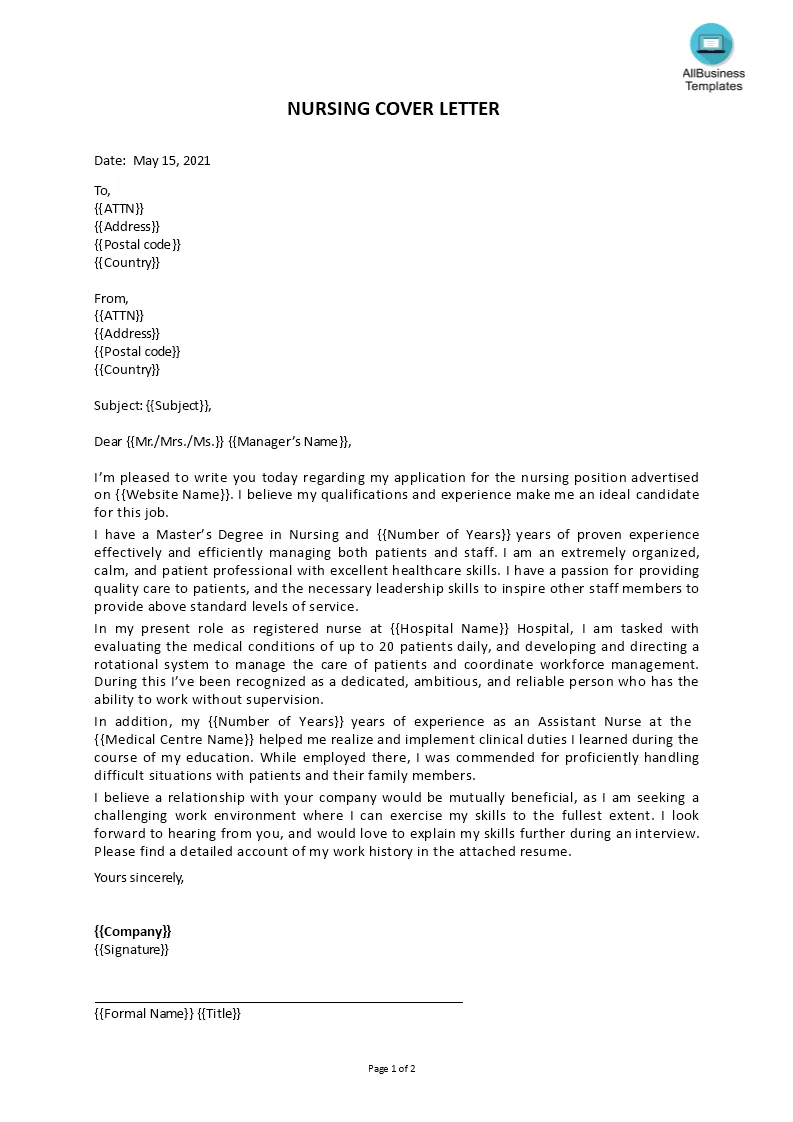
A well-formatted cover letter is easy to read and shows your attention to detail. Begin with your contact information, including your name, address, phone number, and email address. Include the date, and the hiring manager’s name and title, if known. Use a professional font, such as Times New Roman or Arial, with a font size of 11 or 12 points. Maintain consistent formatting throughout the document, including spacing, margins, and bullet points. Use clear and concise language, avoiding jargon or overly complex sentences. Break up your text into short paragraphs. Proofread your cover letter carefully for any grammatical errors. A clean and organized cover letter demonstrates your professionalism and makes a good first impression on potential employers.
Structuring Your Cover Letter Effectively
A well-structured cover letter is easier to read and more likely to grab the reader’s attention. Start with a compelling opening paragraph that introduces yourself and states the position you are applying for. In the body of your cover letter, highlight your key skills, experiences, and accomplishments, as discussed previously. Tailor your content to the specific requirements of the job. Explain why you are a good fit for the organization and the nursing position. Close your cover letter with a call to action, expressing your interest in an interview and providing your contact information. Always personalize your cover letter, and include a sentence or two about why you are interested in the specific healthcare facility or hospital you are applying to. A well-structured cover letter is concise and clearly conveys your message.
Choosing the Right Tone for Your Application
The tone of your nursing cover letter should reflect professionalism, enthusiasm, and a genuine interest in the position. Use a formal and respectful tone, addressing the hiring manager by name, if possible. Express your passion for nursing and your eagerness to contribute to the healthcare organization. Use positive and confident language, highlighting your skills and experiences without being arrogant. Avoid using overly casual or informal language, and refrain from using slang or jargon. Tailor your tone to the specific requirements of the job and the culture of the healthcare facility. Match the tone of your cover letter to the tone of your resume. Review your cover letter before submitting and make sure it reflects your true personality and your excitement about the opportunity.
Addressing the Hiring Manager Directly

Addressing the hiring manager by name demonstrates your initiative and attention to detail. It shows that you have taken the time to research the organization and the specific role. Whenever possible, find out the name of the hiring manager and use it in your cover letter. You can find this information by checking the job posting or searching the company website or LinkedIn. If you are unable to find the name, use a general greeting such as “Dear Hiring Manager.” Avoid using generic greetings like “To Whom It May Concern.” It is more personal and demonstrates you have taken the time to learn about the organization. Addressing the hiring manager directly can help to make your cover letter stand out. It is a sign of respect and professionalism.
Proofreading and Editing Your Cover Letter
Proofreading and editing your cover letter is essential to ensure it is free of errors and professionally presented. Take the time to review your cover letter carefully for any grammatical errors, typos, or spelling mistakes. Read it aloud to identify any awkward phrasing or unclear sentences. Ask a friend or colleague to proofread your cover letter. They may catch errors that you have missed. Ensure the formatting is consistent and the layout is clean and easy to read. Double-check the contact information to make sure it is accurate. A polished cover letter is essential. It makes a positive first impression and shows your attention to detail, which is crucial in healthcare. Errors in a cover letter can negatively impact your chances of getting the job.
Common Mistakes to Avoid
Avoid these common mistakes when writing a nursing cover letter. Do not use generic cover letters that are not tailored to the specific job. Avoid excessive length. Keep your cover letter concise and to the point, ideally within one page. Do not include information that is irrelevant to the job. Avoid using jargon or overly complex language. Avoid grammatical errors and typos. Do not be negative or overly critical of previous employers. Avoid sounding arrogant or entitled. Do not forget to proofread your cover letter carefully. A cover letter containing mistakes sends the wrong message. By avoiding these common mistakes, you can increase your chances of making a positive impression and securing an interview.
Generic vs. Tailored Cover Letters

The difference between a generic and a tailored cover letter can significantly impact your chances of success. A generic cover letter is a template that is used for every job application. These cover letters are often vague and do not provide any specific information about your skills or experience. Tailored cover letters are customized for each job application. These letters are specific to the requirements of the job and the organization. Tailoring your cover letter demonstrates that you have taken the time to research the job and the healthcare facility. It also allows you to highlight the skills and experiences that are most relevant to the position. By personalizing your cover letter, you make a strong impression and increase your chances of getting an interview. Always make sure your cover letter directly addresses the job requirements.
Tips for Writing a Strong Opening
Your opening paragraph is your chance to grab the reader’s attention and make a strong first impression. Start by stating the position you are applying for and where you saw the job posting. Briefly summarize your qualifications and highlight your most relevant skills or experiences. Show your enthusiasm for the position and express your interest in the organization. Avoid generic opening lines and clichés. Instead, try to tailor your opening to the specific requirements of the job. You might also mention a specific project or accomplishment that aligns with the organization’s mission. The opening paragraph of your cover letter is a key element that will make the hiring manager want to read further. Make sure it is engaging and clearly states your interest in the position.
Tips for Writing a Compelling Body
The body of your cover letter is the opportunity to showcase your skills, experiences, and accomplishments in detail. Use the body to elaborate on the information in your resume and provide examples that demonstrate your abilities. Focus on the experiences that are most relevant to the job requirements. Quantify your accomplishments whenever possible. Use numbers and data to support your claims. Highlight your key skills and explain how you have used them to achieve positive outcomes. Be sure to showcase your understanding of patient care, the challenges of the role, and your passion for the profession. Tailor your content to the specific needs of the healthcare facility or hospital. By presenting your information logically and persuasively, you increase your chances of being noticed by the hiring manager.
Tips for Writing a Powerful Closing

Your closing paragraph should leave a lasting impression. Reiterate your interest in the position and express your enthusiasm for the opportunity. Include a call to action, such as requesting an interview or offering to provide additional information. Thank the hiring manager for their time and consideration. Restate your contact information for easy access. End with a professional closing, such as “Sincerely” or “Respectfully.” Make sure your closing paragraph is concise, clear, and leaves the reader with a positive impression of your qualifications and personality. A strong closing ensures your application is memorable and helps your case in securing an interview.
Showcasing Your Passion for Nursing
In your cover letter, it’s important to express your passion for nursing. Show your dedication to patient care and explain why you are drawn to the nursing profession. Provide specific examples of what motivates you, such as a desire to help others, a passion for medical science, or a commitment to making a difference in people’s lives. Emphasize your commitment to providing excellent patient care. Mention any volunteer experiences or extracurricular activities that demonstrate your passion for nursing. Showcase your interest in the specific role and the healthcare organization. Share your long-term career goals and how the nursing position aligns with your aspirations. A cover letter that conveys your genuine enthusiasm will resonate with potential employers.
Demonstrating Patient-Centered Care
Highlighting patient-centered care is critical in your nursing cover letter. Emphasize your ability to build relationships with patients and their families. Mention instances where you went above and beyond to meet patient needs. Describe your approach to patient education and how you help patients understand their conditions and treatment plans. Highlight your skills in active listening, empathy, and cultural sensitivity. Demonstrate your commitment to providing holistic care, considering the physical, emotional, and spiritual needs of patients. Patient-centered care is a core value in healthcare, and showcasing your commitment to this will impress hiring managers. Focus on actions that demonstrate you see each patient as an individual, and make it clear you are dedicated to their well-being.
Highlighting Relevant Certifications

Including relevant certifications in your nursing cover letter is a way to enhance your credentials. Provide a list of any nursing certifications you have earned, such as certifications in Advanced Cardiac Life Support (ACLS), Basic Life Support (BLS), or specialized certifications related to your area of practice. Mention any professional licenses or registrations you hold, such as your registered nurse (RN) license. Specify the issuing organization and the date of certification. If the job description calls for a specific certification, make sure to highlight it prominently. Certifications prove your competence and make you a more desirable candidate. This demonstrates your commitment to continuing education and your dedication to providing high-quality patient care. Adding all necessary licenses adds to your chances of getting hired.
Including a Call to Action
Including a clear call to action at the end of your cover letter is essential. It encourages the hiring manager to take the next step and consider you for an interview. Express your interest in an interview and state that you are available to discuss your qualifications further. Provide your contact information. Thank the hiring manager for their time and consideration. You can add your availability, and let them know when the best time to reach you is. A call to action demonstrates your enthusiasm and initiative. It increases your chances of being contacted. By ending with a call to action, you are making it easy for the employer to move forward with your application.