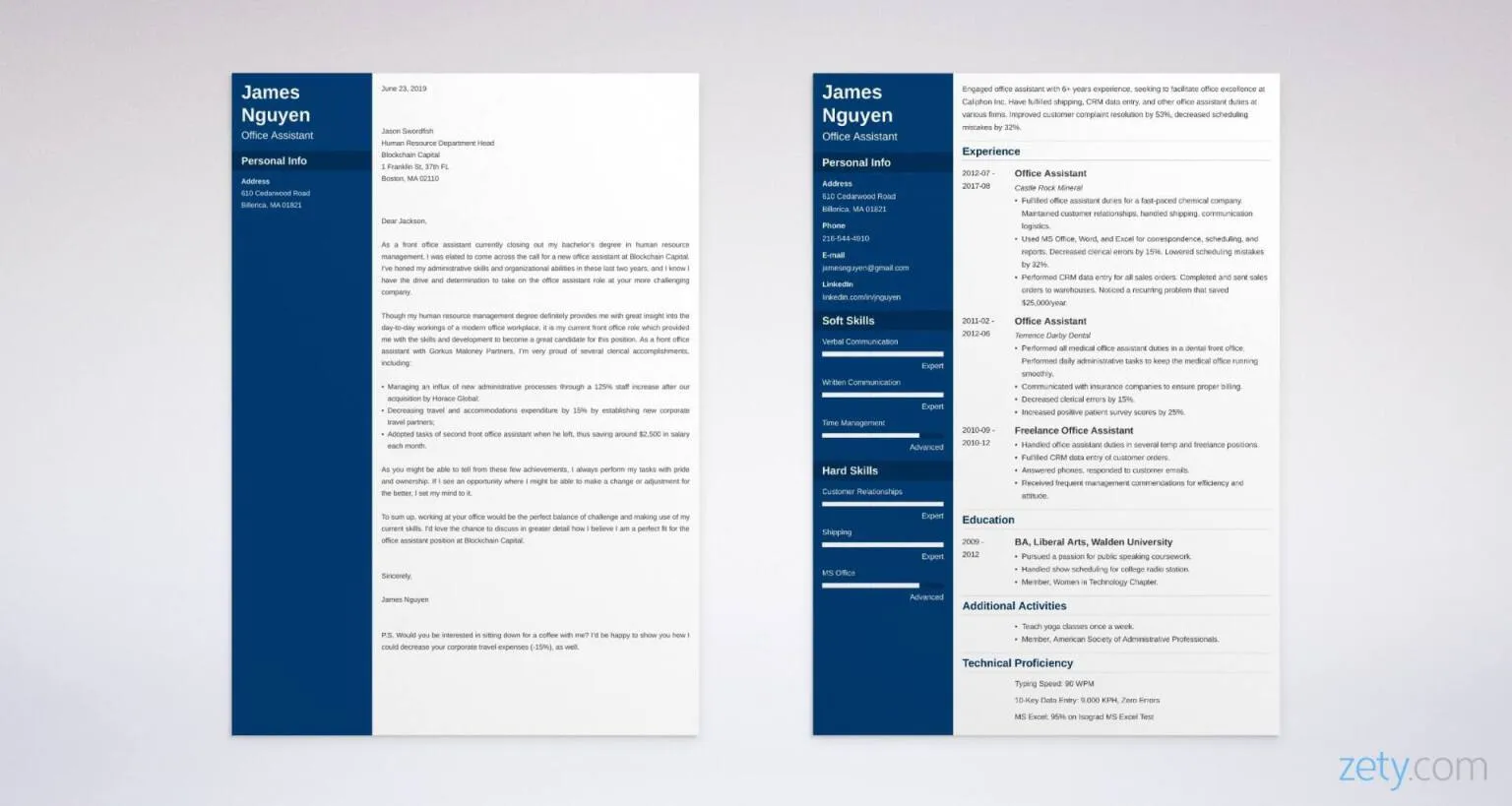
Crafting a Winning Office Assistant Cover Letter
A compelling cover letter is your first chance to make a positive impression on a potential employer. As an office assistant, your cover letter serves as a crucial tool in showcasing your skills, experience, and personality. It’s not just a formality; it’s an opportunity to differentiate yourself from other applicants and demonstrate your suitability for the role. A well-crafted cover letter complements your resume, providing context and highlighting key achievements that make you the ideal candidate. Start by researching the company and tailoring your letter to their specific needs and values. This demonstrates your genuine interest and attention to detail. The tone should be professional yet personable, reflecting your ability to communicate effectively. Remember, your cover letter is a sample of your written communication skills, so ensure it’s clear, concise, and error-free. A strong cover letter can significantly increase your chances of landing an interview and ultimately securing the office assistant position. Don’t underestimate the power of a well-written cover letter; it’s your first step towards a successful application.
Highlighting Your Skills
The skills section is where you showcase the abilities that make you a perfect fit for the office assistant role. Focus on the skills that are most relevant to the job description. This includes both hard skills, such as proficiency in specific software, and soft skills, like communication and organizational abilities. Quantify your achievements whenever possible. Instead of stating you ‘managed phone calls,’ specify ‘managed an average of 50 calls per day, resolving inquiries efficiently.’ Use action verbs to describe your accomplishments. For example, instead of saying you were ‘responsible for’ something, use words like ‘coordinated,’ ‘managed,’ ‘implemented,’ or ‘streamlined.’ This paints a clear picture of your capabilities. Ensure your skills align with the requirements outlined in the job posting. Customize this section for each application, highlighting the skills the employer values most. This shows that you’ve taken the time to understand their needs and are genuinely interested in the position. Think of this section as your personal sales pitch, selling your skills and capabilities.
Communication Skills

Excellent communication skills are fundamental for an office assistant. These encompass both written and verbal abilities, as you will be interacting with colleagues, clients, and vendors regularly. Highlight your ability to clearly and concisely convey information. Mention your experience in writing emails, reports, or memos. Showcase your active listening skills, emphasizing how you understand and respond to inquiries effectively. If you have experience in handling phone calls, describe your phone etiquette and ability to manage a high volume of calls professionally. Mention any experience you have in customer service, as this demonstrates your ability to handle difficult situations with grace and diplomacy. Give specific examples. Instead of saying you have good communication skills, state, ‘Successfully managed client inquiries via phone and email, resulting in a 15% increase in customer satisfaction.’ This provides tangible evidence of your capabilities.
Organizational Abilities
Office assistants must be highly organized to manage multiple tasks and deadlines. Emphasize your ability to prioritize tasks, manage schedules, and maintain efficient filing systems. Highlight your experience in coordinating meetings, managing calendars, and organizing office supplies. Provide examples of how you have improved office organization in previous roles. Describe any systems or methods you have used to stay organized, such as to-do lists, project management software, or color-coding systems. Mention your attention to detail and ability to maintain accuracy in your work. For instance, you could state, ‘Implemented a new filing system that reduced document retrieval time by 20%.’ Show how you can manage projects and keep track of information. Employers value organizational skills, so make this section detailed and compelling to make your application stand out.
Technical Proficiency
Technical skills are increasingly important for office assistants. List the software programs and technologies you are proficient in, such as Microsoft Office Suite (Word, Excel, PowerPoint, Outlook), Google Workspace, or any other industry-specific software. Specify your level of proficiency (beginner, intermediate, advanced). Mention your experience in using office equipment, such as printers, scanners, and photocopiers. Highlight any experience with database management, data entry, or bookkeeping software. If you have experience in any specialized software relevant to the job description, be sure to include that as well. If you are familiar with social media management, mention that too. Be specific in detailing your technical skills, rather than listing them in a general manner. For example, instead of saying, ‘proficient in Microsoft Office,’ state, ‘Advanced user of Microsoft Excel, with experience in creating complex spreadsheets and data analysis.’ Showcasing your technical skills will make you stand out.
Showcasing Your Experience

Your experience section should provide a clear and concise overview of your previous roles and responsibilities. Focus on the positions that are most relevant to the office assistant role, even if it’s an internship. Use action verbs to describe your duties and accomplishments. Quantify your achievements whenever possible. For example, instead of saying you ‘managed’ the front desk, state, ‘Managed front desk operations, greeting an average of 50 visitors daily.’ Highlight any accomplishments that demonstrate your skills, such as improvements in efficiency, cost savings, or successful projects. Tailor this section to the specific requirements of the job description. If the job emphasizes customer service, highlight your experience in this area. Focus on the skills and experiences that align best with the requirements of the position. Include the dates of your employment, the name of the company, and your job title. Provide a brief description of each role and what you accomplished.
Tailoring to the Job Description
Customizing your cover letter to the specific job description is crucial for making a strong impression. Carefully read the job posting and identify the key requirements and skills that the employer is seeking. Use keywords from the job description throughout your cover letter, mirroring the language used by the employer. Highlight the skills and experiences that directly align with the job requirements. Research the company and tailor your letter to their values and culture. Demonstrate that you understand their mission and goals, and that you are genuinely interested in the position. Address your cover letter to a specific person, if possible. This shows that you have taken the time to research the company and are not just sending a generic application. By tailoring your cover letter, you will make it clear that you are a perfect fit for the job and increase your chances of being selected for an interview. Taking the time to personalize your application makes a significant difference.
Formatting and Presentation
The presentation of your cover letter can significantly impact the reader’s impression. Use a professional and easy-to-read font, such as Times New Roman, Arial, or Calibri, with a font size between 10 and 12 points. Maintain consistent formatting throughout the document, including spacing, margins, and bullet points. Use clear headings and subheadings to organize your content and make it easy to scan. Keep your letter concise and focused, typically one page in length. Use bullet points to highlight key skills and achievements, making it easy for the reader to grasp the essential information quickly. Proofread your cover letter carefully for any spelling or grammatical errors. Ensure your letter is well-structured, with a clear opening, body, and closing. A well-formatted and presented cover letter demonstrates your attention to detail and professionalism, making a positive first impression on the employer. Make sure the overall look is clean and visually appealing.
The Importance of Proofreading

Proofreading is a non-negotiable step in the cover letter writing process. Errors in spelling, grammar, or punctuation can undermine your professionalism and credibility. Set aside time specifically for proofreading. Read your cover letter multiple times, slowly and carefully. Consider reading it aloud, as this can help you catch errors you might miss when reading silently. Use spell-check and grammar-check tools, but don’t rely on them entirely; they may not catch all errors. Ask a friend, family member, or career advisor to review your cover letter. Fresh eyes can often spot mistakes you may have overlooked. Ensure consistency in your formatting and language use throughout the document. A polished and error-free cover letter demonstrates your attention to detail and commitment to excellence. A mistake-free letter shows you care about accuracy and professionalism, and will help you make a strong impression on the hiring manager. Take the time to ensure your cover letter is perfect.
Closing Strong
The closing of your cover letter is your final opportunity to leave a lasting impression. Thank the hiring manager for their time and consideration. Reiterate your interest in the position and the company. Express your enthusiasm for the opportunity and your confidence in your ability to contribute to the team. Include a call to action, such as stating that you are available for an interview at their earliest convenience. Provide your contact information, including your phone number and email address. Sign off with a professional closing, such as ‘Sincerely,’ ‘Best regards,’ or ‘Yours faithfully.’ Avoid generic or informal closings. By closing strong, you solidify your application and encourage the hiring manager to take the next step – inviting you for an interview. This last impression is essential to showing them your excitement to work for them.