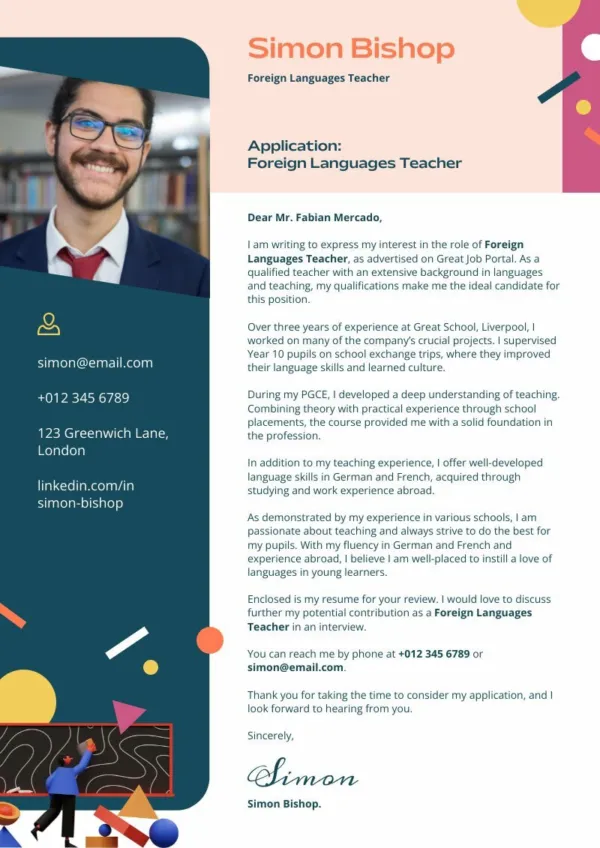
Landing your dream online teaching position starts with a standout cover letter. In the competitive world of virtual education, a well-crafted cover letter is your first chance to make a positive impression on potential employers. It’s more than just a formality; it’s your opportunity to showcase your unique skills, experience, and passion for online teaching. This guide will provide you with actionable tips and strategies to craft a compelling online teacher cover letter that will help you stand out from the crowd and increase your chances of getting hired. Follow these steps, and you’ll be well on your way to securing your ideal online teaching role.
Crafting a Compelling Online Teacher Cover Letter
A compelling online teacher cover letter isn’t just a summary of your resume; it’s a narrative that highlights your suitability for the specific role and the institution. It should be concise, engaging, and tailored to the job description. The goal is to grab the hiring manager’s attention and make them want to learn more about you. Remember that your cover letter is your first impression, and in the world of online teaching, where communication is key, it’s essential to demonstrate your writing skills, attention to detail, and ability to connect with potential employers through written communication.
Understanding the Importance of a Cover Letter
In an online environment, a cover letter serves as your initial introduction, and it is often the first piece of communication that a potential employer will review. It provides context to your resume, offering insights into your personality, teaching philosophy, and how you can contribute to their institution. A well-written cover letter can significantly increase your chances of being selected for an interview, as it allows you to go beyond the basic information listed in your resume. It allows you to personalize your application and highlight your passion for online education.
Highlighting Your Qualifications

When highlighting your qualifications, be specific and provide evidence of your abilities. Don’t just state that you’re a great teacher; show it. The cover letter is where you get to expand on what’s in your resume, providing context and showcasing the real value you bring. Focus on the skills and experiences most relevant to the position. Use keywords from the job description to demonstrate that you’ve read and understood the requirements. Highlight any certifications, degrees, or specializations that make you a strong candidate for the role.
Showcasing Your Experience
Online teaching experience is highly valued, but even if you’re new to the online world, you can still showcase relevant experience. If you have previous experience in a traditional classroom setting, be sure to emphasize how you adapted to the online environment. Highlight any specific online teaching platforms or tools you’ve used, such as Zoom, Google Classroom, or Moodle. If you’ve participated in professional development related to online teaching, mention it. Use the STAR method (Situation, Task, Action, Result) to describe your accomplishments and experiences, providing concrete examples of your impact.
Quantifying Your Achievements
Whenever possible, quantify your achievements. Instead of saying you improved student engagement, state by what percentage. If you developed a new curriculum, mention how many students benefited from it. If you received positive feedback, share the specific comments or the results. Use data and statistics to demonstrate the impact of your work, providing tangible evidence of your effectiveness. Quantifiable results make your achievements more credible and help potential employers understand the value you bring to their team.
Emphasizing Your Skills

The online teaching environment requires a unique set of skills. It is important to highlight them. Focus on the skills the employer mentioned. Think about what you can do for the school. Make sure you mention your ability to adapt. This shows your potential employer you have the skillset needed for the job.
Technical Skills
Online teachers must have strong technical skills. Make sure you are familiar with: Learning Management Systems (LMS) such as Canvas, Blackboard, or Moodle; video conferencing tools such as Zoom, Google Meet, or Microsoft Teams; interactive whiteboards; and other educational software. Also, mention any experience you have with troubleshooting technical issues and providing technical support to students.
Communication Skills
Effective communication is crucial for online teaching. Show off your exceptional written, verbal, and nonverbal communication skills. Make sure to emphasize your ability to provide clear, concise instructions, provide constructive feedback, and build rapport with students and parents online. Highlight your experience in facilitating online discussions, responding to student inquiries promptly, and maintaining open communication with families. Also, make sure to include examples on how you build a classroom atmosphere with respect.
Classroom Management Skills

Online classroom management is a specialized skill. Highlight your experience creating a positive learning environment where students feel supported and engaged. You might highlight your experience with a range of tools and techniques, such as how you utilize breakout rooms, how you monitor student participation, and how you manage disruptive behavior effectively in a virtual environment. Explain how you facilitate student collaboration and promote inclusivity. Also, be sure to provide examples.
Tailoring Your Cover Letter
One of the most common mistakes is using a generic cover letter for every job application. It is very important to tailor the cover letter to each specific position and institution. It takes a little more effort, but it shows the employer that you are genuinely interested in the opportunity and that you have taken the time to understand their needs.
Researching the School or Institution
Before writing your cover letter, research the school or institution. Familiarize yourself with their mission, values, and any specific requirements or preferences they have. Visit their website, read any information on their teaching staff. You can show your interest by highlighting how your skills and experience align with their specific needs and goals. Show that you know their needs by demonstrating that you have a good understanding of their program, curriculum, or teaching style.
Personalizing Your Letter

Personalize your letter by addressing the hiring manager by name. If you can’t find the name, try to find out who the hiring manager is through the school’s website, LinkedIn, or by contacting the institution directly. In the body of the letter, refer to the specific job description and use keywords from the job posting to demonstrate your understanding of the role. Highlight how your qualifications and experience make you an excellent fit for the position. The best way to impress is by showing them you took the time to look into their needs.
Addressing Specific Needs
In your cover letter, address any specific requirements or preferences mentioned in the job description. If the job posting emphasizes experience with a specific platform or teaching methodology, make sure to highlight your relevant skills and experiences. If the institution values a particular teaching philosophy, align your cover letter with those values. By addressing specific needs, you demonstrate your ability to meet the expectations of the role and the institution.
Formatting and Structure
A well-formatted and structured cover letter is easy to read and makes a positive impression. Avoid common formatting mistakes and pay close attention to structure. Make sure your cover letter is visually appealing, and easy to navigate. Use clear headings, concise paragraphs, and bullet points to break up text and highlight important information. This helps the hiring manager quickly grasp the key points of your qualifications and experience.
Using a Professional Tone

Maintain a professional tone throughout your cover letter. Use formal language, avoid slang and jargon, and proofread carefully for any grammatical errors or typos. Your cover letter is a reflection of your professionalism, and you want to present yourself in the best possible light. Make sure to be polite, respectful, and enthusiastic. Also, keep it concise.
Proper Formatting
Use a professional font such as Times New Roman, Arial, or Calibri, with a font size between 11 and 12 points. Use standard margins (1 inch) and single-space the body of the letter. Ensure that your cover letter is visually appealing. Use bolding, italics, or underlining sparingly. Break up the text into logical paragraphs to improve readability.
Proofreading and Editing
Before submitting your cover letter, proofread it carefully for any errors. Typos, grammatical errors, and inconsistencies can damage your credibility. Proofread your letter multiple times, preferably after a break. Ask a friend, family member, or career advisor to review your cover letter. They can provide objective feedback and identify any areas that need improvement. Make sure your writing is perfect before you send it off, as this demonstrates attention to detail.
In conclusion, a compelling online teacher cover letter is your key to making a memorable first impression and securing your ideal teaching position. By following the guidelines and tailoring your letter to each opportunity, you increase your chances of standing out from the competition. Remember to emphasize your qualifications, showcase your experience, highlight your skills, and maintain a professional tone. With a well-crafted cover letter, you’ll be well on your way to success in the exciting world of online education. Good luck!