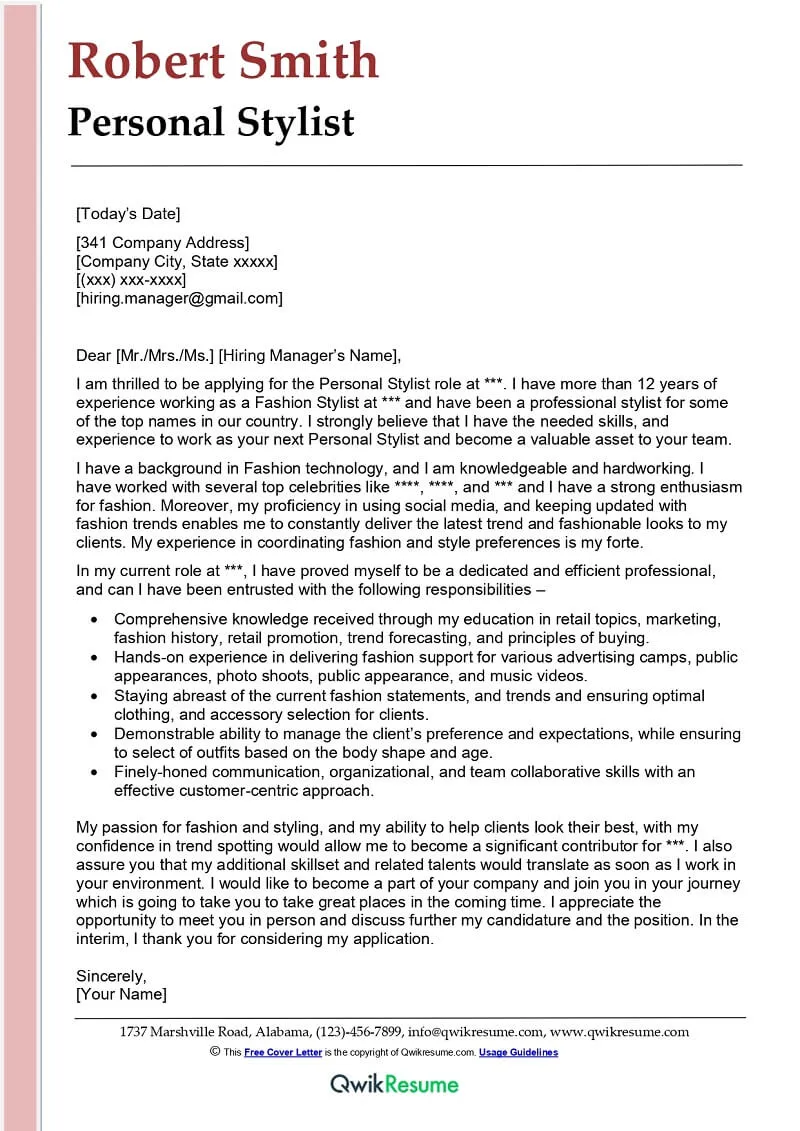
Crafting a Compelling Personal Stylist Cover Letter
A well-crafted cover letter is your first opportunity to make a lasting impression on a potential employer. For a personal stylist, the cover letter is especially crucial, as it’s where you can showcase your personality, style, and understanding of the fashion industry. This guide offers proven tips to help you create a cover letter that not only gets you noticed but also lands you the job of your dreams. From highlighting your experience to tailoring your letter to the specific role, we’ll cover all the essential elements you need to succeed. Remember, the goal is to convince the hiring manager that you’re the perfect fit, both professionally and personally. So, let’s dive into the key strategies for writing a cover letter that truly shines.
Highlighting Your Styling Experience
Your styling experience is the cornerstone of your cover letter. Focus on illustrating your expertise by providing concrete examples of your past successes. Instead of simply listing your responsibilities, delve into what you accomplished in each role. Did you increase client satisfaction? Did you boost sales? Did you streamline any processes? These are the types of achievements that will truly impress a hiring manager. Consider the types of clients you have worked with, the budgets you have managed, and the specific styling challenges you have overcome. The more specific and detailed you are, the better. Use action verbs to describe your contributions and always quantify your results whenever possible.
Quantifying Your Achievements

Numbers speak volumes. When possible, quantify your achievements to make them more impactful. Instead of saying, “I increased client satisfaction,” say, “I increased client satisfaction by 20% through personalized styling consultations.” Or, instead of saying, “I managed a variety of budgets,” state, “I successfully managed client styling budgets ranging from $500 to $5,000, consistently staying within budget and exceeding client expectations.” This will not only demonstrate your capabilities but also provide tangible evidence of your value. Consider using percentages, dollar amounts, or specific metrics to illustrate your successes. This makes your achievements more credible and compelling.
Showcasing Your Personality and Style
As a personal stylist, your personality and style are as important as your technical skills. Your cover letter is your chance to demonstrate your unique approach to styling. Use your letter to reflect your own personal style and aesthetic. Does your style lean towards classic elegance, trendy and bold, or minimalist chic? Let that shine through in your writing. Incorporate your understanding of fashion, your passion for style, and your ability to connect with clients. Consider including examples of how you’ve helped clients find their signature looks or feel confident in their clothing choices. Ensure your tone is professional yet engaging, showcasing your enthusiasm for the industry and the specific role.
Demonstrating Your Knowledge of Fashion Trends
Fashion is ever-evolving, and a strong personal stylist is always aware of the latest trends. Your cover letter is an excellent place to highlight this knowledge. Mention current trends you are knowledgeable about. You can demonstrate your understanding of current fashion trends by referencing specific designers, styles, or seasonal collections that align with the company’s brand. For instance, if the company specializes in sustainable fashion, mention your familiarity with eco-friendly brands and practices. If the role involves styling for a particular demographic, reference trends and styles relevant to that group. Demonstrate your ability to stay informed and adaptable to current fashion landscapes.
Tailoring Your Letter to the Job

A generic cover letter will not impress a hiring manager. Instead, tailor each cover letter to the specific job you are applying for. This requires careful research and a strategic approach. Start by thoroughly reviewing the job description and identifying the key skills and qualifications the employer is seeking. Then, customize your cover letter to highlight the aspects of your experience and personality that align with those requirements. Demonstrate that you understand the company’s brand, target audience, and styling philosophy. This shows you are genuinely interested in the role and understand the company’s values.
Researching the Company and the Role
Before you start writing, research the company and the specific role. Explore the company’s website, social media, and any available press releases to gain a comprehensive understanding of their brand, values, and target audience. Pay close attention to the job description, looking for keywords that highlight the skills and experience the employer values most. Identify any specific styling requirements or client demographics mentioned in the job description. The more you know about the company and the role, the better equipped you will be to tailor your cover letter and highlight your relevant skills and experience.
Matching Your Skills to the Job Description
Once you have researched the company and the role, align your skills and experience with the job description. Identify the key requirements and highlight how your qualifications and achievements meet those needs. Use specific examples to illustrate how your past experiences have prepared you for the role. If the job description emphasizes client communication, provide examples of your excellent interpersonal skills and how you have successfully built relationships with clients in the past. If the role requires knowledge of a specific style, show that you have expertise in that area. By clearly connecting your skills to the job requirements, you will make a strong case for why you are the ideal candidate.
Using Keywords Effectively

To get your cover letter noticed by applicant tracking systems (ATS) and hiring managers, use keywords from the job description strategically. These keywords help highlight your relevant skills and experience. Incorporate keywords into your cover letter naturally. Don’t just stuff keywords into your text; integrate them into your sentences to create a smooth and compelling narrative. Use the keywords throughout your letter, from the introduction to the conclusion. This not only helps you get past ATS filters but also demonstrates that you understand the role and the company’s needs. Review the job description thoroughly and identify the most important keywords to incorporate into your cover letter.
Formatting and Presentation
Your cover letter’s format and presentation are as important as its content. A well-formatted cover letter is easy to read and visually appealing, making it more likely that the hiring manager will pay attention to your message. Choose a clean, professional font, such as Arial or Times New Roman. Use consistent formatting throughout, including the font size, spacing, and margins. Keep your paragraphs concise and easy to read. Break up large blocks of text with bullet points or short, impactful sentences. Always ensure your cover letter is visually clean and professionally formatted. It is also important to save the document in a professional format, such as PDF, before submitting it.
Choosing the Right Tone and Style
The tone and style of your cover letter should match the company’s brand and the role you are applying for. If the company has a formal, corporate culture, your cover letter should reflect that formality. However, if the company has a more relaxed, creative environment, you can adopt a more informal and engaging tone. Regardless of the tone, your cover letter should always be professional and respectful. Use a positive and enthusiastic tone to demonstrate your interest in the role. Proofread your cover letter carefully to eliminate any grammatical errors or typos that could undermine your credibility. Your cover letter should be clear, concise, and easy to read.
Proofreading and Editing for Perfection

Before you submit your cover letter, proofread and edit it meticulously. Errors can create a negative impression and undermine your credibility. Start by carefully reading your cover letter from beginning to end, checking for any grammatical errors, typos, or punctuation mistakes. Then, read your letter aloud to catch any awkward phrasing or unclear sentences. Consider asking a friend or family member to review your cover letter for feedback. A fresh pair of eyes can often spot mistakes that you might miss. Ensure your cover letter is clear, concise, and easy to read. Proofreading will help you ensure that your cover letter is polished and professional.
Making a Strong Impression
To make a strong impression, go beyond simply listing your qualifications. Think of your cover letter as a marketing tool where you present your unique selling points. Highlight your most impressive achievements and tailor them to the specific job requirements. Demonstrate your passion for fashion and your ability to connect with clients. Consider including a brief anecdote that highlights your personality or your ability to solve a challenging styling problem. Show what sets you apart from other candidates. In short, make the hiring manager want to meet you.
Ending with a Call to Action
Your cover letter should always end with a clear call to action. Tell the hiring manager what you want them to do next. For example, you could state, “I am eager to discuss my qualifications further and would welcome the opportunity to interview for this position.” Or, “Thank you for your time and consideration. I am available for an interview at your earliest convenience.” Avoid ending your letter with a passive statement. Instead, clearly express your interest in the position and your willingness to move forward in the hiring process. This will show your enthusiasm and initiative.
Following Up After Submission

After you have submitted your cover letter and resume, follow up with the hiring manager within a reasonable timeframe. This shows your interest and initiative. Send a polite email or make a brief phone call to inquire about the status of your application. Thank the hiring manager for their time and reiterate your interest in the position. If you haven’t heard back within a week or two, it’s acceptable to follow up again. This will ensure your application remains at the forefront of their mind. However, be mindful not to overdo it, as too many follow-ups could be perceived as pushy or unprofessional.