Understanding the Importance of a Project Manager Resume and Cover Letter
In the competitive landscape of project management, a standout resume and cover letter are more than just formalities they’re your first impression and often, the keys to unlocking your next career opportunity. These documents serve as your professional introduction, offering hiring managers a glimpse into your skills, experience, and potential fit within their organization. A well-crafted resume highlights your core competencies, showcasing your ability to manage projects, lead teams, and deliver results. The cover letter, on the other hand, provides an opportunity to personalize your application, demonstrating your enthusiasm for the role and explaining how your unique qualifications align with the company’s needs. Neglecting either of these can significantly diminish your chances of getting an interview. Therefore, taking the time to create compelling and tailored documents is an investment in your project management career.
Key Components of a Strong Project Manager Resume
A strong project manager resume is a meticulously crafted document that immediately captures the attention of potential employers. It starts with a clear and concise presentation of your contact information at the top, followed by a compelling summary or objective that encapsulates your career goals and highlights your most relevant skills. The core of your resume should be the experience section, where you detail your past roles and responsibilities, emphasizing your achievements and quantifiable results. This section should be organized in reverse-chronological order, providing a clear narrative of your career progression. Furthermore, including a dedicated skills section that lists your technical, soft, and project management-specific skills, such as Agile, Scrum, or PMP, is crucial. Finally, a well-formatted education section, including any relevant certifications, rounds out the resume, presenting a complete picture of your qualifications.
Project Manager Resume: Contact Information and Summary

Your contact information should be at the top of your resume, easy to find, and accurate. This includes your full name, phone number, professional email address, and optionally, a link to your LinkedIn profile. Ensure your email address is professional. Following your contact information, include a concise summary or objective statement. The summary provides a snapshot of your skills and experience, tailored to the specific role you’re applying for, such as years of experience and project types. The objective statement is useful if you are a recent graduate or changing careers, outlining your career goals and how they align with the company’s objectives.
Highlighting Skills and Experience
The experience section is where you showcase your accomplishments. For each role, list your job title, the company name, and the dates of employment. Under each position, use bullet points to describe your responsibilities and, more importantly, your achievements. Focus on quantifiable results whenever possible, such as successfully delivered projects on time and within budget, improved team efficiency, or reduced project costs. Tailor these bullet points to match the requirements of the job description, emphasizing the skills and experiences most relevant to the role. Action verbs are essential for creating a dynamic and engaging description of your past roles. Begin each bullet point with a strong action verb (e.g., managed, led, implemented, oversaw).
Project Management Methodologies, Tools and Technologies
In today’s project management landscape, proficiency in various methodologies, tools, and technologies is highly sought after. Be sure to highlight your experience with Agile, Scrum, Waterfall, or Kanban, depending on your expertise. List any project management software you’re familiar with, such as Microsoft Project, Jira, Asana, or Monday.com. Also, mention any other relevant technical skills, like proficiency with data analysis tools or reporting software. This section gives potential employers an overview of your technical capabilities. It’s crucial to align these skills with the specific requirements mentioned in the job description. If the description emphasizes experience with a particular methodology or tool, ensure it’s prominently featured in your skills section.
Quantifying Achievements with Metrics

One of the most critical aspects of a strong project manager resume is quantifying your achievements. Instead of simply listing your responsibilities, provide concrete examples of how you’ve made a positive impact. Use numbers and metrics to demonstrate your successes. For example, instead of writing “Managed project budgets”, state “Managed project budgets, consistently delivering projects under budget by an average of 10%.”. Likewise, when describing team leadership experience, quantify improvements, like “Increased team productivity by 15% within six months.” These types of metrics provide tangible evidence of your capabilities and make your resume more compelling to potential employers. This also differentiates you from other candidates and showcases your ability to deliver results in measurable terms.
Tailoring Your Resume for Each Job Application
A generic resume is unlikely to impress hiring managers. To make your resume stand out, tailor it to each specific job application. Carefully review the job description and identify the key skills, experiences, and qualifications the employer is seeking. Then, customize your resume to emphasize those aspects. This might involve rearranging sections, adjusting the wording of your bullet points, or even adding or removing information. Customizing your resume demonstrates that you’ve taken the time to understand the role and that you possess the specific qualifications the employer is looking for. It’s an important step in showcasing your relevance to the role and will increase your chances of getting an interview. Therefore, always take the time to customize and review your resume before submitting it.
Crafting a Compelling Project Manager Cover Letter
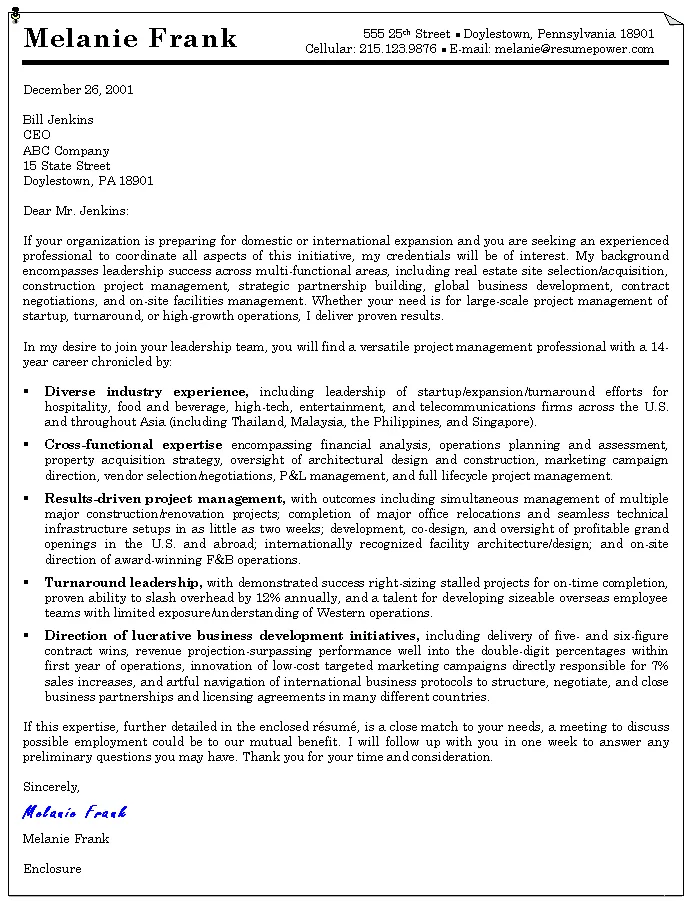
A well-crafted cover letter can be just as important as your resume. It’s your opportunity to introduce yourself, express your interest in the role, and explain why you’re the perfect fit. Unlike your resume, which provides a factual overview of your skills and experience, your cover letter is an opportunity to showcase your personality, enthusiasm, and communication skills. This gives you a space to elaborate on your key accomplishments, to explain how your experience aligns with the company’s needs, and to demonstrate your understanding of the role and the organization. It is also a way to set yourself apart from other applicants and to encourage the hiring manager to read your resume in more detail.
Addressing the Hiring Manager’s Needs

Your cover letter should directly address the needs and requirements of the hiring manager. Study the job description carefully and identify the key qualifications, skills, and experiences that are being sought. In your cover letter, explain how your background aligns with these requirements. Provide specific examples of your accomplishments that demonstrate your ability to meet the needs of the role. This might involve highlighting projects you’ve managed, challenges you’ve overcome, or results you’ve achieved. Be sure to tailor your letter to the specific company, showing that you’ve researched the organization and understand their mission and values. Demonstrating a genuine interest in the role and the company is a surefire way to make a positive impression.
Showcasing Relevant Skills and Experience
Your cover letter is an excellent opportunity to showcase your relevant skills and experience, which should support what is listed on your resume. Avoid simply repeating information from your resume. Instead, use your cover letter to elaborate on specific achievements and provide context. For instance, if the job description emphasizes experience with risk management, you can describe a project where you successfully identified and mitigated potential risks, resulting in a successful project completion. When discussing your experience, relate it to the specific requirements of the job, again using examples and metrics to demonstrate your ability to deliver results. Always aim to illustrate the value you can bring to the organization by highlighting how your skills and experience align with their specific needs.
Formatting and Tone in Your Cover Letter
The format and tone of your cover letter are just as important as its content. Use a professional and easy-to-read format. Address the hiring manager by name, if possible; otherwise, use a generic greeting such as ‘Dear Hiring Manager.’ Keep your letter concise and focused. Aim for no more than one page. Use clear and concise language, avoiding jargon or overly technical terms. Your tone should be enthusiastic and confident, but not arrogant. Proofread your cover letter carefully for any grammar or spelling errors. A well-formatted and error-free cover letter demonstrates your professionalism and attention to detail. It shows the hiring manager that you are serious about the role and willing to put in the effort to create a polished application.
Reviewing and Polishing Your Resume and Cover Letter

Before submitting your resume and cover letter, take the time to thoroughly review and polish these documents. A well-written and error-free application demonstrates your professionalism and attention to detail, significantly increasing your chances of getting an interview. Review all sections, paying close attention to clarity, accuracy, and formatting. Ensure that your contact information is correct, your skills and experience are accurately presented, and your accomplishments are quantified whenever possible. Read the documents aloud, or better yet, have someone else review them. Fresh eyes can often catch errors or areas that need improvement. Make sure to proofread and improve both the resume and cover letter.
Proofreading for Errors and Ensuring Clarity
Proofreading is a crucial step in the job application process. Even minor errors can detract from your qualifications and make you appear unprofessional. Carefully check your resume and cover letter for any spelling, grammar, punctuation, and formatting errors. Read each document multiple times, or use a spellchecker and grammar checker. Consider having a friend, family member, or career counselor review your application. They may catch errors you’ve overlooked. Ensure that the language is clear and concise and that your ideas are well-organized. A polished and error-free application demonstrates your attention to detail and professionalism, which is essential for any project manager. Make sure you proofread everything before submitting it for the job you want to get.
Optimizing for Applicant Tracking Systems (ATS)
Many companies use applicant tracking systems (ATS) to screen resumes before a human even sees them. These systems scan resumes for keywords and phrases related to the job description. To ensure your resume passes the ATS, it’s essential to optimize it for these systems. Review the job description and identify the key skills, keywords, and phrases the employer is seeking. Incorporate these keywords naturally throughout your resume, especially in the skills section, experience section, and summary. Use standard formatting, such as clear headings and bullet points. Avoid using complex tables, graphics, or unusual fonts, as these can sometimes confuse ATS. Save your resume in a common format, such as a .doc or .pdf. Ensuring your resume is ATS-friendly will significantly increase your chances of getting past the initial screening process.
Final Tips for a Standout Project Manager Application

In the highly competitive field of project management, several key tips can help your resume and cover letter stand out from the crowd. First, tailor your documents to each specific job application, emphasizing the skills and experiences most relevant to the role. Second, quantify your achievements whenever possible, using metrics to demonstrate your successes. Include a professional and polished LinkedIn profile, as this is often the first place hiring managers will look to verify your qualifications. Network with industry professionals and seek feedback from career counselors or mentors. Be persistent and don’t get discouraged by rejections. Each application is an opportunity to refine your skills and improve your documents. Taking these steps can substantially increase your chances of landing an interview and ultimately securing your desired project management position.