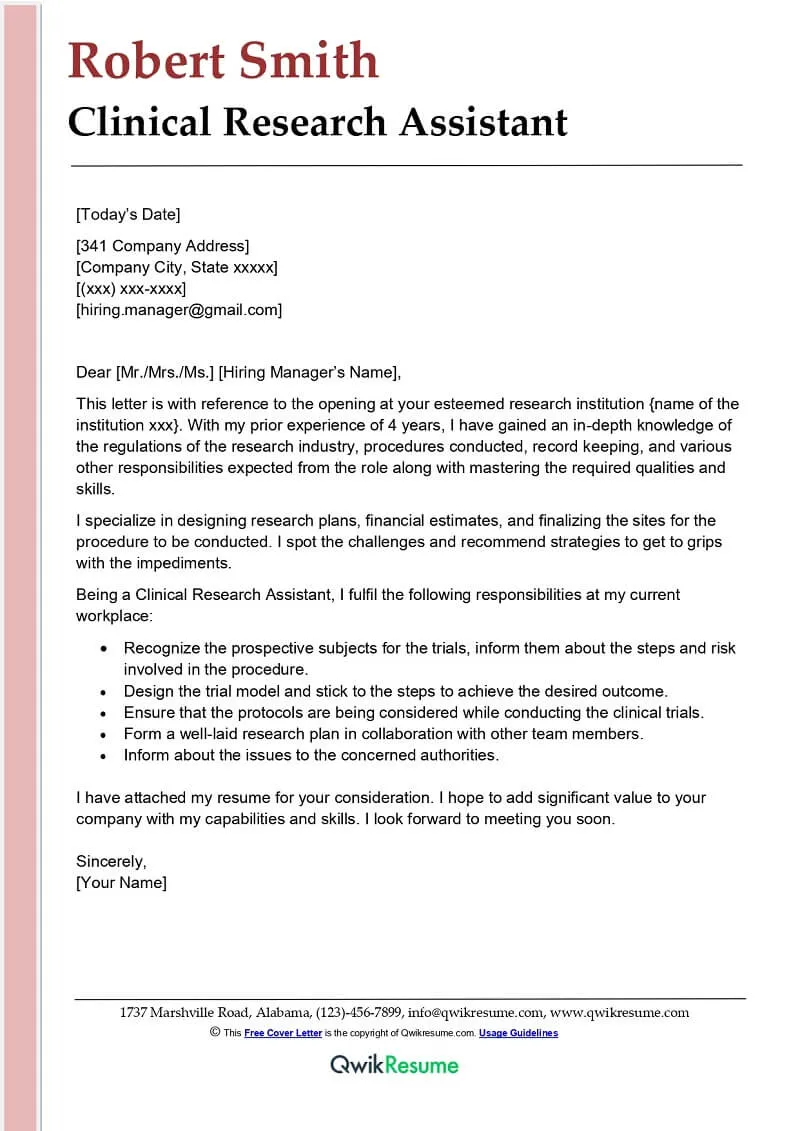
What is a Research Position Cover Letter?
A research position cover letter is a crucial document that accompanies your resume when applying for research-oriented jobs. It serves as your first introduction to a potential employer, providing an opportunity to showcase your qualifications, skills, and enthusiasm for the position. Unlike a resume, which presents a factual overview of your experience, a cover letter allows you to elaborate on your accomplishments, explain your motivations, and demonstrate how your background aligns with the specific requirements of the research role. It’s your chance to make a strong first impression and persuade the hiring manager to read your resume closely. It should be tailored to each position and highlight the most relevant information to capture the attention of the reader.
Key Components of a Strong Cover Letter
A well-crafted cover letter is essential for making a positive impression and increasing your chances of securing a research position. Several key components contribute to its effectiveness. Begin with a professional header containing your contact information, followed by a personalized greeting that addresses the hiring manager by name if possible. The introduction should immediately grab the reader’s attention, stating the specific position you’re applying for and briefly mentioning why you’re interested. The body paragraphs are the heart of the letter, where you elaborate on your qualifications, highlight relevant skills and experience, and explain why you are a good fit for the role. Close with a compelling call to action and express your enthusiasm for the opportunity.
Header and Contact Information

Your cover letter’s header sets the stage for professionalism. Include your full name, address, phone number, and professional email address. Ensure your email address is appropriate and easy to read. Below your contact information, add the date and the recipient’s information, including their name, title, department, and the institution’s address. This section establishes your identity and provides the employer with the means to contact you easily. Accuracy is key here; double-check all details to avoid any errors that could reflect poorly on your attention to detail. A well-formatted header demonstrates your commitment to professionalism and attention to detail, setting a positive tone for the rest of the letter. See research-position-cover-letter-header.webp.
Personalized Greeting
A personalized greeting is a small but impactful touch that shows you’ve taken the time to research the hiring manager. Whenever possible, address the letter to a specific person rather than using a generic greeting like “To Whom It May Concern.” Research the department website or LinkedIn to find the name of the hiring manager or the person in charge of the research team. If you are unsure, a polite “Dear Hiring Manager” is acceptable, but try to find a name to make a stronger connection. Personalizing the greeting demonstrates initiative and attention to detail, making your letter stand out from the stack. The goal is to create a direct connection with the reader from the very start.
Introduction Hook & Stating the Purpose
The introduction is your first chance to grab the reader’s attention. Start with a compelling hook that immediately captures their interest. This could be a brief statement of why you are excited about the position or a quick mention of your relevant experience. Clearly state the specific research position you’re applying for, ensuring there’s no ambiguity. Briefly explain why you are interested in the role and the institution. This initial paragraph sets the tone and gives the reader a glimpse of what to expect, highlighting your enthusiasm and providing a clear purpose for your letter. A strong opening statement immediately demonstrates your understanding of the role and your eagerness to contribute.
Body Paragraph 1 Highlight Your Qualifications

The body of your cover letter is where you showcase your qualifications. In the first body paragraph, highlight your most relevant skills and experience. Focus on the aspects of your background that align directly with the job requirements, emphasizing how your skills and experience make you an ideal candidate. Quantify your accomplishments whenever possible by using numbers and specific examples to demonstrate the impact of your work. This demonstrates that you not only possess the required skills but that you have a proven track record of success. This section provides the essential details that demonstrate your ability to succeed in the role.
Highlight Relevant Skills and Experience
Carefully review the job description and identify the key skills and experience the employer is seeking. Then, in your cover letter, explicitly mention these skills, providing evidence of your proficiency. This is the place to highlight your technical skills, such as statistical analysis, laboratory techniques, or software proficiency. Also, include your soft skills, such as teamwork, communication, and problem-solving abilities. Provide specific examples of how you have used these skills in past research projects or academic settings. This creates a convincing narrative that shows you possess the ability to do the job. Showcasing a combination of both hard and soft skills makes you a well-rounded candidate. See cover-letter-skills-and-experience.webp.
Body Paragraph 2 Showcase Your Research Experience
This is where you dive deep into your research experience. Provide details about your past research projects, emphasizing your role and contributions. Describe the methodologies you used, the results you obtained, and any publications or presentations you have made. If you have experience with specific research areas or techniques relevant to the position, highlight those. Illustrate your ability to conduct research, analyze data, and contribute to a team. Detail your accomplishments within these projects, illustrating your knowledge and expertise in the field. The goal is to demonstrate your readiness to tackle the challenges of this new research opportunity.
Mention Specific Projects and Achievements

Provide specific examples of your achievements in previous research projects. Instead of making general statements about your abilities, provide concrete evidence. Quantify your accomplishments whenever possible. For example, mention the number of experiments you conducted, the percentage increase in efficiency you achieved, or the number of publications you have contributed to. Explain how you contributed to the project’s success and what you learned from the experience. By providing specific, measurable achievements, you demonstrate your ability to make a real impact. Mention any awards, grants, or other recognition you received. See research-projects-and-achievements.webp.
Body Paragraph 3 Explain Why You’re a Good Fit
In this paragraph, connect your skills and experience to the specific requirements of the research position. Explain why you are a good fit by demonstrating your understanding of the research area and the institution. Show that you have carefully considered the role and can envision yourself succeeding in it. Explain how your goals align with the research team’s objectives. This section demonstrates that you are not just applying for any job but that you have a genuine interest in this specific opportunity and the work being done. It’s the place to describe your long-term research goals and aspirations, aligning them with the objectives of the research group.
Demonstrate Knowledge of the Research
To demonstrate your understanding, research the hiring team’s work and the specific projects they are involved in. Mentioning specific publications, projects, or research areas will indicate that you have done your homework and are genuinely interested in the position. Show that you have an informed perspective on the research field and that you can contribute meaningfully. This level of preparation shows initiative and a willingness to learn and grow. Mention any specific methodologies or tools that you are familiar with, and explain how they align with the research needs of the role. See research-position-good-fit.webp.
Body Paragraph 4 Express Enthusiasm and Closing

End your cover letter by expressing your enthusiasm for the opportunity. Reiterate your interest in the position and the institution. Thank the hiring manager for their time and consideration. This should be a clear and confident closing that reinforces your qualifications and your genuine interest in the role. Express your desire to discuss your qualifications further in an interview. Maintain a professional and enthusiastic tone to leave a lasting positive impression. This final paragraph is crucial for cementing the positive impression you’ve built throughout the letter. You want to ensure they remember you and your enthusiasm.
Call to Action and Closing
Include a clear call to action, such as expressing your availability for an interview. Reiterate your contact information if you want. Thank the hiring manager for their time and consideration. Close your letter with a professional sign-off, such as “Sincerely” or “Respectfully,” followed by your typed name. Proofread your cover letter one final time to ensure it is free of errors and is properly formatted. A well-executed closing leaves the reader with a positive final impression. A strong conclusion ensures the reader remembers you and is motivated to contact you. This last section should reinforce your interest and highlight your availability for the interview. The goal is to leave the employer wanting to learn more.
Common Mistakes to Avoid
Several common mistakes can undermine your cover letter and reduce your chances of securing a research position. One of the most significant is neglecting to tailor your letter to the specific job and institution. Using a generic template or failing to address the specific requirements of the position can make your application appear impersonal and unenthusiastic. Another critical error is a lack of proofreading; grammatical errors, spelling mistakes, and typos can create a negative impression and make your application appear unprofessional. Make sure you have a second set of eyes to review the document. The following paragraphs highlight some of the biggest pitfalls to avoid.
Grammar and Spelling Errors

Typos and grammatical errors can immediately damage your credibility. Proofread your cover letter multiple times, preferably with fresh eyes. Utilize spell-check and grammar-check tools, but don’t rely on them entirely; they may not catch all errors. Read your cover letter aloud to help identify awkward phrasing or errors. Have a friend or mentor review your cover letter for any mistakes you might have missed. Errors can be perceived as a lack of attention to detail, and if the research requires attention to detail, it’s important that you show that you are capable of that. Attention to detail is crucial in research. See research-cover-letter-common-mistakes.webp.
Generic Cover Letters
Avoid using a generic cover letter that is not customized for the specific research position. Generic letters show a lack of genuine interest and do not allow you to highlight your relevant skills and experience effectively. Take the time to tailor each cover letter to the specific job description, the research team’s work, and the institution’s goals. Mention specific details from the job description and explain how your skills and experience align with the specific requirements. This demonstrates that you have done your research and are genuinely interested in the opportunity. It also increases your chances of getting the interview. This personalization makes your letter more compelling and significantly increases your chances of success.
How to Tailor Your Cover Letter
Customizing your cover letter is essential for increasing your chances of getting an interview. Start by carefully reviewing the job description. Identify the key skills, qualifications, and experience the employer is seeking. Highlight the specific aspects of your background that align with these requirements. Research the research team or the individual to whom you’re applying to learn about their current projects, publications, and research interests. Mentioning specific projects or research areas demonstrates that you’ve done your homework and are genuinely interested in the opportunity. Using keywords from the job description can also help your application pass through applicant tracking systems. Tailoring your cover letter to each specific role shows the employer that you are serious about the position and have taken the time to consider how your skills and experience align with their needs.
Researching the Hiring Manager

Researching the hiring manager and the research team is an important step in personalizing your cover letter. Find the name of the hiring manager and use a proper greeting. Learn about their research interests, recent publications, and any projects they are currently working on. Mentioning their work in your cover letter demonstrates your interest and initiative. This shows the hiring manager that you are not just applying for any job, but that you are particularly interested in working with them and their team. Review the institution’s website, academic profiles, and LinkedIn to find relevant information. This research is valuable for tailoring your letter and showing your genuine interest in the opportunity. Tailoring your letter increases your chances of an interview.
Formatting and Design Tips
A well-formatted cover letter is easy to read and visually appealing. Use a professional font like Times New Roman, Arial, or Calibri, with a font size between 10 and 12 points. Use single-spaced lines with a space between paragraphs to improve readability. Keep your cover letter concise, ideally one page in length. Break up large blocks of text with bullet points and short paragraphs to make it easy for the hiring manager to scan. Use clear headings and subheadings to organize the content. The overall layout should be clean and professional. A well-formatted cover letter demonstrates your attention to detail and makes a positive first impression. See cover-letter-formatting-design.webp.
Proofreading and Editing Your Cover Letter
Proofreading and editing are crucial steps in ensuring your cover letter is polished and error-free. Check for any grammatical errors, spelling mistakes, and typos. Verify that all names, dates, and contact information are correct. Read the cover letter aloud to catch any awkward phrasing or unclear sentences. Consider asking a friend, mentor, or career counselor to review your letter for feedback. A fresh perspective can help you identify areas for improvement that you might have missed. Proofreading and editing will boost your letter’s professionalism. Before submitting your cover letter, ensure that it is free of any errors and properly formatted. See tailoring-your-cover-letter.webp.