Why Resume and Cover Letter Examples Matter
In the competitive job market, a well-crafted resume and cover letter are your primary tools for making a strong first impression. They are the first points of contact between you and potential employers, and they significantly influence whether you are selected for an interview. Resume and cover letter examples serve as invaluable guides, providing models for structure, content, and formatting. By studying these examples, job seekers can gain insights into how to effectively showcase their skills, experience, and qualifications. Using examples helps to understand how to tailor your application to specific job descriptions and industry standards, ultimately increasing your chances of securing interviews and job offers. Understanding the importance of these documents is the first step in your job search.
Understanding the Power of Effective Resumes
An effective resume is more than just a list of past jobs. It’s a targeted marketing document designed to present your skills and accomplishments in a way that aligns with the requirements of the position you are applying for. It should be easy to read, well-organized, and free of errors. Key elements include a clear summary or objective, a detailed work history with quantifiable achievements, a concise list of skills, and relevant education and certifications. Furthermore, an effective resume uses action verbs to describe responsibilities and accomplishments. An effective resume is not generic; it is tailored to each job application, highlighting the most relevant information. Therefore, using resume examples can help you structure your resume in the best way possible and learn to highlight your strengths to impress the hiring manager.
Crafting a Compelling Resume

Crafting a compelling resume involves more than just listing your past experiences. It requires a strategic approach that emphasizes your value to potential employers. Start by understanding the specific requirements of the job you are targeting. Then, structure your resume to highlight the skills and experiences that align with those requirements. Use a clean and professional format, making sure to use headings, bullet points, and clear fonts to enhance readability. Quantify your accomplishments whenever possible; use numbers and data to demonstrate the impact you made in previous roles. Proofread meticulously to eliminate any errors in grammar and spelling. A compelling resume presents a clear, concise, and impactful overview of your qualifications. It is designed to capture the attention of recruiters and hiring managers and drive them to want to learn more about you and invite you for an interview.
Resume Examples
Resume examples serve as excellent templates for structuring your own resume. By examining well-crafted examples, you can gain a better understanding of how to organize your work history, skills section, and education. They provide insights into the most effective language to use, how to highlight your achievements, and what information to include or exclude. Different industries and job types require different approaches. For instance, a resume for a tech position might emphasize technical skills and projects, while a resume for a marketing role could focus on campaign results and creative skills. Looking at various examples, from entry-level resumes to executive-level profiles, can help you tailor your resume to the specific needs of your target role and industry. Be careful not to simply copy and paste; instead, use the examples to inspire your own unique and tailored document.
Highlighting Skills and Experience
A key aspect of a compelling resume is the effective presentation of your skills and experience. Start by identifying the core skills required for the job you are seeking and those you possess. Group your skills into relevant categories, such as technical skills, soft skills, and industry-specific skills. When describing your work experience, use action verbs to begin each bullet point and focus on your accomplishments rather than just your responsibilities. Quantify your achievements whenever possible to demonstrate the impact you made in your previous roles. For example, instead of saying ‘Managed social media accounts,’ you might say ‘Increased social media engagement by 30% in six months.’ Customize your resume to match the keywords and requirements listed in the job description. Tailoring your resume to the specific job makes it more relevant and increases the likelihood of it being noticed by recruiters.
Formatting and Design Tips

The formatting and design of your resume play a crucial role in capturing the reader’s attention and making your resume easy to read. Choose a clean, professional font, such as Arial, Calibri, or Times New Roman, and use a consistent font size. Use headings and subheadings to break up the text and make it easier to scan. Employ bullet points to list your accomplishments and responsibilities clearly. Maintain ample white space on the page to avoid a cluttered appearance. Consider using a simple, two-column layout if appropriate, but avoid excessive design elements that could distract from the content. Ensure that your resume is easy to read on different devices, including mobile phones and tablets. Consistency in formatting is essential throughout your resume to maintain a professional and organized look.
Common Resume Mistakes to Avoid
Several common mistakes can undermine the effectiveness of a resume. Avoid using generic, outdated objective statements; instead, use a concise professional summary. Ensure your contact information is accurate and up-to-date. Do not include irrelevant information, such as your hobbies unless they are directly related to the job. Proofread meticulously for any grammatical errors or typos, as these can be a significant turnoff for employers. Avoid using overly long paragraphs or sentences, and keep the language clear and concise. Don’t exaggerate your skills or experience, as this can lead to problems during the interview. Finally, do not submit a resume that is poorly formatted or difficult to read. These common pitfalls can be easily avoided by carefully reviewing your resume before submitting it.
The Importance of a Cover Letter
While your resume provides a summary of your skills and experience, a cover letter allows you to provide context and express your interest in a specific job opportunity. A cover letter allows you to introduce yourself, explain why you are a good fit for the role, and highlight your most relevant qualifications. It’s a chance to personalize your application and show your enthusiasm for the position and the company. A well-written cover letter can make a significant difference, especially when applying for competitive positions. It is an opportunity to provide context to your application and explain how your skills align with the job requirements and company culture. Neglecting a cover letter can result in your application being overlooked, even if your resume is strong. Use cover letter examples to understand how to structure your letter to achieve the best results.
Cover Letter Examples

Cover letter examples offer valuable insights into how to structure and write a compelling cover letter. They provide templates and models that you can adapt to your specific needs. Looking at various examples can help you understand how to tailor your letter to the specific job description and the company’s values. Examples can also show you how to effectively highlight your key qualifications, explain your career goals, and demonstrate your interest in the role. Use these examples as a starting point to create your own unique cover letter, ensuring that you tailor the content to the specific requirements of each job. By studying different examples, you can improve your writing and learn how to make a strong impression on potential employers.
Tailoring Your Cover Letter
Tailoring your cover letter to each job application is essential. Start by carefully reading the job description and identifying the key skills and qualifications the employer is looking for. Use the cover letter to showcase how your skills and experience align with these requirements. Mention specific examples of your achievements that demonstrate your ability to succeed in the role. Customize your letter by researching the company and mentioning why you are interested in working there. This demonstrates that you have taken the time to learn about the organization. Proofread your cover letter thoroughly to ensure it is free of errors and tailored to the specific job. Customization shows employers that you are genuinely interested in the position.
Cover Letter Structure and Content
A well-structured cover letter includes an introduction, body paragraphs, and a conclusion. The introduction should state the position you are applying for and how you learned about it. The body paragraphs should highlight your relevant skills and experience, providing specific examples of your achievements. Explain why you are a good fit for the role. The conclusion should reiterate your interest in the position and include a call to action, such as requesting an interview. Content should be concise, professional, and tailored to the specific requirements of the job. Clearly outline your key qualifications and demonstrate how your skills align with the employer’s needs. A well-structured and compelling cover letter can significantly increase your chances of getting an interview and ultimately landing the job.
Cover Letter Mistakes to Avoid

Several common mistakes can diminish the impact of your cover letter. Avoid using generic templates that are not tailored to the specific job. Do not simply repeat information from your resume; instead, provide additional context and highlight your key accomplishments. Ensure your cover letter is free of errors, typos, and grammatical mistakes. Avoid using overly formal or informal language; strive for a professional tone. Do not write a cover letter that is too long; keep it concise and to the point, typically one page. Also, avoid the use of clichés and overly enthusiastic language. Focusing on these areas can significantly improve your cover letter and present you in the best possible light.
Top 5 Resume and Cover Letter Examples
Choosing the right resume and cover letter example is important for job search success. Below are five examples, including resume and cover letter combinations for various job types, that you can use as a starting point for your job search. Each of the following examples should be used as a guide, not a direct template. You must customize them for your own needs.
Example 1 Marketing Resume & Cover Letter
This example highlights a marketing professional’s experience with campaign management, digital marketing, and content creation. It showcases the use of data analytics to track results and optimize strategies, illustrating the candidate’s analytical skills. The resume format is modern and easy to read, with clear sections for skills, experience, and education. The cover letter emphasizes the candidate’s ability to drive results and their passion for the company’s brand. The combination demonstrates the candidate’s ability to not only understand marketing principles, but also show the application of them in practice.
Example 2 Tech Resume & Cover Letter

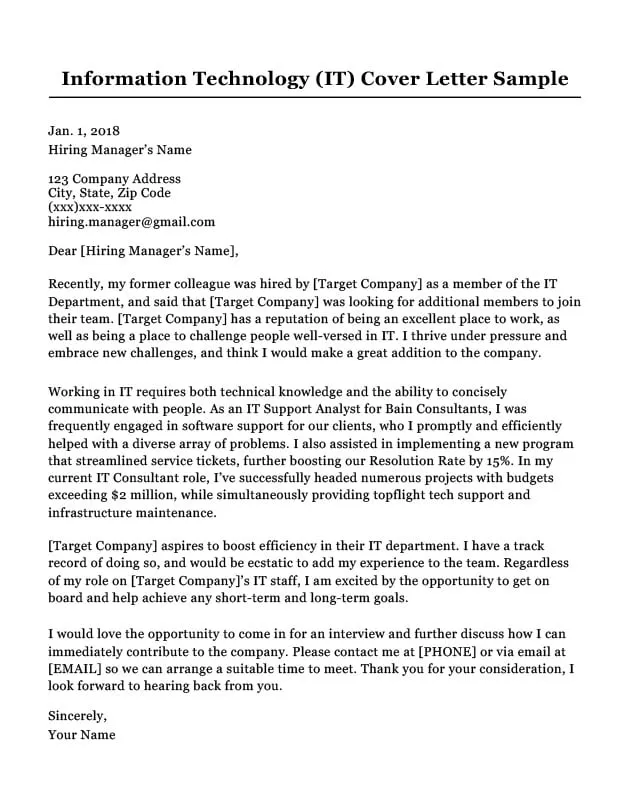
This tech-focused example features a technical resume and cover letter that highlights skills in software development, cybersecurity, and IT infrastructure. The resume emphasizes projects, certifications, and specific programming languages, highlighting the candidate’s technical expertise. The cover letter demonstrates the candidate’s understanding of the company’s technological challenges and explains their relevant experience and problem-solving skills. These examples are structured to attract the attention of hiring managers in the tech industry and provide the candidate with every opportunity to showcase their experience.
Example 3 Healthcare Resume & Cover Letter
This example presents a resume and cover letter tailored for healthcare professionals, featuring experience in patient care, medical administration, and healthcare management. The resume includes sections for clinical skills, professional licenses, and certifications. The cover letter highlights the candidate’s compassion, communication skills, and commitment to providing excellent patient care. The cover letter also mentions the candidate’s familiarity with healthcare regulations. The combination demonstrates professionalism and empathy, which are essential traits in the healthcare sector. The resume focuses on relevant skills and experience, while the cover letter highlights the applicant’s commitment to patient care.
Example 4 Entry-Level Resume & Cover Letter
This example is designed for recent graduates or individuals with limited work experience, featuring a resume focused on education, internships, and relevant coursework. It highlights transferable skills, such as communication, teamwork, and problem-solving. The cover letter explains the candidate’s career aspirations and demonstrates their enthusiasm for learning and growing in the role. The focus is on showcasing potential rather than extensive experience. By using clear and concise language, this example is perfect for entry-level job seekers.
Example 5 Management Resume & Cover Letter

This example features a resume and cover letter for experienced managers, highlighting leadership abilities, strategic planning, and team management skills. The resume includes sections for key accomplishments, project leadership, and quantifiable results, demonstrating the candidate’s impact. The cover letter emphasizes the candidate’s ability to drive business growth and improve team performance. The combination demonstrates leadership qualities and a track record of success. The focus is on the candidate’s ability to manage teams, and show their knowledge of the field.
Tips for Customizing Examples
When using resume and cover letter examples, it is essential to customize them to fit your specific needs. Start by replacing the example information with your own details, including your work history, skills, and education. Tailor the language and content to match the job description and the requirements of the role. Be sure to use keywords from the job posting to increase your chances of getting noticed by applicant tracking systems (ATS). Proofread your documents carefully to eliminate any errors in grammar and spelling. Be sure to include a personalized touch by including specific details about why you are interested in the company and the role. Customizing the examples for your own use ensures the documents accurately reflect your experience and increase your chances of success.
Where to Find More Examples
Numerous online resources offer a wealth of resume and cover letter examples. Websites like Indeed, LinkedIn, and Resume.io provide templates and examples tailored to various industries and job titles. CareerBuilder and Monster also offer numerous examples and resume builders. Professional resume writing services often provide examples on their websites or offer them as part of their services. Be sure to use these resources to tailor your documents to the specific job that you are applying for.
Using Examples for Career Success

Leveraging resume and cover letter examples is a strategic approach to enhancing your career prospects. By studying these examples, you can learn best practices for structuring your documents, showcasing your skills, and highlighting your achievements. They serve as a valuable source of inspiration and guidance, helping you to create applications that stand out to potential employers. Using examples in your job search helps you tailor your materials to specific roles and industries. By customizing these examples and making them your own, you can increase your chances of securing interviews and landing your dream job. Taking advantage of these valuable resources is a key component in your overall career success.