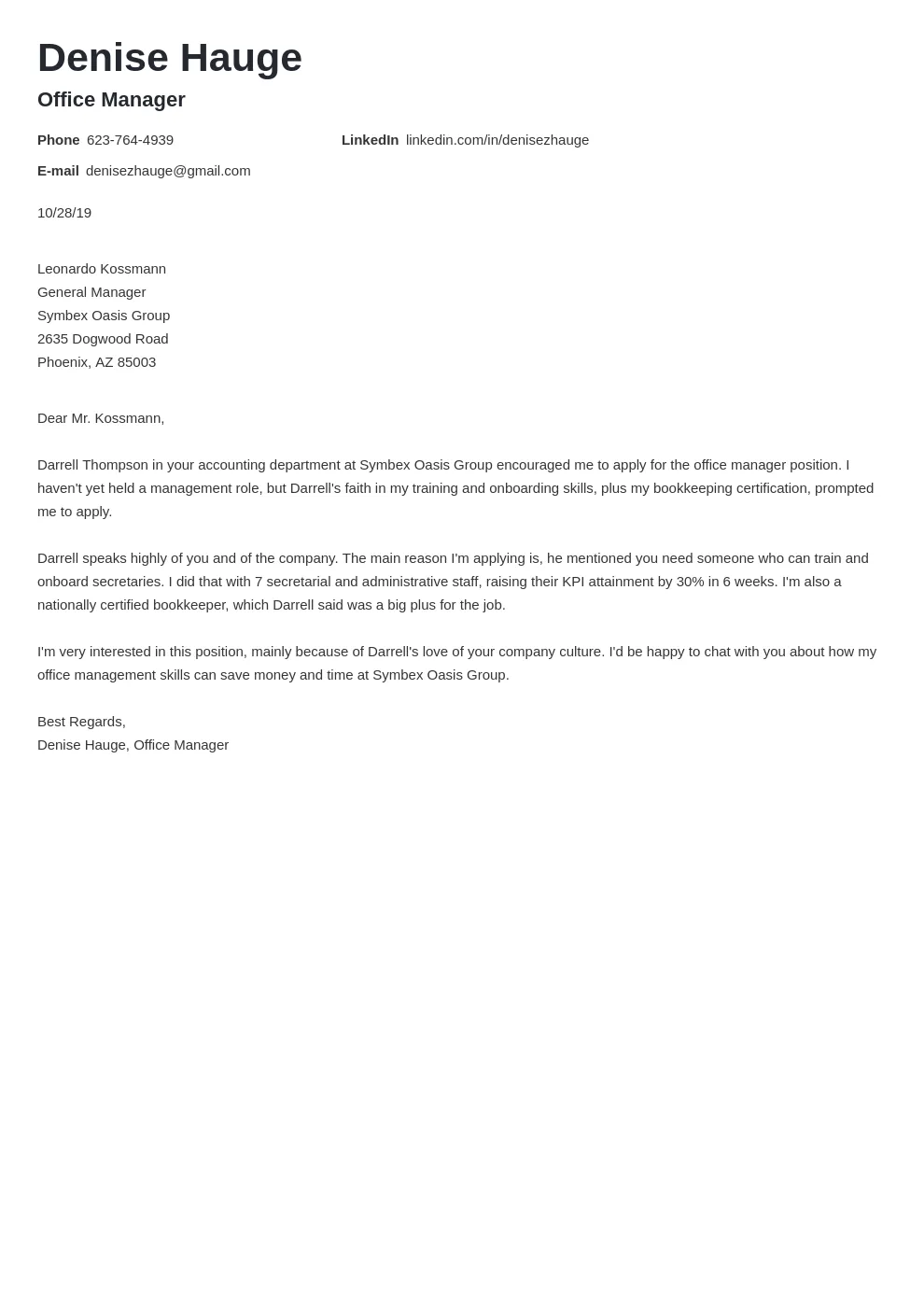
Understanding the Importance of a Management Resume Cover Letter
In the competitive landscape of management job applications, a well-crafted resume cover letter is your crucial first impression. It’s not merely a formality; it’s a powerful tool that can significantly influence whether you secure an interview. A cover letter serves as an introduction, a platform to showcase your personality, and an opportunity to connect your skills and experience directly to the specific requirements of the job. It’s a chance to go beyond the bullet points of your resume and tell a compelling story about why you are the ideal candidate. A strong cover letter can set you apart from other applicants, demonstrating your genuine interest in the role and the company, which can be the difference between landing an interview and being overlooked. A well-written cover letter can transform your application from generic to personalized and from unmemorable to impactful. A cover letter allows you to highlight your key accomplishments that are relevant to the job.
Key Components of a Management Cover Letter
Header Section

The header section is the foundation of your cover letter, providing essential contact information and setting a professional tone. It’s the first thing a hiring manager sees and should be clean, organized, and easy to read. Think of it as your digital business card. Ensure that all information is accurate and up-to-date. This section should be the first thing a hiring manager sees, setting the stage for the rest of the letter. The header’s attention to detail is a subtle indication of your organizational skills and professionalism – qualities that are highly valued in management roles. A polished header demonstrates that you pay attention to details, a crucial skill for any management position. Include your name, address, phone number, and email address. Consider using a professional font for consistency. See image: management-cover-letter-header
Your Contact Information
Begin with your full name, followed by your complete address, phone number, and professional email address. Use a clear and easy-to-read font like Arial or Times New Roman, and ensure the font size is between 10 and 12 points for optimal readability. Verify that the phone number is correct and the email address is professional. Avoid using nicknames or unprofessional email addresses. Your contact information should be readily accessible and easy to spot at the top of the page. Correct contact information helps the recruiter to reach you if they are interested in your application, it is important to make sure that you are reachable and responsive.
Recipient’s Contact Information
Directly below your information, include the recipient’s details. If possible, address the letter to a specific person, such as the hiring manager or the recruiter, to demonstrate personalization. If the name is not available, you may use a generic title such as ‘Hiring Manager.’ Include the company’s name, the department, and the full address. If you know the name of the person, it shows that you have done your research and are genuinely interested in the position. Addressing the letter to a specific person can increase the chances of it being read and considered seriously, rather than being filed away with generic applications. If you don’t know the person’s name, research the company to find the contact information.
Professional Salutation

Start your cover letter with a professional salutation. If you know the hiring manager’s name, use “Dear Mr./Ms./Mx. [Last Name].” If the name is unavailable, use “Dear Hiring Manager” or “Dear [Company Name] Hiring Team.” Avoid overly casual greetings. Use a professional and respectful tone to set the right mood. A well-chosen salutation shows attention to detail. The salutation immediately sets the tone of your letter. A professional salutation shows respect and a clear understanding of workplace etiquette. Avoid using informal greetings like “Hi” or “Hello.” It’s important to be formal and polite to make a positive first impression.
Body Section
The body of your cover letter is where you make your case, highlight your value, and convince the hiring manager that you are the right fit for the job. This section should be well-structured, persuasive, and tailored to the specific requirements of the management role. The body should provide specific examples of your past experiences and accomplishments. It’s important to maintain a clear and professional tone, and to showcase your achievements and align them with the needs of the position. The body should consist of three paragraphs. See image: resume-cover-letter-examples
Opening Paragraph
Start with a compelling opening that immediately grabs the reader’s attention and clearly states the position you are applying for. Briefly mention where you saw the job posting and express your strong interest in the role. Make it clear why you are excited about this opportunity, and show some knowledge about the company or the industry. Show your enthusiasm for the role. A strong opening paragraph sets the tone for the rest of your cover letter. A strong opening makes an immediate impression by grabbing the reader’s attention. Clearly stating the position you are applying for is important to help the reader to quickly understand the purpose of your letter.
Highlight Your Value Proposition

In this section, demonstrate your understanding of the company’s needs and how your skills and experiences align with them. Explain what you bring to the table and what unique value you offer. This is your chance to differentiate yourself from other candidates by showcasing what makes you the best fit for the role. Mention specific contributions you can make, and focus on what you can do for the company. Show them why they should hire you. Highlight your understanding of the company’s goals and demonstrate how your skills and experience match their requirements. Identify your core strengths and explain how they will benefit the company. It is also a good idea to list your skills.
Showcase Relevant Skills and Experience
Use this section to highlight your relevant skills and experiences. Provide concrete examples that support your claims and demonstrate how you’ve used your skills to achieve results. Tailor this section to the job description, emphasizing the skills and experiences that match the requirements. The key is to highlight specific achievements that demonstrate your skills. Show how your accomplishments match the job requirements. Support your claims with evidence. This section gives you the chance to show how you have used those skills. Providing specific examples of past achievements is critical to making your case. Ensure that the skills and experiences you highlight match those that the employer is looking for.
Quantify Achievements
Instead of simply listing responsibilities, quantify your achievements whenever possible. Use numbers and data to demonstrate the impact of your work. For example, instead of saying “Managed a team,” say “Managed a team of 15 employees, increasing productivity by 15%.” Quantifying your achievements makes your accomplishments more compelling and demonstrates your ability to deliver results. Using numbers is a powerful way to showcase your achievements. The more specific you are, the more impact your cover letter will have. Highlighting your accomplishments will make your cover letter stand out and demonstrate your effectiveness in previous roles. See image: management-resume-skills
Call to Action and Closing

End your cover letter with a clear call to action and a professional closing. Reiterate your interest in the position and express your enthusiasm for the opportunity to discuss your qualifications further. Thank the hiring manager for their time and consideration. Include a call to action that invites the recruiter to contact you for an interview. A well-crafted call to action indicates your enthusiasm and proactive approach. A professional closing leaves a positive impression and reinforces your suitability for the role. Close by restating your interest in the position. This is your opportunity to thank the hiring manager for their time and to reiterate your interest in the position. Your closing should be professional and show genuine gratitude for the opportunity.
Formatting and Design Best Practices
The formatting and design of your cover letter play a significant role in its readability and overall impression. A well-formatted letter is easy to read and visually appealing, which keeps the reader engaged. Focus on creating a clean and professional look to enhance the letter’s appeal. A cover letter should be easy to read and visually appealing. Consistency is crucial. See image: cover-letter-formatting
Font and Readability
Choose a professional and easy-to-read font like Arial, Times New Roman, or Calibri. Maintain a consistent font throughout the document. Use a font size of 10 to 12 points for body text and 12 to 14 points for headings. Avoid overly decorative fonts that can distract from the content. Ensure the font is clear and legible. A well-chosen font will make your cover letter more readable and professional. The use of a clean font will not distract from your content. Consider a font size that is easy on the eyes. See image: cover-letter-font-readability
White Space and Visual Appeal

Use white space effectively to improve readability. Leave ample margins (1 inch on all sides). Use line spacing of 1.15 or 1.5 to create space between the lines of text. Avoid dense blocks of text. Break up paragraphs and use bullet points to highlight key information. White space helps guide the reader’s eye and makes the document more inviting. Using white space in your cover letter will prevent the document from looking crowded and will make it more visually appealing. Ensure your formatting is clean and consistent. White space will create an easy-to-read document.
Proofreading and Editing
Before submitting your cover letter, proofread it carefully for any errors in grammar, spelling, and punctuation. Double-check all names, dates, and contact information. Ask someone else to review your letter for a fresh perspective. Errors can undermine your credibility. Proofreading demonstrates attention to detail. Even small errors can damage your application. See image: proofreading-cover-letter
Tailoring Your Cover Letter
Customizing your cover letter for each job application is essential. A generic cover letter will not stand out, while a tailored one demonstrates your genuine interest and research. Take the time to understand the specific needs of the job and the company. Personalizing your cover letter for each role demonstrates your genuine interest and research. Tailoring your letter is a critical step in increasing your chances of landing an interview. Tailor your cover letter to each specific job. Personalization shows that you have researched the company and that you are truly interested in the role.
Matching the Job Description

Carefully read the job description and identify the key requirements and skills. Highlight how your experiences and skills match these requirements. Use keywords from the job description throughout your cover letter. Customize your cover letter for each job application by emphasizing the skills and experiences listed in the job description. Tailor your resume to each job, and make sure that your skills are reflected in the document.
Researching the Company
Before writing your cover letter, research the company’s mission, values, and recent projects. Demonstrate your knowledge of the company and explain why you are interested in working there. Show that you understand the company’s goals. Research the company to understand their mission and values. Personalizing your cover letter to the company will increase the likelihood of the recruiter calling you for an interview.
Keywords and ATS Optimization
Many companies use Applicant Tracking Systems (ATS) to screen applications. To ensure your cover letter is seen by a human, include relevant keywords from the job description. Use these keywords naturally throughout your letter, but avoid keyword stuffing. Make sure that the important keywords are included in the document to prevent your application from being filtered out by an ATS. Optimize your resume with the necessary keywords. See image: ats-optimization-cover-letter
Common Mistakes to Avoid

Avoiding common mistakes is crucial to making a positive impression and ensuring your cover letter doesn’t undermine your application. These mistakes can range from using generic content to exceeding the length limit. Awareness of the most frequent errors can help you improve your cover letter and increase your chances of being noticed by employers. Make sure you do not include common mistakes that can hinder your application. By avoiding common mistakes, you can enhance your professionalism and increase your chances of success.
Generic Content
Avoid using generic content that could apply to any job or company. Tailor your cover letter to the specific requirements of the job. Customize your content and demonstrate your genuine interest in the position. Tailor your cover letter to the specific job application. Ensure the document is personalized so that your application is more likely to be read. Your content should be unique and specific to the role and the company. Avoid the use of generic content.
Typos and Grammatical Errors
Typos and grammatical errors can make you look unprofessional and can signal a lack of attention to detail. Always proofread your cover letter multiple times and ask someone else to review it. Proofreading demonstrates attention to detail. Typos and grammatical errors can undermine your credibility and make you look careless. Avoid making mistakes by reviewing the document multiple times. Correcting such errors shows your attention to detail and commitment to accuracy.
Exceeding Length Limits
Keep your cover letter concise and to the point. Aim for one page, unless specifically instructed otherwise. Recruiters and hiring managers often have a limited time to review applications, so it’s important to make your letter easy to read and focused. Keeping the cover letter to one page maximizes the chances of it being read in its entirety. Keep your cover letter concise. Aim for one page to grab the hiring manager’s attention. Be precise and to the point.
Finalizing and Submitting Your Cover Letter
The final steps in preparing your cover letter involve ensuring that it is properly formatted and ready for submission. Proper formatting and submission procedures can significantly impact your application’s success. Ensure the document is ready to submit. Your final steps should reflect your attention to detail. The format and submission of your cover letter can impact its effectiveness.
Saving as a PDF
Save your cover letter as a PDF file to ensure that the formatting remains consistent across different devices and operating systems. A PDF file will prevent any layout issues. Saving your cover letter as a PDF will help preserve the formatting. This will make sure that the document will appear as you designed it, regardless of the recipient’s software or operating system. Ensure your cover letter is saved correctly.
Sending via Email or Application Portal
Follow the instructions provided in the job posting for submitting your cover letter. If sending via email, attach the PDF file and include a brief, professional email subject line. If using an online application portal, ensure you upload the correct file type and follow all provided instructions. Proper submission is crucial to ensure your application is considered. Be sure to follow all provided instructions when submitting your application. Follow the instructions provided to prevent any issues. See image: submit-cover-letter