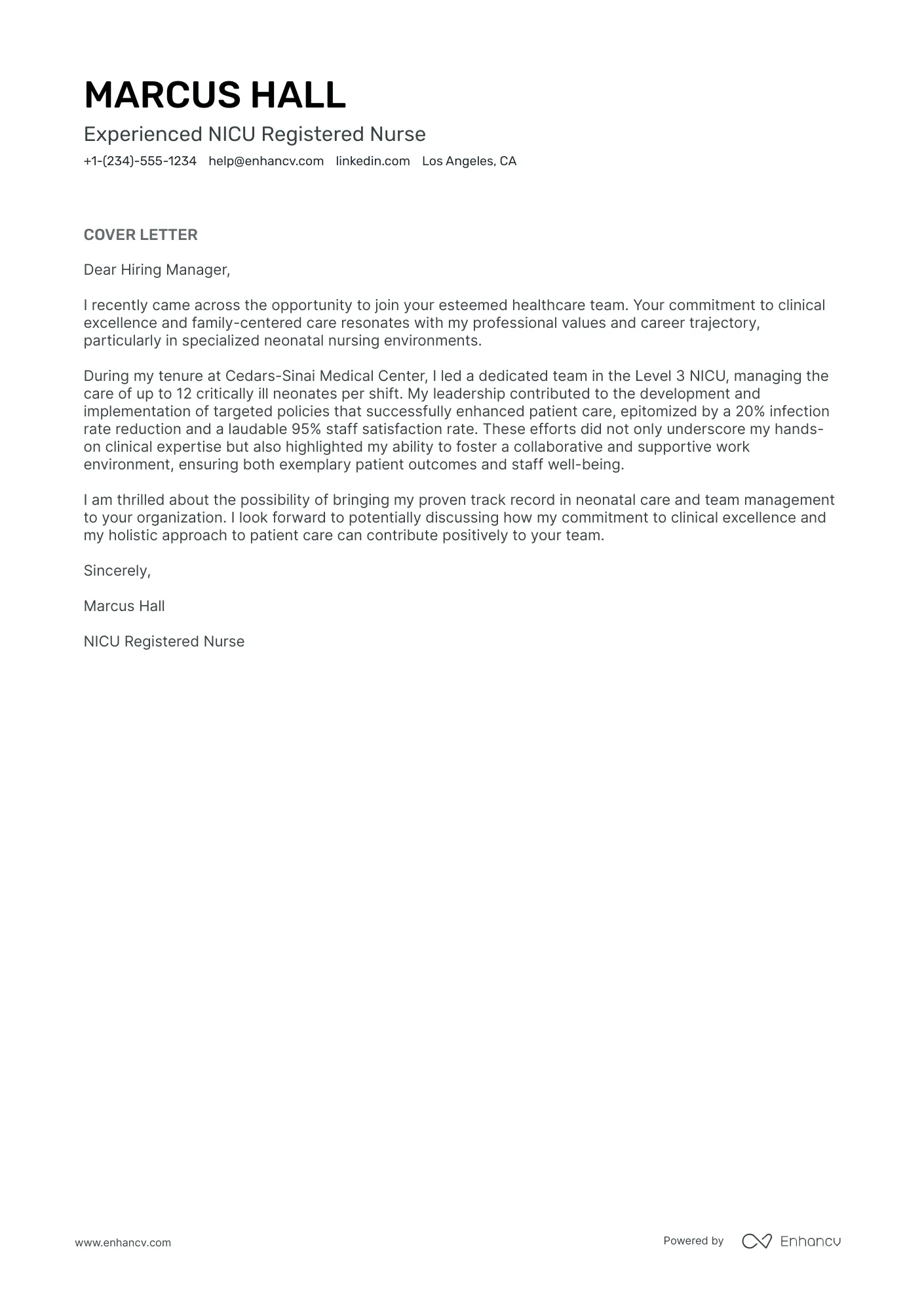
Understanding the RN Cover Letter
A Registered Nurse (RN) cover letter is a crucial document when applying for nursing positions. It serves as your first introduction to a potential employer, allowing you to showcase your qualifications, skills, and experience in a more personalized way than a resume. A well-crafted cover letter highlights your enthusiasm for the role and demonstrates your understanding of the specific requirements of the job and the healthcare organization. It’s your opportunity to make a positive first impression and persuade the hiring manager to review your resume and consider you for an interview. A strong cover letter complements your resume by providing context and depth, explaining why you are the ideal candidate for the position.
Key Components of an RN Cover Letter
To create an effective RN cover letter, understanding its key components is essential. These components work together to present a compelling case for your candidacy. Each section of the letter should be carefully crafted to reflect your professionalism, skills, and suitability for the role. The goal is to provide a clear and concise overview of your qualifications and to express your enthusiasm for the position and the healthcare facility. Here’s a breakdown of the core elements to include.
Your Contact Information and Date

Start your cover letter by including your contact information at the top, including your full name, phone number, email address, and mailing address. Following this, add the date. This ensures the employer knows how to reach you and when the letter was written. This section is about providing easily accessible contact information for the hiring manager.
Hiring Manager’s Information
Address the letter to the hiring manager by name. If possible, research and find out the name of the person responsible for hiring RNs. Addressing the letter directly shows that you have taken the time to research the company and the specific role. If you cannot find a name, use a professional greeting such as “Dear Hiring Manager”. Personalization demonstrates your initiative and attention to detail.
Professional Greeting
Begin your letter with a professional greeting. As mentioned before, using the hiring manager’s name is a good idea. Avoid generic greetings like “To Whom It May Concern.” This sets a tone of professionalism and respect from the outset.
Highlight Your Qualifications

Use this section to briefly state the position you are applying for and your source of information about the job. Then, provide a concise overview of your nursing qualifications and experience. Mention your RN license and any relevant certifications. Briefly mention your years of experience in the field, and the type of experience you have. This section gives the hiring manager a quick snapshot of your suitability.
Showcase Your Skills and Experience
Go into more detail about your skills and experience, aligning them with the job description. Highlight the skills that match the requirements of the specific nursing role. Focus on the skills that are most relevant. For instance, if the job description emphasizes patient care or ICU experience, showcase these skills. Mention your experience in different healthcare settings, such as hospitals, clinics, or long-term care facilities, if applicable. Provide specific examples and quantify your achievements whenever possible.
Quantify Your Achievements
Whenever possible, quantify your accomplishments using numbers and data. This gives the hiring manager concrete evidence of your abilities. For instance, you might state, “Managed a team of 10 nurses, improving patient satisfaction scores by 15%.” Use metrics to demonstrate your impact on patient outcomes, team performance, or operational efficiency. The more quantifiable data you include, the stronger your cover letter will be. See the image to see how to demonstrate impact.
Express Your Interest and Enthusiasm

Clearly express your interest in the position and the healthcare organization. Explain why you are excited about the opportunity and what attracts you to the role. State your reasons for wanting to work at the specific hospital or clinic, showing that you have researched their mission, values, and reputation. Demonstrate your genuine enthusiasm for nursing and your commitment to patient care.
Demonstrate Your Knowledge of the Role
Demonstrate that you understand the responsibilities of the role by referencing the job description and aligning your skills and experience accordingly. Mention specific tasks or duties that you are experienced in performing. This shows that you are a good fit for the position and understand what is expected. Tailor your cover letter by mentioning how your skills align with the requirements of the role.
Tailor Your Letter to the Job
Customize your cover letter for each job application by carefully reviewing the job description and highlighting the skills and experiences that are most relevant. Use keywords from the job description to demonstrate that you meet the specific requirements. Avoid using a generic cover letter and instead, tailor it to showcase why you are uniquely qualified for the role.
Proofread and Edit Your Letter

Always proofread your cover letter carefully before submitting it. Check for any grammatical errors, spelling mistakes, or typos. Have someone else review your letter to catch any errors you may have missed. Ensure that your cover letter is well-written, polished, and free of errors. Take the time to refine your cover letter for a professional presentation.
The Importance of a Strong Closing
Your closing should be just as impactful as your introduction. A strong closing reinforces your interest in the position, expresses gratitude, and provides a clear call to action. The way you conclude your cover letter can leave a lasting impression on the hiring manager and increase your chances of landing an interview. See the image below on what to include.
Express Gratitude
Thank the hiring manager for their time and consideration. Express your appreciation for the opportunity to be considered for the position. Show your gratitude by thanking the hiring manager for their time and acknowledging them for considering your application. Conclude your cover letter by thanking them for considering your application and for their time.
Formal Closing and Signature

Use a professional closing such as “Sincerely” or “Respectfully.” If submitting a digital copy of your cover letter, type your full name below the closing. If you are printing your letter, leave space for a handwritten signature above your typed name. A professional and formal closing enhances the overall presentation of your cover letter.
5 Tips for a Standout RN Cover Letter
To create a standout RN cover letter, here are five essential tips that can make your application more compelling. Implementing these tips will help you differentiate your application and increase your chances of securing an interview. Follow these for the best results. See the image to start.
Research the Hospital or Clinic
Before writing your cover letter, research the hospital or clinic where you are applying. Understand their mission, values, and any recent achievements or initiatives. This research allows you to personalize your cover letter and demonstrate your genuine interest in the organization. Mention specific aspects of the hospital’s mission or values that resonate with you. Show that you understand their priorities and are aligned with their goals.
Use Action Verbs

Use action verbs to start your sentences and make your descriptions more dynamic. Action verbs bring your accomplishments to life and show your active involvement in your previous roles. Instead of saying “Responsible for patient care,” use phrases like “Administered medication to patients” or “Managed patient care plans.” This helps to demonstrate your practical abilities and the value you bring to your team.
Emphasize Relevant Experience
Focus on the skills and experiences that are most relevant to the job description. Tailor your cover letter to highlight experiences that align with the role’s requirements. If the job description requires experience in a specific area of nursing, such as ICU or oncology, be sure to emphasize that experience. This helps you show that you meet the needs of the role and understand the key requirements.
Keep It Concise and Focused
Keep your cover letter concise and to the point. Hiring managers are busy, so it’s important to get your key points across quickly. Aim for a letter that is no longer than one page. Focus on the most important details and avoid unnecessary information. A concise cover letter keeps the hiring manager engaged and helps you get your key qualifications across.
Proofread Carefully
Proofreading your cover letter is essential to ensure it is free of errors. Typos, grammatical errors, and spelling mistakes can undermine your credibility. Proofread the letter multiple times and have someone else review it before submitting it. This demonstrates your attention to detail and professionalism.
RN Cover Letter Examples
Seeing examples of RN cover letters can provide valuable guidance. Reviewing different examples will help you understand how to structure your letter effectively and showcase your qualifications. Use these examples as a starting point, tailoring them to reflect your own experiences and the specific requirements of the positions you are applying for. Here are three examples.
Example 1 Experienced RN
An experienced RN cover letter should highlight years of experience, specialized skills, and accomplishments. This will show the hiring manager your ability to manage teams and contribute to patient care. The cover letter should clearly state the number of years of experience you have and the specific roles you have held. Include details about any leadership roles you’ve had and any specific achievements, such as implementing new patient care protocols.
Example 2 New Grad RN
A new grad RN cover letter should focus on educational background, clinical experience, and any relevant skills. If you do not have years of experience to showcase, focus on your clinical rotations, academic achievements, and any volunteer experience that demonstrates your commitment to nursing. Highlight skills learned during clinical rotations, such as medication administration, patient assessment, and care planning. Mention any relevant certifications, such as Basic Life Support (BLS) or Advanced Cardiovascular Life Support (ACLS).
Example 3 RN with Specialization
An RN with a specialization should emphasize their expertise and specific skills relevant to their specialty. Your cover letter should highlight the specialized training and experience you possess. Detail your experience in your specialty, whether it’s critical care, oncology, pediatrics, or another area. Mention any certifications or advanced training relevant to your specialization, such as Certified Critical Care Nurse (CCRN) or Oncology Certified Nurse (OCN). Use specific examples of your achievements and how you’ve applied your specialized skills to improve patient outcomes.
Additional Tips for RN Cover Letters
In addition to the core components and examples, consider some additional tips to enhance your cover letter. These tips can help your cover letter stand out. Here are the main areas to consider when writing your cover letter.
Formatting
Ensure that your cover letter is formatted in a professional and easy-to-read manner. Use a standard font like Times New Roman or Arial in a size between 10 and 12 points. Use 1-inch margins on all sides of the page. Use single-spacing within paragraphs and double-spacing between paragraphs. A well-formatted cover letter is visually appealing and easy for the hiring manager to review.
Tone and Voice
Use a professional and enthusiastic tone throughout your cover letter. Demonstrate your passion for nursing and your interest in the specific role and organization. Be authentic in your writing and let your personality shine through. Use clear and concise language, avoiding jargon or overly complex sentences. The overall tone should be positive and demonstrate your enthusiasm.
Keywords
Use keywords from the job description in your cover letter to ensure that your application gets noticed. Identify the key skills and requirements mentioned in the job description and incorporate those keywords into your cover letter. The goal is to highlight how your skills align with the role’s requirements. Incorporate keywords throughout your cover letter in a natural and seamless way.
Common Mistakes to Avoid
Avoid common mistakes that can detract from the impact of your cover letter. Taking note of these mistakes can ensure your cover letter is a strong reflection of your skills. Here are some common mistakes to avoid when writing your cover letter.
Generic Language
Avoid using generic phrases and statements that could apply to any job. Make sure your cover letter is tailored to the specific role. Using generic language shows a lack of attention to detail. Replace general statements with specific examples and tailor your cover letter to the job.
Typos and Grammatical Errors
Always proofread your cover letter to avoid typos and grammatical errors. These errors can damage your credibility and make a negative impression on the hiring manager. Read your cover letter multiple times and ask someone else to proofread it for you. A well-written cover letter shows your attention to detail and professionalism.
Lack of Specificity
Avoid making vague statements about your skills and experience. Provide specific examples and quantify your achievements whenever possible. Specific details show your achievements and make your qualifications more impactful. Highlight your achievements and skills with concrete examples.