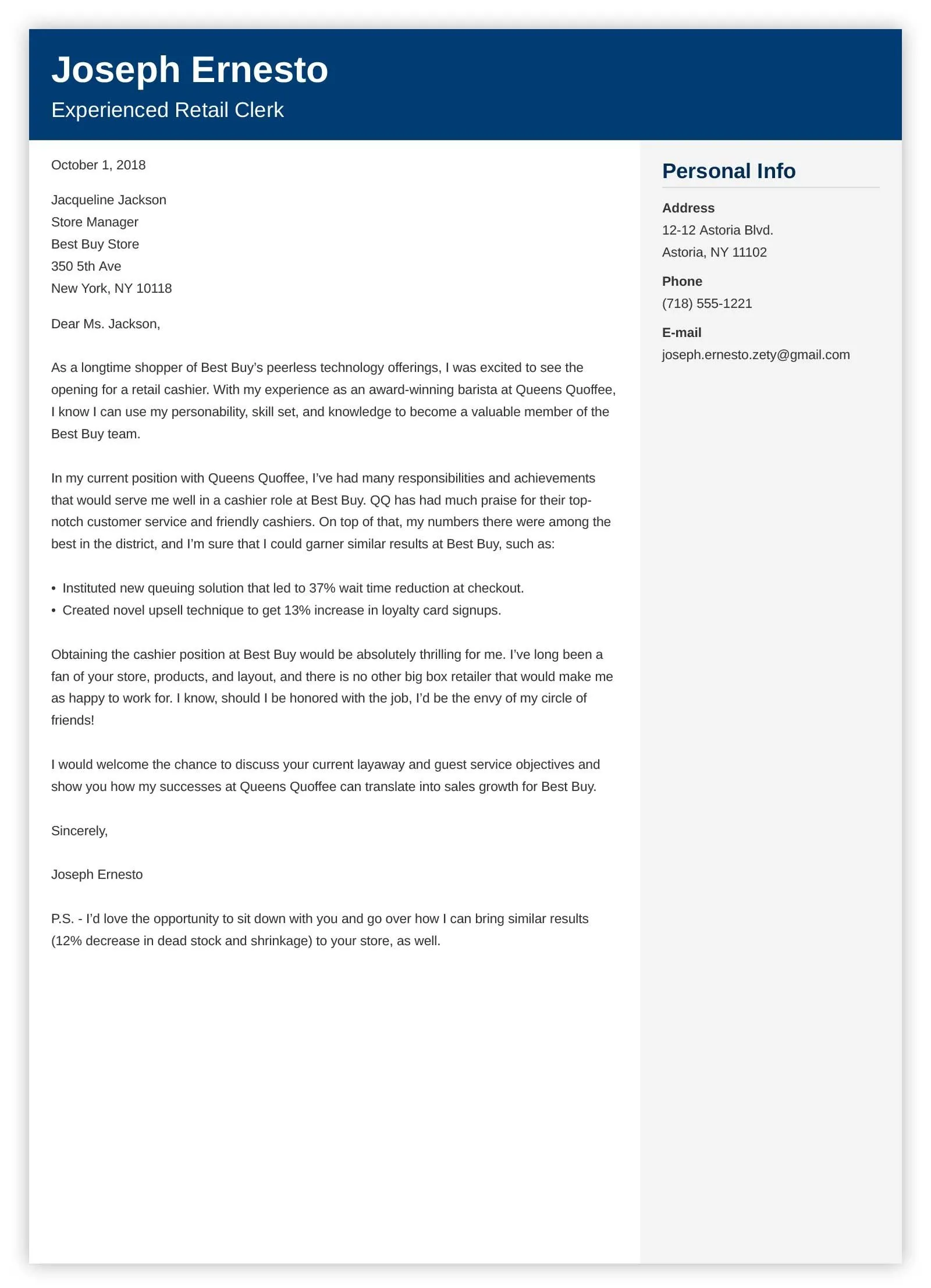
What is a Sales Retail Cover Letter
A sales retail cover letter is a crucial document that accompanies your resume when applying for a sales or retail position. It serves as your introduction to a potential employer, providing an opportunity to showcase your skills, experience, and enthusiasm for the role. Unlike a resume, which is a factual overview of your qualifications, a cover letter allows you to personalize your application and demonstrate why you are the ideal candidate. It’s your chance to make a strong first impression and convince the hiring manager to take a closer look at your resume. Think of it as your personal sales pitch, highlighting your ability to contribute to their team and achieve their sales goals. The cover letter is also a way to show your communication skills and attention to detail, which are vital in any sales or retail environment.
Why a Cover Letter Matters in Sales Retail
In the competitive world of sales and retail, a cover letter can be the deciding factor in whether your application makes it to the interview stage. It gives you the chance to differentiate yourself from other applicants by highlighting your unique skills and experiences. Many hiring managers use cover letters to assess a candidate’s communication skills, writing ability, and attention to detail. A well-written cover letter demonstrates your genuine interest in the specific role and the company, which can significantly boost your chances of getting an interview. It’s also an opportunity to explain any gaps in your resume or to address any specific requirements mentioned in the job description. Moreover, a cover letter shows that you’re proactive and willing to put in the extra effort to secure the position, a quality highly valued in sales retail.
Essential Components of a Sales Retail Cover Letter

A compelling sales retail cover letter consists of several key components that work together to create a strong impression. These elements include your contact information, a professional salutation, a captivating opening statement, a detailed discussion of your relevant skills and experiences, a clear closing with a call to action, and appropriate formatting. Each section plays a vital role in effectively communicating your qualifications and enthusiasm for the position. By incorporating these components thoughtfully, you can create a cover letter that grabs the hiring manager’s attention and sets you apart from the competition. Remember to tailor each section to the specific job and company to demonstrate your sincere interest and suitability for the role.
Contact Information and Salutation
Start with your contact information (name, phone number, email, and LinkedIn profile URL) at the top. Then, address the hiring manager by name if possible; research the company to find the name of the hiring manager or use a professional salutation like ‘Dear Hiring Manager.’ Addressing the letter to a specific person demonstrates your attention to detail and proactive approach. Ensure your contact details are accurate and professional. This initial section sets the tone for the rest of the letter, emphasizing your professionalism and eagerness to connect with the employer.
Opening Statement
Your opening statement is your chance to grab the reader’s attention and establish your purpose. State the specific position you’re applying for and where you found the job posting. Then, write a concise and compelling sentence or two highlighting your most relevant skills or experiences, or express your enthusiasm for the company or the role. Consider starting with a strong statement that immediately grabs the reader’s attention. For example, if you excelled in a previous sales role, briefly mention a significant achievement. The opening should clearly convey your interest and make the hiring manager want to read more.
Highlighting Your Sales Retail Skills

In the body of your cover letter, dedicate a section to highlighting your skills that align with the job requirements. Identify key skills mentioned in the job description and provide specific examples of how you’ve demonstrated those skills in previous roles. Focus on skills like customer service, communication, sales techniques, product knowledge, and problem-solving. Provide concrete examples of how you’ve used these skills to achieve results, such as increasing sales, resolving customer complaints, or improving customer satisfaction. Use action verbs to describe your accomplishments and quantify your achievements whenever possible.
Quantifiable Achievements in Sales
Quantifiable achievements are crucial in making your cover letter stand out. Use numbers and data to showcase your sales performance and accomplishments. Instead of saying you ‘increased sales,’ specify by how much, such as ‘increased sales by 15% in one quarter.’ Mention any sales targets you exceeded, any awards you received, or any other metrics that demonstrate your success. For example, you could state, ‘Consistently exceeded monthly sales targets by an average of 10%’ or ‘Received the ‘Top Sales Performer’ award for two consecutive years.’ Quantifying your achievements provides concrete evidence of your capabilities and demonstrates your value to potential employers.
Demonstrating Retail Experience
If you have retail experience, use your cover letter to showcase your understanding of the retail environment. Describe your responsibilities, the types of products you sold, and the specific skills you used. For example, if you worked in a clothing store, mention your experience with customer service, visual merchandising, or inventory management. Emphasize how your experience aligns with the requirements of the job you are applying for. If you have experience with point-of-sale (POS) systems, loss prevention, or opening and closing procedures, be sure to highlight those skills. Focus on how your retail experience has prepared you for the role and what you have learned from it.
Showcasing Relevant Soft Skills

Soft skills are just as important as hard skills in sales retail. In your cover letter, showcase your soft skills, such as communication, teamwork, problem-solving, and adaptability. Provide examples of how you’ve demonstrated these skills in previous roles or situations. For example, you could describe a time when you successfully resolved a difficult customer complaint or collaborated with colleagues to achieve a sales target. Highlight your ability to work under pressure, handle multiple tasks, and provide excellent customer service. Demonstrating your soft skills helps the hiring manager understand your overall capabilities and how you would fit into the company culture. (Image: soft-skills-sales.webp)
Expressing Enthusiasm for the Role and Company
One of the most effective ways to impress a hiring manager is to express your genuine enthusiasm for the role and the company. Demonstrate that you’ve researched the company by mentioning specific aspects that appeal to you, such as their products, values, or customer service approach. Explain why you are interested in working for this particular company and what you admire about them. Tailor your cover letter to demonstrate that you have a clear understanding of what the company does and the kind of role that you are applying for. This level of engagement shows your proactive approach and sincerity.
Closing and Call to Action
Your closing should reiterate your interest in the position and include a clear call to action. Thank the hiring manager for their time and consideration, and express your eagerness to discuss your qualifications further in an interview. Make it clear that you are available for an interview and provide your contact information again. For example, you could say, ‘Thank you for considering my application. I am eager to discuss how my skills and experience can contribute to your team. I am available for an interview at your earliest convenience and can be reached at [phone number] or [email address].’ This closing statement leaves a professional and memorable impression.
Formatting Your Sales Retail Cover Letter

Proper formatting is essential for ensuring your cover letter is easy to read and visually appealing. Use a professional font like Times New Roman, Arial, or Calibri, and maintain a consistent font size (11 or 12 points). Use single spacing within paragraphs and double spacing between paragraphs. Ensure a clean and uncluttered layout with adequate margins (1 inch on all sides). Break up large blocks of text with short paragraphs and bullet points to improve readability. Your goal is to create a visually balanced and professional document that reflects your attention to detail. A well-formatted cover letter demonstrates your commitment to professionalism. (Image: cover-letter-format.webp)
Choosing the Right Font and Layout
Selecting the right font and layout is crucial for the readability of your cover letter. Opt for a clear and professional font that is easy to read. Use a standard font size (11 or 12 points) and maintain consistent spacing throughout. A simple and uncluttered layout helps the hiring manager focus on the content of your letter. Avoid using overly decorative fonts or a layout that is too busy. Remember, you want the focus to be on your qualifications and experience, not on the aesthetics of the document.
Proofreading and Editing
Proofreading and editing are non-negotiable steps in writing a successful cover letter. Always proofread your cover letter carefully for any grammatical errors, spelling mistakes, or typos. Read the letter aloud to catch awkward phrasing or unclear sentences. Use spell-check and grammar-check tools, but don’t rely on them entirely; they can sometimes miss errors. Ask a friend, family member, or career advisor to review your cover letter as a second pair of eyes. A polished and error-free cover letter shows your attention to detail and commitment to excellence, making a positive impression on the hiring manager.
Tailoring Your Cover Letter

To maximize your chances of success, you must tailor your cover letter to each specific job application. Do not use a generic template; instead, customize your letter to match the job description and the company’s needs. Research the company, understand the role’s requirements, and adjust your letter to highlight the skills and experiences that are most relevant. Mention specific accomplishments and examples that align with the job’s expectations. Tailoring your cover letter shows the hiring manager that you have put in the effort to understand the role and that you are genuinely interested in the opportunity. A personalized cover letter will make a stronger impression than a generic one.
Researching the Company
Before writing your cover letter, research the company. Visit their website, read about their mission and values, and familiarize yourself with their products or services. If possible, look for news articles or social media posts about the company. This research will enable you to tailor your cover letter to the company’s specific needs and demonstrate your genuine interest in the opportunity. Include specific examples of how your skills and experience align with their values or how you can contribute to their goals. This attention to detail will show the hiring manager that you’ve gone the extra mile.
Matching Skills to Job Requirements
Carefully review the job description and identify the key skills and qualifications the employer is seeking. Use this information to customize your cover letter, ensuring that you highlight your most relevant skills and experiences. Provide specific examples of how you’ve demonstrated these skills in the past and how they would benefit the company. For example, if the job description emphasizes customer service skills, describe your experience in handling customer complaints or exceeding customer expectations. By matching your skills to the job requirements, you demonstrate that you are a strong candidate and that you understand what the employer is looking for. (Image: retail-sales-skills.webp)
Sales Retail Cover Letter Examples and Templates

Utilizing cover letter examples and templates can be an effective way to get started and ensure you cover all the necessary elements. Search online for examples of sales retail cover letters that you can adapt to your specific situation. However, do not copy the examples verbatim; instead, use them as a guide to structure your letter and customize the content to reflect your unique skills and experience. Many online resources offer free cover letter templates that you can download and modify. When using a template, make sure to replace the placeholder text with your own information and personalize it to align with the job description and the company. Remember, the goal is to create a cover letter that is both informative and original.
Common Mistakes to Avoid
Avoid common mistakes that can undermine your chances of getting an interview. These include using generic language, making grammatical errors, including irrelevant information, and failing to tailor your letter to the specific job. Avoid clichés and overly formal language. Make sure your cover letter is concise, well-organized, and easy to read. Avoid negative statements or criticizing previous employers. Focus on your positive qualities and accomplishments. Finally, always proofread your cover letter carefully before submitting it to ensure there are no errors or typos. (Image: cover-letter-mistakes.webp)
Sending Your Cover Letter
When sending your cover letter, ensure it is formatted correctly and properly attached to your email. If the job posting specifies a particular format, adhere to those instructions. If not, it’s generally best to send your cover letter as a PDF file to maintain the formatting. Always include a professional email subject line that includes the job title and your name, such as ‘Sales Associate Application - [Your Name].’ Use a professional email address. Proofread your email carefully before sending it to avoid any typos or errors in your message. This extra step is essential in showcasing your professionalism and attention to detail.
Following Up

Following up after submitting your cover letter is an important step to demonstrate your continued interest in the position. If you haven’t heard back within the timeframe mentioned in the job posting or after one to two weeks, send a polite follow-up email to the hiring manager. In your email, briefly reiterate your interest in the role, refer to your application, and inquire about the status of your application. Keep your follow-up email concise and professional. It’s also a good idea to connect with the company on LinkedIn, especially if you know the hiring manager’s name. A well-timed follow-up can keep you top of mind and show your enthusiasm for the opportunity. (Image: job-search-tips.webp)