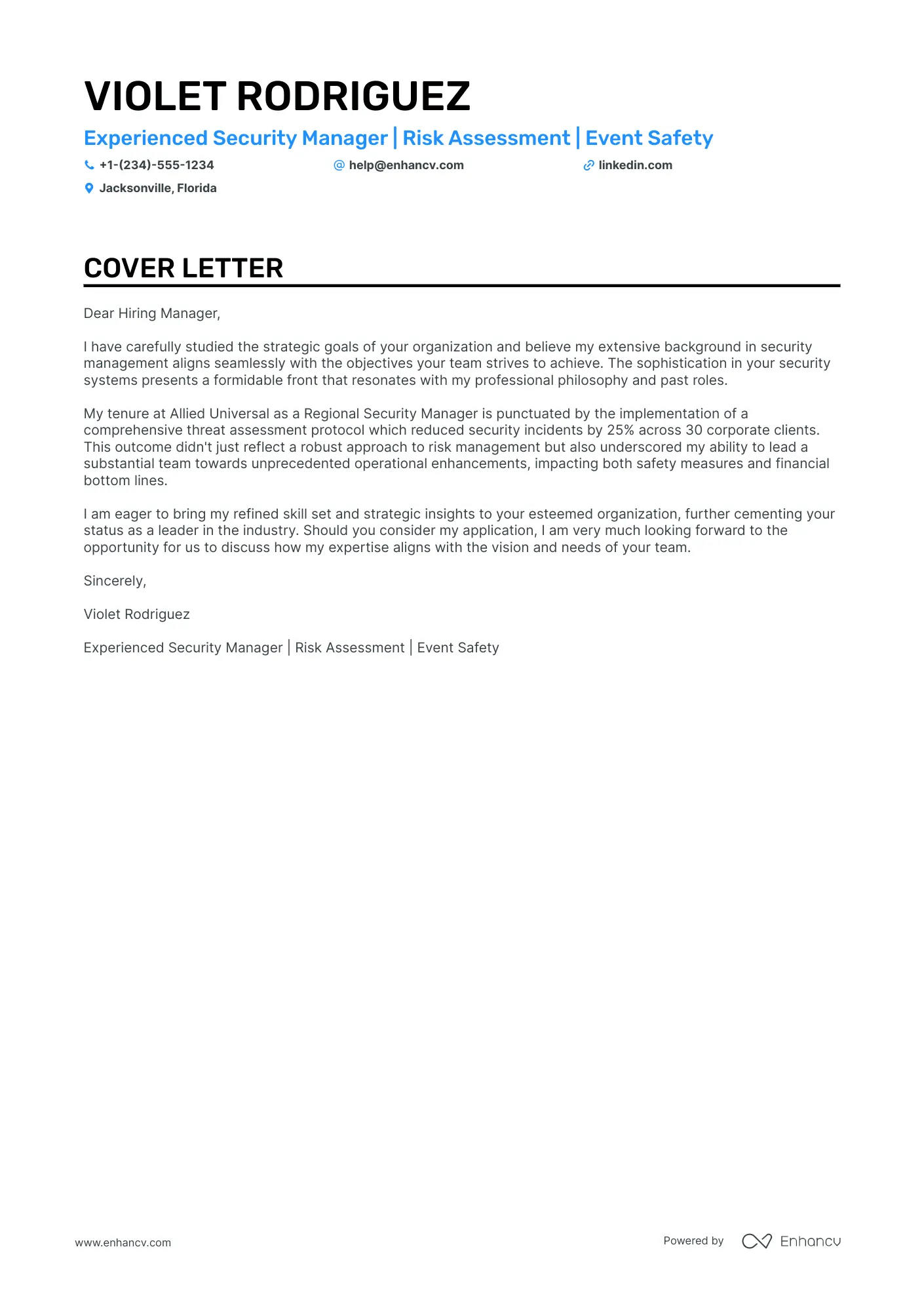
Crafting a Security Director Cover Letter
A security director cover letter is your first opportunity to make a strong impression on a potential employer. It’s more than just a formality; it’s a crucial tool in showcasing your qualifications, experience, and personality. A well-crafted cover letter complements your resume, providing context and highlighting the specific skills and achievements most relevant to the job description. It allows you to demonstrate your understanding of the company’s needs and explain why you are the ideal candidate. This guide provides you with the necessary tools and insights to create a compelling security director cover letter that grabs the attention of hiring managers and increases your chances of landing an interview. Remember, your cover letter is a sales pitch—sell yourself effectively!
Understanding the Importance of a Cover Letter
The cover letter serves as a critical introduction and a way to personalize your application. It allows you to directly address the hiring manager, demonstrate your enthusiasm for the role, and elaborate on key skills and experiences that might not be fully evident in your resume. In today’s competitive job market, a generic or poorly written cover letter can lead to immediate rejection. A well-written letter proves you’ve taken the time to research the company and understand the position requirements. Furthermore, it offers a chance to explain any gaps in your employment history or career changes, if necessary. The best cover letters show your personality and professional writing style, setting you apart from other applicants. Ultimately, the cover letter is a powerful tool that can significantly increase your chances of securing an interview for a Security Director role.
Highlighting Key Skills for Security Directors

A compelling security director cover letter needs to showcase your relevant skills. The skills section should be tailored to the specific requirements outlined in the job description. Focus on the skills that are most relevant and align with the company’s needs. This can include a combination of soft skills and hard skills. Provide specific examples of how you have used these skills in past roles to achieve results. Make sure the skills match the company’s requirements, using some of their keywords to help their applicant tracking system (ATS) identify you as a good match.
Leadership and Management
Leadership is a cornerstone of a security director’s role. Highlight your experience in leading and managing security teams, including your ability to motivate, train, and develop staff. Demonstrate your decision-making abilities, particularly in high-pressure situations, and your skill in delegating tasks effectively. Mention any leadership training programs or certifications you’ve completed. Use specific examples where you have successfully led a team to achieve security goals, improve efficiency, or implement new security protocols. Your ability to mentor and guide security personnel is also crucial, and you should showcase your skills in building a cohesive and high-performing team.
Risk Assessment and Mitigation
Risk assessment is another critical area. Detail your experience in conducting thorough risk assessments, identifying vulnerabilities, and developing mitigation strategies. Highlight your knowledge of security technologies, such as access control systems, surveillance systems, and intrusion detection systems. Mention your familiarity with relevant industry regulations and standards, such as those related to data privacy and physical security. Provide examples of how you have identified and mitigated security risks, reduced potential threats, and improved overall security posture within previous organizations. Focus on your ability to analyze complex situations, develop effective security plans, and implement them successfully.
Emergency Response and Planning

Demonstrate your experience in emergency response and business continuity planning. Explain your ability to develop and implement emergency protocols, conduct drills, and train staff to respond effectively to various security incidents, including natural disasters, active shooter situations, and cyberattacks. Highlight your knowledge of crisis management and your ability to coordinate with law enforcement, fire departments, and other emergency services. Detail your experience in developing and maintaining business continuity plans to ensure minimal disruption during emergencies. Show your ability to create and maintain comprehensive emergency plans that are regularly updated and tested, ensuring they remain effective and compliant.
Communication and Interpersonal Skills
Effective communication is essential for a security director. Showcase your ability to communicate clearly and concisely, both verbally and in writing. Highlight your experience in presenting information to stakeholders at all levels, including senior management, employees, and external agencies. Mention your skills in active listening, conflict resolution, and building strong working relationships. Provide examples of how you have successfully communicated complex security information to different audiences, resolved conflicts, and built trust with stakeholders. Demonstrate your interpersonal skills by highlighting your ability to work collaboratively, build consensus, and foster a positive security culture within an organization.
Tailoring Your Cover Letter
Personalization is the key to a successful cover letter. Avoid sending a generic letter that could be used for any job. Each cover letter should be tailored to the specific role and the company. Read the job description carefully and identify the key requirements and skills. Then, highlight your experiences and achievements that directly align with those requirements. Use the company’s name, and refer to the specific role you’re applying for. Demonstrate that you’ve researched the company and understand its mission and values. Personalize the tone and language to match the company’s culture. This demonstrates your genuine interest and your understanding of their unique needs.
Researching the Company and Role

Before writing your cover letter, conduct thorough research on the company. Visit their website, read news articles, and check their social media profiles to understand their mission, values, and current initiatives. Identify the key challenges and opportunities the company is facing. Understand the specific requirements of the Security Director role, including the responsibilities and expectations. This research will help you tailor your cover letter to demonstrate how your skills and experience align with the company’s needs. Address the specific challenges the company faces and explain how you can contribute to their success. Mention the specific areas of their business that appeal to you and align with your professional goals.
Matching Skills to Job Requirements
Once you understand the company and the role, carefully review the job description. Identify the key skills, experience, and qualifications the employer is seeking. Then, match your own skills and experience to these requirements. Use specific examples to illustrate how you have demonstrated those skills in previous roles. Highlight your accomplishments that are relevant to the job description. Use keywords from the job description in your cover letter. This will help the hiring manager quickly see that you are a good fit for the role and increase your chances of getting an interview. Focus on the top three to five skills they are seeking, and provide detailed examples.
Structuring Your Cover Letter for Impact
A well-structured cover letter is essential for making a strong impression. Use a clear and organized format that is easy to read and navigate. The structure of the letter should guide the reader through your qualifications and achievements. Proper formatting enhances readability and ensures that your key points are communicated effectively. Use a professional font, and maintain consistent formatting throughout the document. Use clear headings and bullet points to break up the text and make it easier to scan. Aim for conciseness, keeping your letter to one page in length. The goal is to convey your qualifications in a manner that is both compelling and easy to understand.
The Introduction Grabbing Attention

The introduction is your first opportunity to capture the reader’s attention. Start with a compelling opening that highlights your interest in the role and the company. State the position you’re applying for. Briefly mention how you learned about the opportunity, and if you have a personal connection to the company. The goal is to grab the reader’s attention and make them want to continue reading. Briefly summarize your key qualifications and experience. Show enthusiasm and state your understanding of the company’s needs. Ensure the opening sets the tone for the rest of the letter. Avoid generic phrases; instead, provide a concise and engaging overview of your qualifications.
The Body Showcasing Achievements
The body of your cover letter is where you showcase your achievements and demonstrate your skills. Use this section to highlight your relevant experience, skills, and qualifications. Provide specific examples of how you have successfully managed security operations, mitigated risks, or improved security protocols in previous roles. Quantify your accomplishments whenever possible, using numbers and data to demonstrate your impact. Focus on the key requirements listed in the job description. Use a few paragraphs to highlight your skills and experience that align directly with the job description. Elaborate on your abilities, using strong action verbs and explaining your contributions to previous companies. Tailor the body to match the specific requirements of the job.
Quantifying Accomplishments with Numbers
Whenever possible, quantify your accomplishments using numbers and data. This adds credibility and demonstrates the tangible impact of your work. For example, instead of saying, ‘Improved security protocols,’ say, ‘Reduced security incidents by 20% within the first year.’ Use specific metrics to illustrate your successes. Include data on budget management, team size, project completion rates, and any cost savings achieved. Numbers make your achievements more concrete and easier to understand. Use data to highlight your achievements in a concise and compelling manner. This will help the hiring manager quickly understand your value and contributions.
The Conclusion Call to Action

The conclusion is your opportunity to reiterate your interest in the role and call for action. Express your enthusiasm for the opportunity and reiterate your key qualifications. Thank the hiring manager for their time and consideration. Clearly state your availability for an interview and provide your contact information. Express confidence in your ability to contribute to the company’s success. End with a professional closing, such as ‘Sincerely’ or ‘Best regards’, followed by your name. Review your conclusion to ensure that it is positive, and shows your genuine interest in the position and company.
Proofreading and Formatting Your Cover Letter
Before submitting your cover letter, proofreading and formatting are crucial steps. Errors, typos, and poor formatting can undermine your credibility. A well-presented cover letter reflects professionalism and attention to detail. Review for clarity, grammar, spelling, and punctuation. Also, make sure the letter is easy to read. Proper formatting enhances readability and ensures your key points are easily understood. A polished cover letter is more likely to make a positive impression.
Ensuring Accuracy and Professionalism
Accuracy and professionalism are paramount. Check for any grammatical errors, spelling mistakes, and punctuation errors. Review all names, titles, and company information for correctness. Proofread the entire document carefully. Consider using grammar and spell-checking tools. Have a friend or colleague review your letter for errors and provide feedback. A second pair of eyes can often catch mistakes that you may have missed. Ensure the language is professional and appropriate for the target audience.
Formatting for Readability

Formatting impacts the readability of your cover letter. Use a professional font, such as Times New Roman, Arial, or Calibri. Ensure a consistent font size. Maintain consistent spacing between paragraphs. Use clear headings and bullet points to break up the text and make it easier to scan. Avoid overly long paragraphs; aim for concise and focused writing. Use a professional layout and avoid excessive formatting. Make it easy for the reader to quickly grasp the key information and qualifications. A well-formatted cover letter is more inviting and easier to read.
Common Mistakes to Avoid
Avoid these common pitfalls to increase your chances of making a positive impression. Making these mistakes can undermine your chances of getting an interview. These can immediately make a negative impression on hiring managers and recruiters. Being aware of these errors is crucial for creating an effective cover letter.
Generic Letters and Lack of Personalization
Sending a generic cover letter is a major mistake. Avoid using a template that is not tailored to the specific role or company. The cover letter should be customized to the job. Show that you have researched the company and understand its needs. Highlight how your skills and experience match the requirements of the position. Demonstrate your genuine interest in the role and the company. Customize the language and tone to match the company’s culture. A personalized cover letter shows that you have invested time and effort in applying for the job.
Typos and Grammatical Errors

Typos and grammatical errors can undermine your credibility. Proofread your cover letter carefully before submitting it. Use spell-check and grammar-check tools. Have a friend or colleague review your letter for errors. Ensure all names, titles, and company information are correct. A polished and error-free cover letter shows professionalism and attention to detail. Errors can give the impression of carelessness or a lack of attention to detail. This could lead to your application being rejected.
Ignoring the Company Culture
Failing to address the company culture is a missed opportunity. Research the company’s values, mission, and culture before writing your cover letter. Tailor your language and tone to match the company’s culture. Show that you understand and appreciate the company’s values. Highlight experiences that align with the company’s culture. Demonstrate your ability to fit into the company’s environment. If the company values innovation, show how you’ve been innovative in the past. By understanding and demonstrating your understanding of their culture, you increase your chances of being seen as a good fit.
Finalizing and Submitting Your Cover Letter
Before submitting your cover letter, take a final look to ensure it is error-free and formatted correctly. Check all details, proofread for any last-minute mistakes, and make sure it aligns with the job description. Ensure that the letter reflects your qualifications, experience, and enthusiasm. Follow the specific instructions provided by the employer regarding submission. Make sure you are following their requirements and that the letter is ready to be sent.
Reviewing Before Submission
Review your cover letter one last time before submitting it. Check for any typos, grammatical errors, or formatting issues. Ensure that all details are correct. Make sure your contact information is up to date. Confirm that the letter is well-structured and easy to read. Verify that you have tailored the letter to the specific job and company. Ensure that you are following the submission instructions correctly.
Following Up After Application
After submitting your cover letter, it’s good practice to follow up with the hiring manager or recruiter. Send a polite follow-up email a week or two after submitting your application. Reiterate your interest in the role and the company. Refer to specific points you made in your cover letter. Thank the hiring manager for their time and consideration. Following up demonstrates your continued interest and initiative. If you don’t hear back, it’s okay to follow up once more a few weeks later. Be professional and respectful of their time.