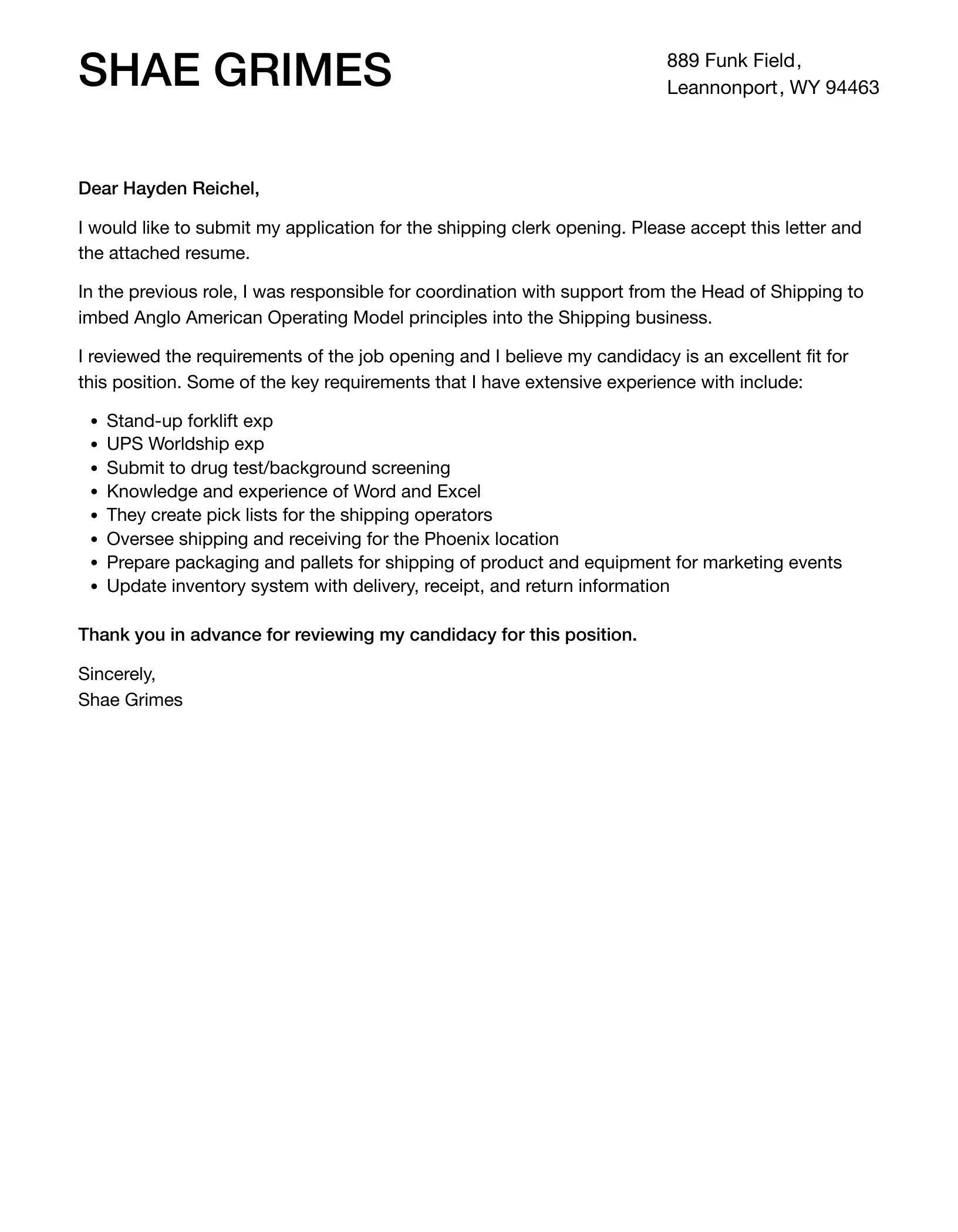
What is a Shipping Clerk Cover Letter?
A shipping clerk cover letter is a crucial document that accompanies your resume when applying for a shipping clerk position. It serves as an introduction, allowing you to highlight your skills, experience, and enthusiasm for the role. This letter provides a space to explain why you are the perfect fit for the job, going beyond the basic information listed in your resume. A well-crafted cover letter can significantly increase your chances of getting an interview and ultimately landing the job. It’s your first opportunity to make a positive impression on a potential employer, demonstrating your writing skills and attention to detail – both vital for a shipping clerk.
Key Components of a Shipping Clerk Cover Letter
To write an effective cover letter, you must include specific information. This ensures that your application is complete and professional, giving you the best chance of success. From the proper formatting of contact details to the content of your body paragraphs, each element is essential. Here’s a breakdown of the key sections you should include in your shipping clerk cover letter:
Contact Information

Start with your contact details at the top of the letter. This should include your full name, address, phone number, and email address. Ensure the email address is professional. This is crucial as it helps the hiring manager reach you easily. Proper contact information is a fundamental aspect of any job application, reflecting your attention to detail.
Your Information
On the left or right side of the page, align your name, address, phone number, and email address. This section provides the employer with an easy way to reach you. Ensuring the format is consistent adds to the professional appearance of the letter.
Date
Directly below your contact information, include the date you are writing the letter. This helps the employer track the application’s timeliness. Format the date correctly to maintain a professional appearance. Proper dating adds credibility and organization to your cover letter.
Hiring Manager’s Information

If possible, address the letter to the hiring manager by name. Researching the company and finding the correct contact person shows initiative. If you cannot find the name, use a formal salutation. Addressing the specific person makes the cover letter more personal and demonstrates your interest in the role.
Professional Salutation
Use a professional salutation such as ‘Dear Mr./Ms./Mx. [Last Name]’ or ‘Dear Hiring Manager’ if you do not know the name. Avoid informal greetings, as they can make your application appear unprofessional. The salutation sets the tone for the entire letter, so it should be appropriate and respectful.
The Body of Your Cover Letter
The body of your cover letter is where you showcase your skills, experience, and enthusiasm. The structure typically includes an introductory paragraph, one or two paragraphs highlighting your relevant skills and experience, and a closing paragraph. Each paragraph should serve a clear purpose, and together, they should convince the employer you’re the right fit for the job.
First Paragraph Highlight Your Interest

Start by stating the position you’re applying for and where you saw the job posting. Briefly mention why you are interested in the role and the company. Show your enthusiasm for the opportunity and the company’s mission. A strong opening immediately grabs the hiring manager’s attention and sets a positive tone for the rest of your letter.
Second Paragraph Showcase Your Skills
This is the most important part of your cover letter. Mention specific skills and experiences that match the job requirements. Provide examples of how you’ve successfully performed similar duties in the past. Quantify your achievements whenever possible (e.g., ‘reduced shipping errors by 15%’). Tailor this section to the specific job description to demonstrate that you meet the employer’s needs.
Third Paragraph Call to Action
In the final paragraph, reiterate your interest and express your enthusiasm for an interview. Thank the hiring manager for their time and consideration. Include a call to action, such as ‘I look forward to the opportunity to discuss my qualifications further.’ This encourages the hiring manager to take the next step in the hiring process.
Closing the Cover Letter

The closing of your cover letter should be professional and courteous. It should leave a positive impression on the hiring manager, reinforcing your interest and encouraging them to contact you. The way you end your cover letter can be as important as the body of the letter itself.
Professional Closing
Use a professional closing such as ‘Sincerely,’ ‘Best regards,’ or ‘Thank you.’ These closings are standard and appropriate for business correspondence. Avoid overly casual closings, as they may not convey the professionalism you intend to project. A professional closing ensures your letter ends on a positive note.
Your Typed Name
After the closing, leave a few spaces and type your full name. This clearly identifies you as the applicant and adds a professional touch. Your typed name is a formal way of signing off on your cover letter, making it clear who the author is and finalizing the document.
Formatting Tips for Your Cover Letter

Proper formatting is essential for a professional-looking cover letter. Consistent formatting makes your letter easy to read and reflects well on your attention to detail. Formatting choices should be professional and reader-friendly.
Font Choice and Size
Use a professional and easy-to-read font such as Times New Roman, Arial, or Calibri. Maintain a font size between 10 and 12 points for readability. A clear and standard font shows that you pay attention to presentation and professionalism. Avoid unusual fonts that may distract the reader.
Margins and Spacing
Set your margins to 1 inch on all sides. Use single-line spacing for paragraphs and double-line spacing between paragraphs. Proper spacing makes your cover letter easy to read and visually appealing. Good spacing ensures your letter is not too cluttered and allows the hiring manager to read it effortlessly.
Proofreading and Editing

Before sending your cover letter, proofread it carefully for any errors in grammar, spelling, or punctuation. Errors can damage your credibility. Having a second set of eyes review your letter can help catch mistakes. Ensuring your cover letter is error-free demonstrates professionalism and attention to detail, important qualities for a shipping clerk.
Common Mistakes to Avoid
Avoid these common mistakes to ensure your cover letter makes a positive impression. Mistakes can lead to your application being rejected, so it’s crucial to be aware of these pitfalls. Addressing these common issues can make your cover letter stand out from the competition.
Using Generic Templates
Avoid using generic cover letter templates that are not tailored to the specific job or company. These letters lack personalization and fail to demonstrate your genuine interest. Customize your cover letter to showcase your unique qualifications for this particular role and company. A personalized letter shows you have taken the time to understand the company’s needs.
Typos and Grammatical Errors
Typos and grammatical errors make your cover letter appear unprofessional and can damage your credibility. Always proofread carefully before submitting your application. Errors can show a lack of attention to detail, which is critical for a shipping clerk position. Double-check your letter to eliminate errors.
Failing to Tailor Your Letter
Failing to tailor your cover letter to the specific job description and company is a missed opportunity. Customize your letter to match the requirements and highlight the skills most relevant to the position. A generic letter suggests a lack of interest and effort. Customize your letter to highlight the skills and experience that align with the job’s specific requirements.
Tips for Tailoring Your Cover Letter
Tailoring your cover letter is vital for making a strong impression on the hiring manager. Adapt your letter to each job and company to highlight your qualifications effectively. Use these tips to customize your cover letter and stand out from the competition.
Research the Company
Research the company’s values, mission, and recent activities. This knowledge helps you tailor your letter to align with their specific needs and goals. Understanding the company shows that you are genuinely interested in the opportunity. Include information about the company in your cover letter.
Highlight Relevant Skills and Experience
Carefully review the job description and highlight the skills and experiences most relevant to the position. Provide specific examples of how you have used these skills in previous roles. Showcase your ability to meet the job’s requirements. Ensure your letter matches the job description.
Use Keywords from the Job Description
Incorporate keywords from the job description throughout your cover letter. This helps the hiring manager quickly identify that you have the required skills. It also helps applicant tracking systems (ATS) scan your application effectively. Using keywords demonstrates that you understand the job requirements.
Shipping Clerk Skills to Include
Highlighting the right skills is crucial to demonstrate your suitability for a shipping clerk position. Focus on the abilities most relevant to the job duties. These skills show your capability to manage shipping processes effectively.
Attention to Detail
Shipping clerks must pay close attention to detail when preparing shipments, verifying documents, and managing inventory. Describe how you’ve demonstrated accuracy in previous roles. This skill is essential for preventing errors and ensuring smooth operations. Attention to detail is key for a shipping clerk.
Organization
Shipping clerks must organize packages, maintain inventory records, and manage shipping documents. Highlight your organizational skills by describing your ability to manage multiple tasks and prioritize responsibilities. Being organized ensures that tasks are completed efficiently. Mention your ability to manage paperwork.
Communication Skills
Shipping clerks need to communicate effectively with colleagues, vendors, and customers. Showcase your ability to clearly convey information, resolve issues, and maintain positive relationships. Explain your experience in communicating both verbally and in writing. Communication skills are essential for the role.
Time Management
Shipping clerks must meet deadlines and manage their time effectively. Describe your ability to prioritize tasks, manage multiple projects, and work efficiently under pressure. Show your experience in meeting deadlines in previous roles. Time management helps maintain efficiency.
Shipping Software Proficiency
Familiarity with shipping software, such as UPS WorldShip, FedEx Ship Manager, or similar platforms, is often required. Mention any software you’re proficient in and your experience using it. This demonstrates your ability to perform essential job tasks. Proficiency in shipping software is essential.
Cover Letter Examples for inspiration
Reviewing examples can help you understand the structure and content of a successful cover letter. Adapt these examples to your skills and experience. Seeing how others have successfully presented themselves can give you ideas and inspiration.
Example 1 Entry Level
If you are an entry-level candidate, focus on your education, relevant coursework, and any internships or volunteer experiences. Highlight transferable skills like attention to detail, organization, and communication. Show your enthusiasm for the role and your eagerness to learn. This example is suited for those new to the field.
Example 2 Experienced Clerk
If you have previous experience as a shipping clerk, highlight your accomplishments and quantifiable results. Mention specific software proficiencies, describe your successes, and provide examples of how you improved shipping processes or reduced costs. This type of letter should be for experienced professionals in the field.
Final Thoughts
Writing a cover letter for a shipping clerk position requires careful attention to detail and a focus on highlighting relevant skills and experiences. By following these guidelines, you can create a cover letter that stands out and increases your chances of landing an interview. Remember to tailor your letter to each job application.
Next Steps
After writing your cover letter, carefully proofread it, customize it for each job, and submit it along with your resume. Prepare for your interview by researching the company and practicing your responses to common interview questions. Good luck with your job search!