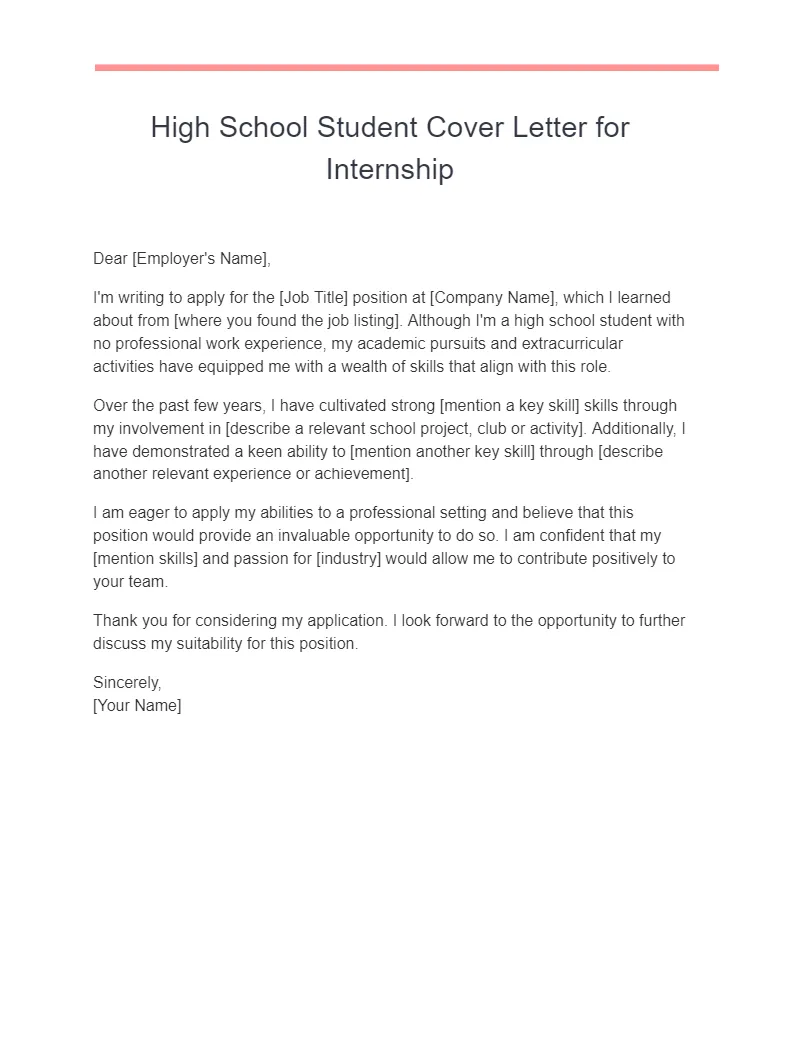
What is a Student Cover Letter
A student cover letter is a crucial document that accompanies your resume when applying for internships, part-time jobs, or entry-level positions. It serves as your personal introduction, allowing you to showcase your personality, skills, and enthusiasm beyond what is listed in your resume. It provides you with an opportunity to connect your qualifications to the specific requirements of the job and express your interest in the opportunity. In essence, it is your chance to make a compelling first impression on potential employers and to demonstrate why you are the ideal candidate for the role. The cover letter is more than just a formality it’s a tool that can significantly increase your chances of landing an interview.
Why Student Cover Letters Matter
Cover letters are very important for students as they bridge the gap between your academic experience and the professional world. While a resume provides a snapshot of your skills and experience, a cover letter allows you to provide context and explain how those skills align with the job requirements. It demonstrates your communication skills, attention to detail, and your genuine interest in the company and the position. A well-crafted cover letter can set you apart from other applicants, especially if you have limited work experience. It allows you to highlight your relevant coursework, extracurricular activities, and any transferable skills you’ve gained. It showcases your personality and passion, giving the employer a sense of who you are beyond your qualifications. Neglecting a cover letter is a missed opportunity to make a strong first impression and increase your chances of securing an interview.
How to Write a Student Cover Letter Step-by-Step

Writing a compelling student cover letter doesn’t have to be daunting. By following a structured approach, you can create a document that effectively highlights your strengths and captures the attention of potential employers. The following steps will guide you through the process, ensuring your cover letter is polished, professional, and tailored to each opportunity. From researching the company to proofreading the final draft, each step contributes to crafting a cover letter that showcases your potential and increases your chances of success in your job search. This guide provides clear instructions and helpful tips to make the process easier for students.
Step 1 Researching the Opportunity
Before you start writing, thoroughly research the company and the specific job you’re applying for. Visit their website, read their ‘About Us’ section, and explore their social media channels to understand their mission, values, and recent projects. Analyze the job description carefully, noting the key skills, qualifications, and experiences they are seeking. This research will inform your cover letter, allowing you to tailor your message and demonstrate your genuine interest in the opportunity. Identifying the company’s needs and matching your skills to those requirements shows that you’re a proactive candidate.
Step 2 Formatting and Structure
Your cover letter should follow a professional format that’s easy to read. Use a standard font like Times New Roman or Arial, with a font size of 11 or 12 points. Maintain consistent margins (1 inch on all sides) and use single-spacing within paragraphs, with a blank line between paragraphs. The general structure includes a header with your contact information, the date, the recipient’s contact information, a salutation, an opening paragraph, body paragraphs highlighting your skills and experience, a closing paragraph, and a professional closing with your signature (if submitting a printed version). Ensure your cover letter is no longer than one page.
Step 3 The Header and Contact Information

At the top of your cover letter, include your full name, address, phone number, and email address. Ensure your email address is professional. Following this, include the date and then the hiring manager’s name, title, and the company’s address. If you can’t find the hiring manager’s name, try to find it via LinkedIn. If you are unable to, you can use a generic salutation like ‘Dear Hiring Manager’. Accurate contact information not only facilitates easy communication but also demonstrates attention to detail.
Step 4 The Salutation
Begin your cover letter with a professional salutation. If you know the hiring manager’s name, use ‘Dear Mr./Ms./Mx. [Last Name]’. If you don’t know the name, use a general salutation such as ‘Dear Hiring Manager’ or ‘Dear [Department Name] Team’. Avoid generic salutations like ‘To Whom It May Concern’. A personalized salutation demonstrates that you’ve taken the time to research the company and the opportunity. It also makes your cover letter feel more engaging and tailored to the reader.
Step 5 The Opening Paragraph
The opening paragraph is your chance to grab the reader’s attention. State the specific position you are applying for and where you found the job posting. Briefly mention why you are interested in the role and the company. You can also include a brief statement about your key skills or experiences that align with the job requirements. This initial paragraph sets the tone for the rest of your cover letter and creates a clear first impression. Keep it concise and engaging.
Step 6 Highlighting Relevant Skills and Experience

In the body of your cover letter, highlight the skills and experiences that make you a good fit for the job. Use the job description as your guide. Choose the most relevant skills and experiences to demonstrate your qualifications. Provide specific examples of how you’ve used these skills in the past. If you have limited work experience, focus on your academic projects, extracurricular activities, and volunteer work, and make sure you include the skills that translate to the job. Quantify your achievements whenever possible to make them more impactful. It is important to show, not just tell, the employer why you are a good fit.
Step 7 Quantifying Achievements
Whenever possible, quantify your achievements to make your cover letter more compelling. Use numbers, percentages, and specific data to illustrate your accomplishments. Instead of saying ‘Improved customer service,’ say ‘Improved customer satisfaction scores by 15%’. This helps the employer understand the tangible impact of your contributions. Quantifying your achievements not only strengthens your claims but also provides concrete evidence of your skills and abilities. This data adds weight to your application, making it stand out from the competition. Your results will be more convincing.
Step 8 Expressing Enthusiasm and Fit
Express your genuine enthusiasm for the position and the company. Explain why you are excited about the opportunity and how it aligns with your career goals. Show that you have researched the company and understand their mission and values. This enthusiasm demonstrates your interest and motivation. Clearly explain how your skills and experience align with the company’s needs. This shows the hiring manager you understand what the company is looking for and that you can make an impact. Make sure that your cover letter is tailored to the needs of the company.
Step 9 The Closing Paragraph

In your closing paragraph, reiterate your interest in the position and thank the hiring manager for their time and consideration. Express your enthusiasm for the opportunity to discuss your qualifications further. Include a call to action, such as ‘I look forward to the opportunity to discuss my qualifications in an interview.’ Keep the closing paragraph brief and professional. You want to end on a positive note, leaving the reader with a sense of anticipation and a clear call to action.
Step 10 The Closing and Signature
End your cover letter with a professional closing such as ‘Sincerely,’ ‘Best regards,’ or ‘Thank you.’ Then, leave a few lines for your signature if you’re submitting a printed version. If you’re submitting electronically, you can simply type your full name. Make sure to include your full name. This final touch adds to the professionalism of the document and reinforces your commitment to the opportunity.
Step 11 Proofreading and Editing
Before submitting your cover letter, carefully proofread and edit it for any errors in grammar, spelling, and punctuation. Check for clarity, conciseness, and coherence. Ensure that your tone is professional and that your letter is free of any typos or inconsistencies. Ask a friend, family member, or career counselor to review your cover letter for feedback. A fresh pair of eyes can catch errors you might have missed. Proofreading is a crucial step to ensure that your letter reflects your attention to detail and professionalism.
Key Elements of a Strong Student Cover Letter

A strong student cover letter goes beyond simply listing your qualifications; it demonstrates your potential, enthusiasm, and fit for the role. It should showcase your skills, highlight your education, and address the employer’s needs. A well-crafted cover letter should be tailored to the specific job and company, using relevant keywords from the job description. This section explores the key elements that contribute to a compelling cover letter, helping you create a document that grabs the reader’s attention and secures an interview.
Showcasing Your Skills
Highlight the skills that align with the job requirements. Identify the skills that the employer is looking for and make sure your cover letter showcases those talents. Provide specific examples to demonstrate how you’ve used those skills in the past. This could include skills gained through coursework, extracurricular activities, or volunteer work. Be specific and provide evidence of your abilities. Focus on the skills that are transferable to the role, even if you don’t have direct work experience. This section is your chance to demonstrate to the employer why you are a good fit.
Highlighting Your Education
Mention your educational background and relevant coursework. If you have a high GPA or have received any academic awards, include them. Highlight any projects or research that align with the job requirements. If you’re a recent graduate, you can also include relevant coursework. Emphasize how your education has prepared you for the role. Highlight your major or degree, and explain how it relates to the job. Make sure to show the employer that you’ve learned a lot during your time in school.
Addressing the Employer’s Needs

Show how your skills and experiences meet the employer’s needs. Analyze the job description and identify the key requirements. Tailor your cover letter to address these requirements. Explain how you can contribute to the company’s goals. Clearly state how you can solve problems and add value. Show the employer that you’ve understood the needs of the company and that you are the right candidate.
Tailoring Your Cover Letter
A generic cover letter is unlikely to impress employers. To make your cover letter stand out, you must tailor it to each specific job and company. This involves customizing your content to align with the job requirements and the company’s values. This section focuses on the importance of tailoring your cover letter and provides strategies for effective customization. It will show you how you can demonstrate your genuine interest.
To the specific job and company
Always tailor your cover letter to the specific job and company. Research the company and the role. Show that you understand their mission, values, and recent projects. Highlight the skills and experiences that are most relevant to the job. If a job emphasizes teamwork, highlight your collaborative experiences. If it values leadership, showcase your leadership abilities. Tailoring your letter shows the employer that you have paid close attention to detail and that you are serious about the opportunity.
Using keywords from the job description

Carefully review the job description and identify key keywords and phrases. Incorporate these keywords into your cover letter naturally. This will help your application pass through applicant tracking systems (ATS) and make it clear to the hiring manager that you have the required qualifications. However, do not overuse keywords or include them unnaturally. Make sure that your letter flows smoothly and reads naturally. Keywords should enhance your application and reflect your genuine abilities.
Student Cover Letter Templates and Examples
Templates and examples can serve as valuable resources when writing your student cover letter. They provide a starting point and can guide you on how to structure your letter and present your qualifications. This section explores where to find templates and examples, and how to analyze them to create a compelling and effective cover letter. Following these guidelines can help you to create a cover letter that is both professional and tailored to your needs.
Where to Find Templates
You can find cover letter templates on various websites. Many career websites offer free templates. When you find a template, tailor it to your specific needs. These templates can help you structure your cover letter, but it is crucial to customize it to your unique qualifications and experiences. Using a template can simplify the writing process, but be sure to fill it with content that truly represents you and your abilities. Remember that you should never submit a template as is; always customize it.
Analyzing Examples
Reviewing examples of successful student cover letters can provide valuable insights. Analyze how other students have highlighted their skills, experiences, and enthusiasm. Pay attention to the structure, tone, and language used in the examples. Use these examples to get ideas, and adapt the approaches to your unique situation. Study how others have addressed the employer’s needs and tailored their letters. You can use the examples to improve your own writing.