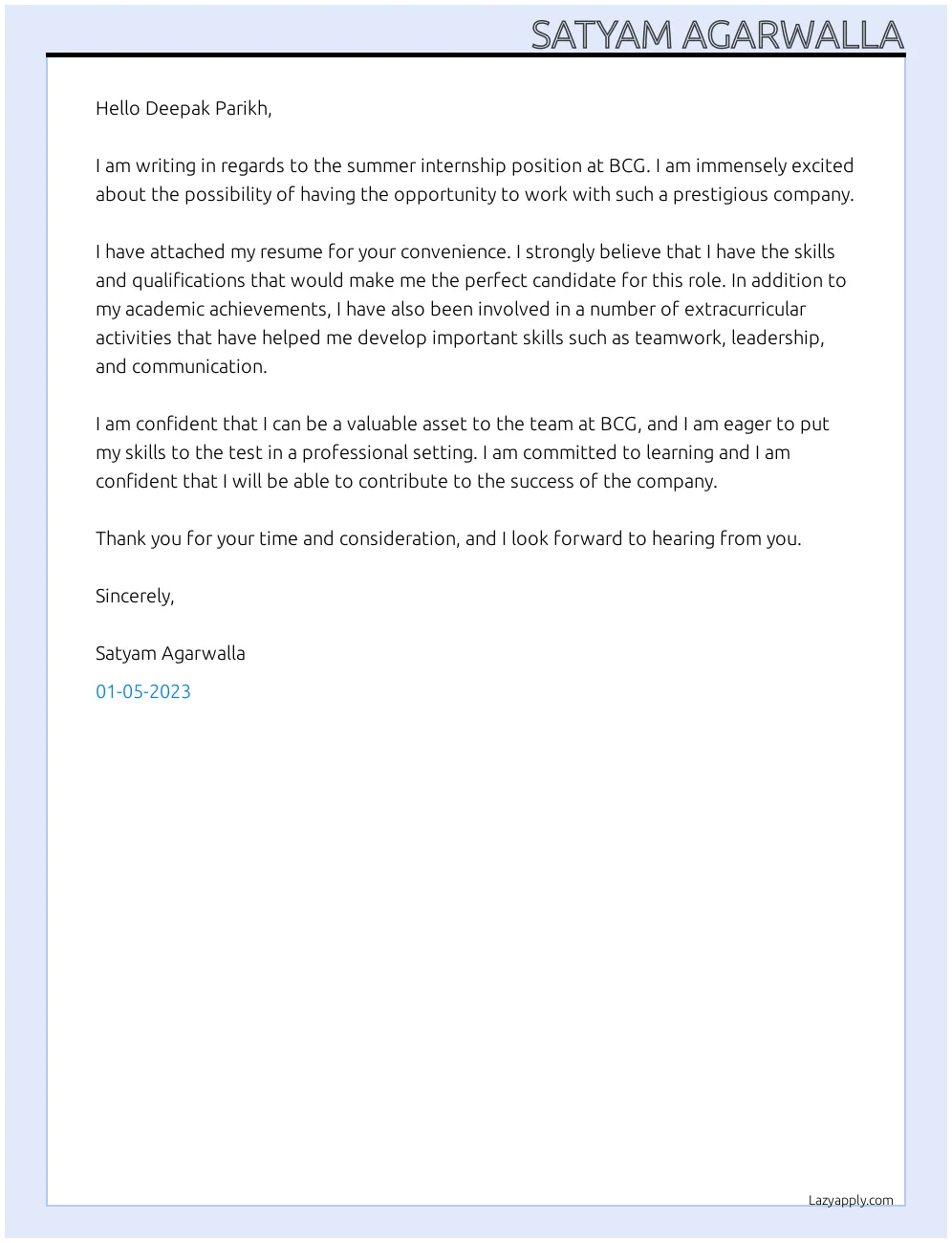
Crafting a Winning Summer Internship Cover Letter
A summer internship cover letter is your first chance to make a strong impression on potential employers. It’s more than just a formality; it’s a powerful tool to showcase your enthusiasm, qualifications, and suitability for the role. A well-crafted letter can significantly increase your chances of landing an interview and ultimately, the internship. This guide unveils the secrets to creating a cover letter that stands out from the competition and gets you noticed.
Understanding the Purpose of Your Cover Letter
The primary purpose of your summer internship cover letter is to introduce yourself, highlight your relevant skills and experiences, and express your genuine interest in the internship opportunity. It allows you to go beyond the bullet points of your resume and provide context, explain your motivations, and demonstrate how your aspirations align with the company’s goals. Think of it as a narrative that complements your resume, painting a picture of you as the ideal candidate.
Highlighting Your Skills and Experiences

Your cover letter is where you connect your skills and experiences to the specific requirements of the internship. Instead of simply listing your accomplishments, explain how they have prepared you for this role. Provide concrete examples, use action verbs, and quantify your achievements whenever possible. Show the employer what you can bring to the table and how you can contribute to their team’s success. This will help you stand out among the applicants.
Tailoring Your Cover Letter to the Internship
A generic cover letter is a surefire way to get your application overlooked. Tailor each cover letter to the specific internship and company. This demonstrates your genuine interest and that you’ve taken the time to research the opportunity. Customization also allows you to highlight the most relevant skills and experiences, making your application more impactful.
Researching the Company
Before you start writing, thoroughly research the company and the internship program. Understand their mission, values, and recent projects. This knowledge will help you tailor your letter and showcase how your skills and aspirations align with their goals. Visit their website, read industry news, and explore their social media presence. This research will allow you to use specific information and demonstrate a genuine interest in the company culture.
Matching Skills with Requirements

Carefully review the internship description and identify the key skills and qualifications the employer is seeking. Then, map your skills and experiences to these requirements in your cover letter. Use the same keywords and phrases from the job description to demonstrate that you possess the qualities the company is looking for. This targeted approach will make your application more relevant and compelling.
Structuring Your Summer Internship Cover Letter
A well-structured cover letter is easy to read and makes a positive first impression. Use a clear and professional format. Aim for a concise letter, typically no more than one page. Organize your letter into distinct sections to guide the reader. A strong structure helps to ensure that you are effectively communicating your message.
Contact Information and Salutation
Start your cover letter with your contact information, including your name, phone number, email address, and LinkedIn profile (optional). Follow with the date and the hiring manager’s name and title, if known. Always use a professional salutation, such as “Dear Mr./Ms. [Last Name],” or “Dear Hiring Manager,” if you don’t have a specific name.
The Introduction Paragraph

The introduction paragraph should immediately grab the reader’s attention. State the position you’re applying for and how you learned about it. Briefly mention your key skills and qualifications, and express your enthusiasm for the opportunity. Be concise and make your introduction impactful by highlighting why you’re a good fit for the internship.
Body Paragraphs Showcasing Your Value
The body paragraphs are the heart of your cover letter. Use these paragraphs to elaborate on your skills, experiences, and accomplishments. Provide specific examples that demonstrate your abilities and how they align with the internship requirements. Quantify your achievements whenever possible, using numbers and data to showcase your impact. Connect your past experiences to the needs of the internship position.
The Closing Paragraph and Call to Action
In your closing paragraph, reiterate your interest in the internship and express your confidence in your ability to contribute to the company. Thank the reader for their time and consideration. Include a clear call to action, such as requesting an interview or expressing your availability for a follow-up call. End with a professional closing, such as “Sincerely” or “Best regards,” followed by your name.
Essential Elements to Include in Your Letter

Several elements are essential for a compelling summer internship cover letter. These elements will help to ensure that you’re putting your best foot forward and creating a strong impression. Remember to keep your letter concise and focused on the needs of the internship.
Quantifiable Achievements
Instead of simply stating your responsibilities, quantify your achievements. Use numbers, data, and metrics to demonstrate the impact of your work. For example, instead of saying “Managed social media accounts,” say “Increased social media engagement by 25% in three months.” This provides concrete evidence of your abilities and impact on the company’s performance.
Keywords from the Job Description
Carefully review the job description and identify the key keywords and phrases used to describe the desired skills and qualifications. Incorporate these keywords naturally into your cover letter to demonstrate that you meet the requirements of the position. This will also help your application get noticed by applicant tracking systems (ATS) used by many companies.
Enthusiasm and Passion

Express your genuine enthusiasm for the internship and the company. Show that you’re excited about the opportunity and that you’re passionate about the field. Explain why you’re interested in this particular internship and what you hope to gain from the experience. Your enthusiasm will make your application more memorable and convey your genuine interest in the position. (Image: summer-internship-enthusiasm.webp)
Common Mistakes to Avoid
Avoid these common mistakes to ensure your cover letter makes a positive impression. Taking care to avoid these pitfalls will greatly increase your chances of landing an interview. Pay close attention to details and tailor your application for each position.
Generic Cover Letters
A generic cover letter is a sign that you haven’t taken the time to personalize your application. Tailor your letter to each specific internship and company, highlighting the most relevant skills and experiences. Show that you understand the company’s mission and values and that you’re genuinely interested in the opportunity.
Typos and Grammatical Errors

Typos and grammatical errors can damage your credibility and make a negative impression. Proofread your cover letter carefully, and consider having someone else review it for you. A polished and error-free letter demonstrates attention to detail and professionalism. Pay attention to grammar and spelling.
Ignoring Instructions
Always carefully read the instructions in the job posting and follow them exactly. If the posting asks you to submit a cover letter in a specific format or address it to a particular person, be sure to do so. Failing to follow instructions can signal a lack of attention to detail.
Formatting and Presentation Tips
The format and presentation of your cover letter are just as important as the content. A well-formatted letter is easy to read and makes a positive first impression. Make sure you’re using these tips when preparing your application.
Font and Style

Choose a professional and easy-to-read font, such as Times New Roman, Arial, or Calibri. Use a font size of 10-12 points. Maintain consistent formatting throughout your letter, including consistent spacing, margins, and alignment. This will give your letter a clean and professional appearance.
Length and Readability
Keep your cover letter concise, ideally no more than one page. Use clear and concise language, avoiding jargon or overly complex sentences. Break up long paragraphs into smaller, more digestible chunks. Ensure your writing is easy to read and follow.
Proofreading and Editing
Proofread your cover letter carefully for any typos, grammatical errors, or formatting inconsistencies. Read it aloud to catch any awkward phrasing. Consider having a friend, family member, or career advisor review your letter for feedback. A polished and error-free letter demonstrates attention to detail and professionalism. (Image: summer-internship-proofreading.webp)
Conclusion
Crafting a winning summer internship cover letter is a critical step in your job search. By following these secrets and tips, you can create a cover letter that showcases your skills, experience, and enthusiasm, increasing your chances of landing an interview and securing your desired internship. Remember to tailor your letter to each opportunity, highlight your achievements, and present yourself professionally. Good luck! (Image: summer-internship-success.webp)