Crafting the Perfect Teacher Cover Letter
A well-crafted teacher cover letter is your first introduction to a potential employer. It’s your opportunity to make a strong first impression and showcase why you are the ideal candidate for the teaching position. Unlike a resume, which provides a factual overview of your qualifications, a cover letter allows you to express your personality, passion for teaching, and specific reasons for wanting the job. This guide will help you navigate the process of writing a compelling cover letter that gets you noticed. With the right approach, you can significantly increase your chances of securing an interview and landing your dream teaching job.
Understanding the Purpose
The primary purpose of a teacher cover letter is to persuade the hiring committee that you are the right fit for their school. It’s more than just reiterating information from your resume; it’s about demonstrating your understanding of the school’s needs, your enthusiasm for the role, and your unique value proposition. A well-written cover letter complements your resume by providing context, adding depth, and showcasing your communication skills, which are vital for effective teaching. Always remember the goal is to move from paper to an interview.
Highlighting Your Skills and Experience

Your cover letter should highlight the skills and experiences most relevant to the teaching position. This involves carefully reviewing the job description and identifying the key requirements. Then, showcase how your past experiences, skills, and achievements align with those needs. Provide specific examples of how you’ve successfully applied those skills in a classroom setting. For instance, if the job description emphasizes classroom management, share a brief anecdote illustrating your effective strategies for maintaining a positive and productive learning environment.
Tailoring Your Letter to the Specific Job
Generic cover letters are often quickly dismissed. Customize each cover letter for the specific school and position. Research the school’s mission, values, and programs. Mention specific initiatives or aspects of the school that resonate with you, demonstrating your genuine interest. If possible, address the hiring manager by name. Show that you understand the school’s unique needs and how you can contribute to their success. This level of personalization shows effort and genuine interest and significantly increases your chances of getting an interview. Make sure you are clear about the position you are applying for.
Formatting Essentials for a Teacher Cover Letter
Contact Information and Date

Start with your contact information: your name, address, phone number, and email address. Place this at the top, either left-aligned or centered. Include the date below your contact information. The date should be the date you are sending the letter. This ensures that the recipient knows when the letter was written. Proper formatting shows attention to detail, a crucial attribute for educators. This information should be clearly visible.
Salutation and Addressing the Hiring Manager
Address the hiring manager by name whenever possible. Research the name of the principal, hiring manager, or the person listed in the job posting. This shows you’ve done your homework and are genuinely interested in the position. If you can’t find a specific name, use a professional salutation like “Dear Hiring Committee” or “Dear [Department Name] Hiring Team.” Avoid generic salutations like “To Whom It May Concern,” as they make your letter feel impersonal. It is important to show respect for the school.
Body Paragraph Structure
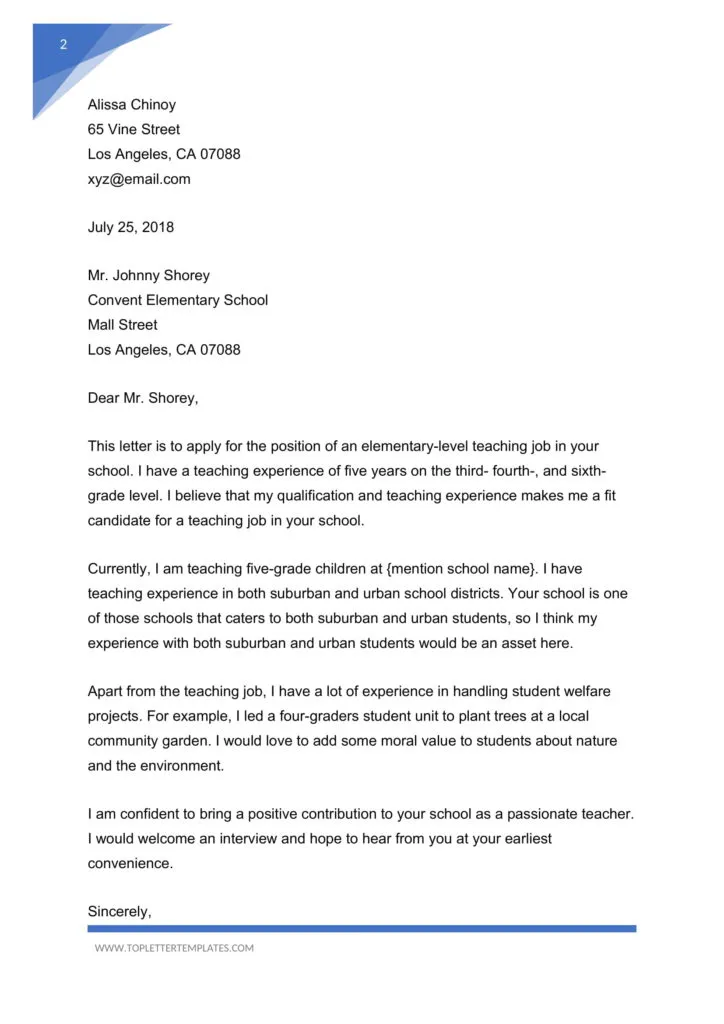
The body of your cover letter is where you showcase your qualifications and passion. Structure the body into three or four paragraphs: an introduction, a few middle paragraphs highlighting your skills and experience, and a closing paragraph with a call to action. Keep the paragraphs concise and focused, using clear and concise language. Each paragraph should have a specific purpose, building a cohesive narrative that persuades the reader to offer you an interview. Structure is critical to conveying the message.
Introduction Paragraph

The introduction should immediately grab the reader’s attention and state the purpose of your letter. Mention the specific position you’re applying for and where you found the job posting. Briefly introduce yourself and your most relevant qualification or skill. Convey your enthusiasm for the position and the school. Consider adding a hook: a compelling statement that reflects your teaching philosophy or a brief anecdote that highlights your passion. This approach will make your letter memorable.
Middle Paragraphs: Skills, Experience, and Achievements
These paragraphs form the core of your cover letter, where you provide evidence of your skills and experience. Focus on the key requirements outlined in the job description. Use specific examples to demonstrate how you’ve successfully applied those skills in past roles. Quantify your achievements whenever possible; for instance, “Increased student test scores by 15%” or “Implemented a new classroom management system that reduced disciplinary issues by 20%.” Highlight accomplishments, such as awards, certifications, or any other recognition received.
Closing Paragraph and Call to Action
In the closing paragraph, reiterate your interest in the position and the school. Summarize why you are a good fit. Express your enthusiasm for the opportunity to discuss your qualifications further. Include a clear call to action, such as “I am eager to learn more about this opportunity and discuss how my skills and experience can benefit your school. I look forward to hearing from you soon.” Thank the hiring manager for their time and consideration. End with a professional closing, such as “Sincerely” or “Best regards,” followed by your typed name.
Proofreading and Editing

Proofreading is a critical step in the cover letter writing process. Errors in grammar and spelling can undermine your credibility and make you appear unprofessional. Before submitting your cover letter, carefully proofread it for any errors. Then, read it aloud to catch any awkward phrasing or sentence structures. Consider having a friend, colleague, or career counselor review your letter for clarity and accuracy. A polished and error-free cover letter demonstrates your attention to detail and commitment to excellence.
Content to Include in Your Teacher Cover Letter
Your Teaching Philosophy and Approach
Your teaching philosophy is a statement about your beliefs about teaching and learning. Briefly outline your teaching philosophy and approach. What do you believe are the most important elements of effective teaching? How do you create a positive learning environment? Do you emphasize student engagement, differentiated instruction, or project-based learning? Briefly explain how you integrate your teaching philosophy into your classroom. Your philosophy should highlight your passion and commitment to education. Consider a short anecdote to illustrate your approach.
Relevant Skills and Qualifications

Highlight the skills and qualifications most relevant to the specific job. Consider experience with specific technology or software. Mention any subject-matter expertise. Align your skills with the school’s needs. Do not simply list skills; provide examples of how you have used those skills successfully. Your letter should be informative and also demonstrate what you have to offer. Show that you have the necessary qualifications to excel in the classroom.
Classroom Management and Teaching Experience
Provide examples of your classroom management skills and your teaching experience. Describe how you create a positive and productive learning environment. Demonstrate that you can effectively manage student behavior and create a culture of respect. Share examples of lesson plans you have implemented. Reference your experience with different student populations. Include any experience with curriculum development or assessment. Be as clear as possible when discussing classroom management.
Achievements and Accomplishments
Showcase your achievements and accomplishments to demonstrate your impact as a teacher. Quantify your successes whenever possible. Did you improve student test scores? Did you implement a new program or initiative? Were you recognized with any awards or honors? Did you receive any positive feedback from students or parents? Use these achievements to make a persuasive case for your candidacy. This is your chance to stand out.
Examples of Successful Teacher Cover Letters

Review examples of successful teacher cover letters to gain inspiration and guidance. Look for examples that align with your teaching experience and the specific types of positions you are applying for. Pay attention to how other teachers have structured their letters and highlighted their qualifications. Analyze the language and tone used. Adapt the best practices from these examples to create your own compelling cover letter. Remember, you want a letter that reflects your personal style and expertise. Tailor these templates to your unique situation.
Key Takeaways for a Strong Cover Letter
A strong teacher cover letter should be tailored to the specific job, highlighting your relevant skills and experience. It should showcase your passion for teaching and your understanding of the school’s needs. Always proofread carefully for errors. Make sure to address the hiring manager directly and provide specific examples of your achievements. Conclude with a clear call to action and express your enthusiasm for the opportunity. By following these guidelines, you can create a cover letter that will impress potential employers and help you land your dream teaching job. Good luck with your application!