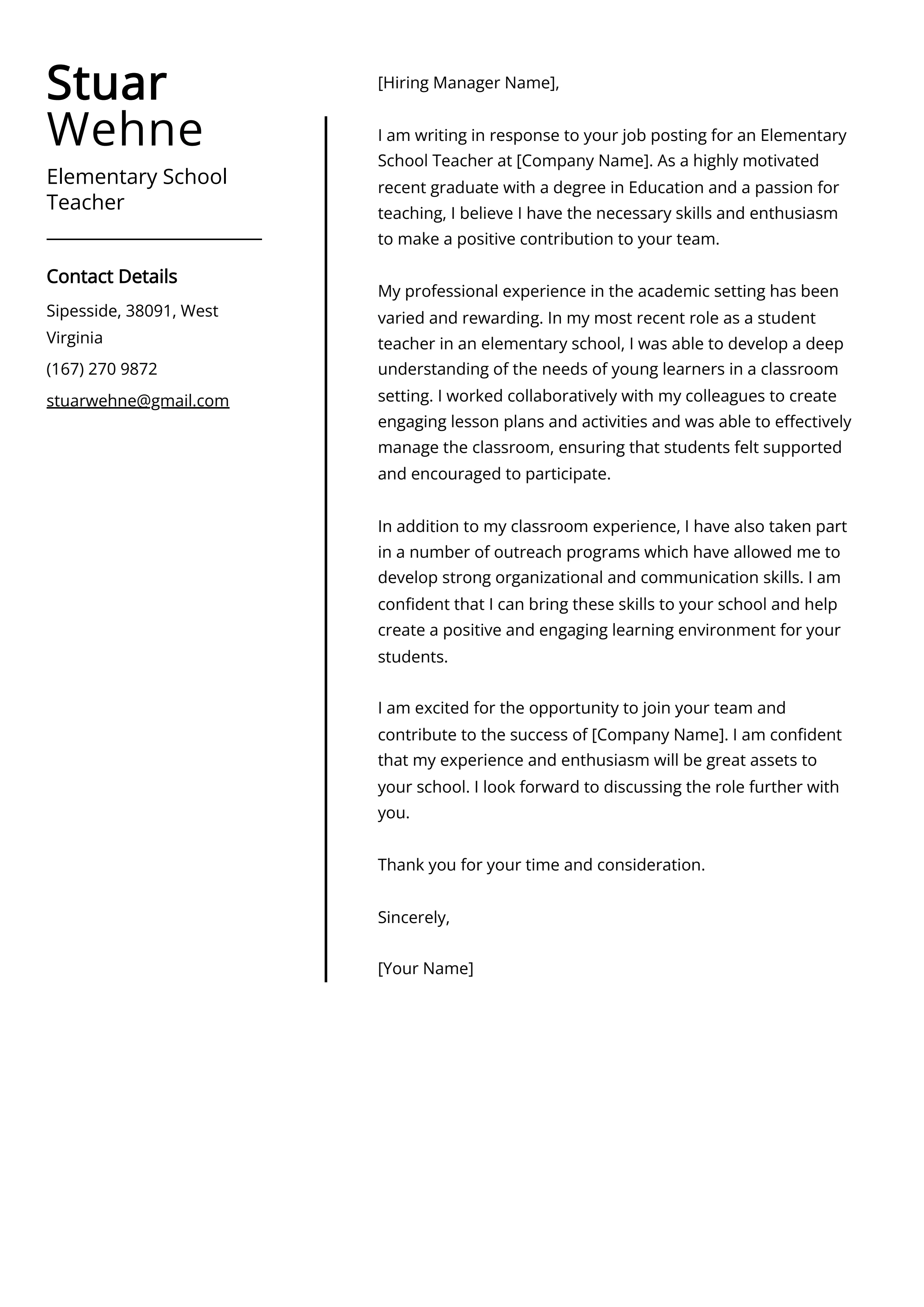
Why a Cover Letter Is Essential for Elementary Teachers
In the competitive field of elementary education, a well-crafted cover letter is your key to unlocking doors. It’s more than just a formality; it’s your first opportunity to make a lasting impression on a potential employer. A cover letter allows you to go beyond the confines of your resume and showcase your personality, teaching philosophy, and genuine enthusiasm for the role. It’s your chance to highlight specific skills and experiences that directly align with the school’s needs and values. Furthermore, a strong cover letter demonstrates your attention to detail, communication skills, and commitment to the application process, all of which are highly valued in the teaching profession. Without a compelling cover letter, your application might be overlooked, missing the chance to stand out from the crowd.
Formatting Your Teacher Cover Letter
The format of your elementary teacher cover letter is crucial for readability and professionalism. Begin with a clear and concise layout, making it easy for the hiring manager to quickly grasp your qualifications. Use a standard business letter format, including your contact information, the date, and the recipient’s details. Choose a professional font, such as Times New Roman, Arial, or Calibri, in a readable size (11 or 12 points). Ensure there’s adequate spacing between paragraphs and sections to avoid a cluttered appearance. Keep the letter to one page, focusing on the most relevant information. Proper formatting demonstrates your attention to detail and respect for the reader’s time. A well-formatted cover letter is more likely to be read and considered seriously. A clean layout helps ensure your qualifications are highlighted clearly and effectively.
Contact Information & Date

Start your cover letter with your full name, address, phone number, and email address at the top left or right of the page. This ensures the hiring manager can easily reach you. Below your contact details, include the date on which you are submitting the application. Following the date, leave a line and then provide the recipient’s information, including their name, title, and the school’s address. This personalized approach shows that you’ve taken the time to research the school and address the letter to the appropriate person. Accuracy in contact information and the date is essential for professionalism and helps streamline the communication process should your application be selected for further consideration. This initial section sets the tone for the rest of the letter, indicating your attention to detail.
Addressing the Hiring Manager
Always address the hiring manager by name, if possible. Doing so shows that you’ve taken the initiative to research the school and personalize your application. If you cannot find the hiring manager’s name, use a professional greeting like ‘Dear Hiring Committee’ or ‘Dear [School Name] Principal’. Avoid generic greetings such as ‘To Whom It May Concern’ as they lack personalization and may make your application seem less thoughtful. Researching the school’s website or contacting the school directly to find the hiring manager’s name demonstrates initiative and a genuine interest in the position. This small step can significantly impact the impression you make, showing you’re committed to making a connection with the school. A personalized greeting sets a positive tone from the beginning and can help you stand out from other applicants.
Opening Paragraph Hooking the Reader
The opening paragraph is your chance to grab the reader’s attention. Start with a strong statement that reflects your enthusiasm for the position and the school. Mention where you saw the job posting and briefly state your interest. Consider incorporating a brief anecdote or a compelling statement that highlights your teaching philosophy or a unique skill that aligns with the school’s needs. Avoid generic opening lines. Instead, be specific and engaging. For example, ‘I was thrilled to see the opening for an elementary teacher at [School Name], as I am passionate about fostering a love of learning…’ A compelling opening paragraph makes the hiring manager want to continue reading, providing a solid foundation for the rest of your cover letter. This ensures your application begins on a high note, making a positive first impression.
Highlighting Your Teaching Skills and Experience

In the main body of your cover letter, highlight your teaching skills and experience. Focus on the skills that align with the specific requirements of the job posting. Use specific examples to illustrate your achievements and how you have contributed to student success in the past. Instead of simply listing your skills, describe how you’ve used them in real-world scenarios. This might include designing engaging lesson plans, differentiating instruction to meet diverse learning needs, or implementing effective assessment strategies. Referencing your experience with specific educational technologies or curriculum models can also set you apart. Quantify your achievements whenever possible, such as by mentioning improved test scores, increased student engagement, or successful implementation of new programs. This section is the heart of your cover letter, where you showcase your qualifications and demonstrate your value to the school.
Showcasing Your Classroom Management Abilities
Classroom management is crucial for an elementary teacher. Use your cover letter to showcase your skills in this area. Describe the strategies you use to create a positive and productive learning environment. This may include establishing clear expectations, using positive reinforcement, implementing behavior management systems, and building strong relationships with students and parents. Provide specific examples of how you’ve successfully managed challenging behaviors or created a classroom culture that promotes respect and collaboration. Discuss how you involve parents and guardians in the learning process. Highlight any training or certifications related to classroom management. Demonstrating your classroom management abilities shows your commitment to creating a safe and effective learning environment, which is essential for student success and well-being. These abilities are essential for an elementary school teaching position.
Demonstrating Your Passion for Education
Elementary teaching goes beyond simply imparting knowledge; it’s about nurturing a lifelong love of learning. Use your cover letter to demonstrate your passion for education. Discuss what motivates you to be an elementary teacher and why you enjoy working with children. Share your teaching philosophy and how it aligns with the school’s mission and values. Mention specific teaching methodologies or educational philosophies that you resonate with, such as inquiry-based learning, project-based learning, or differentiated instruction. Showcase your enthusiasm for creating engaging and inspiring lessons that capture students’ imaginations. Express your desire to create a supportive and inclusive classroom environment where every child feels valued and encouraged to reach their full potential. Demonstrating your passion is essential because it shows the hiring manager that you are not just looking for a job but are genuinely committed to making a positive impact on students’ lives. This passion translates into an enthusiasm for the subject.
Quantifying Achievements & Impact

Quantifying your achievements adds credibility and impact to your cover letter. Instead of making vague statements, provide specific data to demonstrate your successes. For example, instead of saying ‘Improved student performance,’ state ‘Increased student reading comprehension scores by 15% within one academic year.’ Similarly, ‘Implemented a new classroom management system that reduced disruptive behavior incidents by 40%’. Include metrics such as the number of students you have taught, the percentage of students who met or exceeded learning objectives, or the number of professional development hours you’ve completed. Use concrete examples of how you’ve made a difference in your previous roles, such as by mentioning awards you’ve received, grants you’ve secured, or innovative projects you’ve implemented. Quantifying your achievements makes your cover letter more persuasive and provides tangible evidence of your skills and impact on student learning.
Tailoring Your Cover Letter to the School
Customize your cover letter for each school and position. Research the school’s mission, values, and specific needs before you start writing. Review the job description carefully and identify the key requirements and preferred qualifications. Use the cover letter to address these points directly, showcasing how your skills and experience align with what the school is looking for. Mention specific programs, initiatives, or teaching philosophies that the school emphasizes and explain why they resonate with you. Demonstrate that you understand the school’s culture and are genuinely interested in joining their community. Show your genuine interest and enthusiasm for this specific role. Tailoring your cover letter demonstrates that you have taken the time to understand the school and are not just sending out a generic application, significantly increasing your chances of getting noticed.
Mentioning Relevant Skills and Technologies
Highlight any relevant skills and technologies. Modern classrooms increasingly rely on technology, so mention any experience with educational software, interactive whiteboards, or online learning platforms. If you’re proficient in a specific curriculum or teaching methodology, be sure to mention it. Include any skills that are relevant to the job description, such as experience with special education, working with diverse learners, or using data to inform instruction. Mention any professional development courses or certifications you’ve obtained that demonstrate your commitment to ongoing learning and professional growth. Highlighting your technological proficiency and relevant skills demonstrates your ability to adapt to modern teaching practices and contribute to the school’s educational goals, making you a more valuable candidate in the current job market.
Closing Your Cover Letter

Your closing paragraph should be concise and professional. Reiterate your interest in the position and thank the hiring manager for their time and consideration. Express your availability for an interview and mention how you can be reached. Restate your enthusiasm for the opportunity and your alignment with the school’s values. Avoid generic phrases like ‘I look forward to hearing from you.’ Instead, use a more proactive statement like, ‘I am eager to discuss how my skills and experience can benefit [School Name] and am available for an interview at your earliest convenience.’ Close with a professional sign-off, such as ‘Sincerely,’ or ‘Best regards,’ followed by your typed name. A well-crafted closing paragraph leaves a positive final impression and encourages the hiring manager to take the next step.
Expressing Gratitude & Call to Action
Always express your gratitude for the opportunity and the hiring manager’s time. Thank them for considering your application. A clear call to action encourages the hiring manager to move forward with your application. State that you’re available for an interview and provide your contact information again. Make it easy for them to reach you. For example, ‘Thank you for your time and consideration. I am available for an interview at your earliest convenience and can be reached at [phone number] or [email address].’ Including a call to action increases the likelihood of being contacted for an interview. It demonstrates your eagerness and professionalism. A well-structured cover letter closes by thanking the reader and expressing a desire to move to the next step in the hiring process. This final element can make your application more effective and successful.