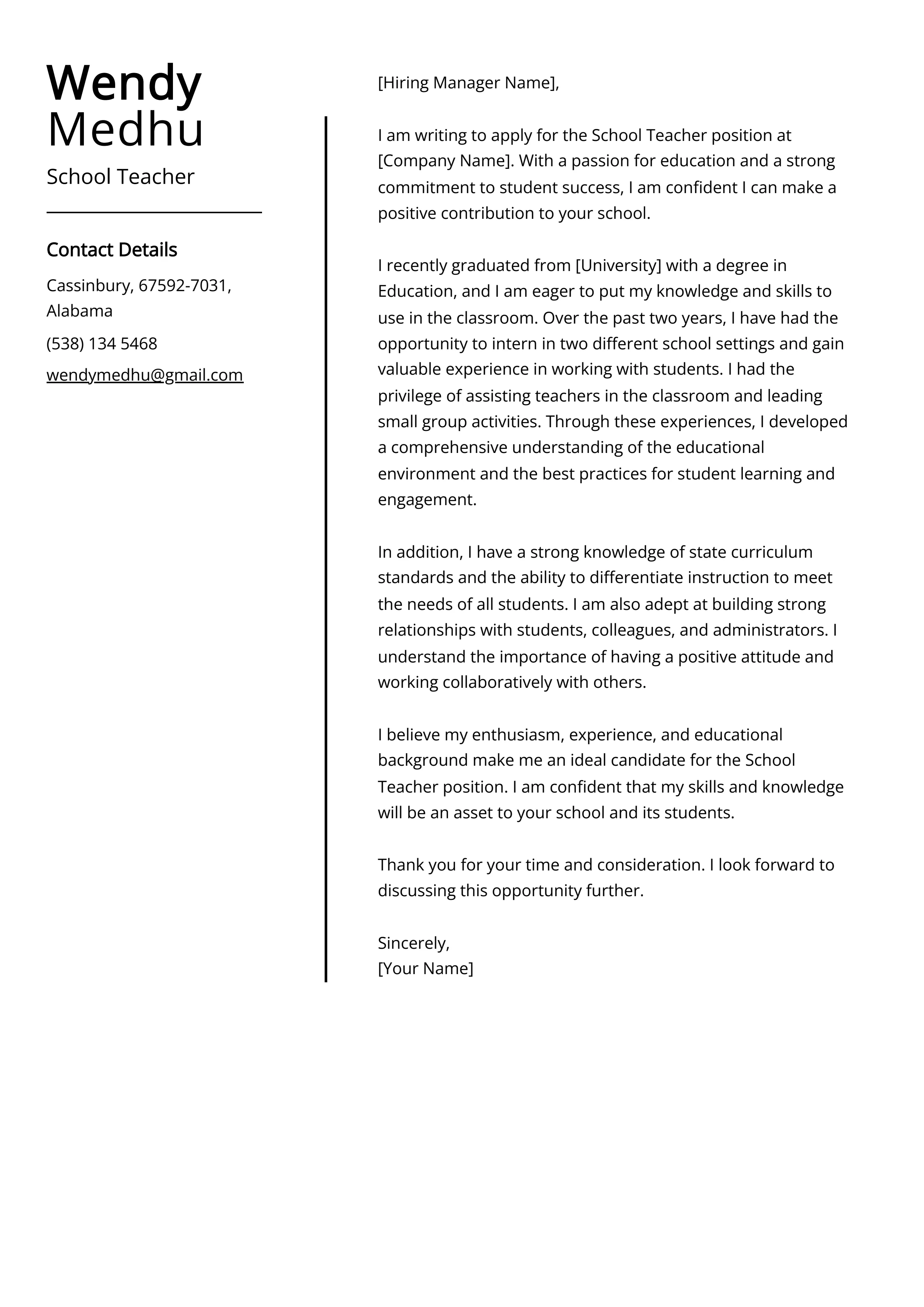
Crafting a Compelling Teaching Cover Letter
A well-crafted cover letter is your first chance to make a positive impression on a potential employer and secure a teaching position. It’s more than just a formality; it’s a powerful tool that allows you to showcase your unique skills, experience, and passion for education. Unlike your resume, which provides a chronological overview of your career, your cover letter offers an opportunity to tell your story, connect with the hiring committee on a personal level, and demonstrate why you are the ideal candidate for the job. This guide will walk you through the essential steps to create a compelling cover letter that will help you stand out from the competition and land your dream teaching job.
Understanding the Purpose of a Cover Letter
The primary goal of a teaching cover letter is to introduce yourself, express your interest in the position, and highlight how your qualifications align with the specific needs of the school or district. It’s a chance to expand on the information presented in your resume, providing context and showcasing your personality. The cover letter should demonstrate your understanding of the school’s mission, your enthusiasm for teaching, and your commitment to student success. By effectively communicating these elements, you can create a strong first impression and increase your chances of being invited for an interview. A well-written cover letter can also help you differentiate yourself from other applicants by emphasizing your unique strengths and experiences.
Highlighting Your Qualifications

Your cover letter is the perfect place to showcase your qualifications and demonstrate your suitability for the teaching position. Focus on the skills and experiences that are most relevant to the job description and the needs of the school. Use specific examples to illustrate your abilities and achievements, quantifying your accomplishments whenever possible. For example, instead of saying “I improved student test scores,” you could say “I increased student test scores by 15% in my first year of teaching.” This level of detail will make your application more persuasive and memorable. Be sure to align your qualifications with the key requirements outlined in the job posting, demonstrating that you understand the school’s needs and can contribute to its success.
Skills to Showcase
When highlighting your skills, focus on those that are most relevant to the teaching profession. These may include classroom management, lesson planning, curriculum development, communication, and collaboration. Provide specific examples of how you have used these skills to achieve positive outcomes in the classroom. For example, you might describe a successful classroom management strategy you implemented or a lesson plan you developed that significantly improved student engagement. Make sure to tailor your skill set to match the requirements of the specific position, emphasizing skills that are particularly important for the grade level or subject area. Consider also mentioning technology integration skills, as these are becoming increasingly important in education. Furthermore, include your adaptability and problem solving skills.
Experience to Emphasize
Your teaching experience is a critical component of your cover letter. Describe your previous teaching roles, including the grade level, subject matter, and the specific responsibilities you held. Highlight your accomplishments and the positive impact you had on students. If you have limited formal teaching experience, consider including relevant experiences such as student teaching, tutoring, or volunteer work. For each experience, be sure to mention relevant skills that you used and the positive outcomes. Provide specific examples of how you have successfully managed a classroom, developed engaging lesson plans, and assessed student learning. When describing your experience, use action verbs and quantify your achievements whenever possible to make your letter more impactful and persuasive.
Formatting Your Cover Letter
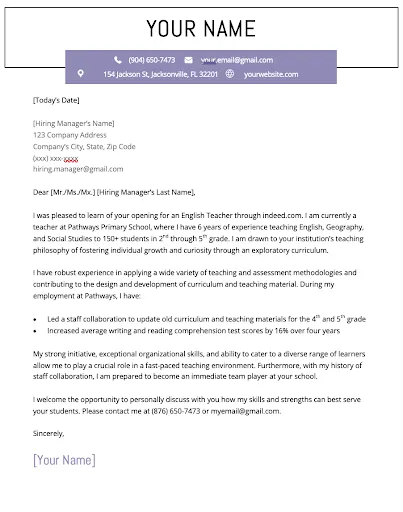
The formatting of your cover letter is just as important as its content. A well-formatted letter is easy to read and visually appealing, making a positive impression on the hiring committee. Use a professional font, such as Times New Roman or Arial, and maintain consistent formatting throughout the document. Keep your paragraphs concise and use bullet points or numbered lists to highlight key information. Proofread your letter carefully to ensure that there are no typos or grammatical errors. Using a clear and organized format will demonstrate your attention to detail and professionalism, which are essential qualities for a teacher.
Contact Information and Date
Begin your cover letter with your contact information, including your name, address, phone number, and email address. Place this information at the top left or right corner of the letter. Directly beneath your contact information, include the date. Make sure that your contact information is up-to-date and professional. Double-check the email address for accuracy. Ensure it is a professional-sounding address. The date should be the current date when you are submitting your application. This information helps the recipient easily contact you and confirms the recency of your application.
Salutation and Opening Paragraph
Start your cover letter with a professional salutation, such as “Dear Mr./Ms. [Last Name],” if you know the name of the hiring manager. If you are unsure of the name, use a general salutation like “Dear Hiring Committee” or “Dear Principal.” In your opening paragraph, state the specific position you are applying for and how you learned about it. Express your enthusiasm for the opportunity and briefly highlight your key qualifications. Make a strong opening statement to capture the reader’s attention and create a positive first impression. Keep your introduction concise and focused, setting the stage for the rest of your letter.
Body Paragraphs Showcasing Skills and Experience

The body paragraphs are where you provide details about your skills and experience. Use these paragraphs to expand on the information presented in your resume. Provide specific examples of how you have used your skills to achieve positive outcomes in previous teaching roles. Quantify your achievements whenever possible. Use strong action verbs to describe your responsibilities and accomplishments. Structure your body paragraphs logically, using one or two paragraphs to highlight your most relevant qualifications and experiences. Ensure that each paragraph has a clear topic sentence and that the paragraphs flow smoothly from one to another.
The Closing and Call to Action
In your closing paragraph, reiterate your interest in the position and thank the hiring manager for their time and consideration. Express your eagerness to learn more about the opportunity and to discuss your qualifications in an interview. Include a call to action, such as “I look forward to hearing from you soon” or “I am available for an interview at your earliest convenience.” End with a professional closing, such as “Sincerely” or “Respectfully,” followed by your name. Proofread your entire letter before submitting it, paying close attention to your tone and grammar.
Tailoring Your Letter to the Specific Position
To maximize your chances of success, it’s essential to tailor your cover letter to the specific teaching position you are applying for. This demonstrates that you have taken the time to understand the school’s needs and that you are genuinely interested in the opportunity. Read the job description carefully and identify the key qualifications and requirements. Then, customize your cover letter to address these specific needs, highlighting the relevant skills and experiences that align with the position. Tailoring your letter shows that you are attentive to detail and understand the importance of meeting the school’s expectations. Also, consider if the school has a specific mission statement. You can reflect this on your cover letter.
Researching the School and Its Needs

Before you start writing, research the school or district to learn about its mission, values, and priorities. Visit the school’s website, read its mission statement, and review any recent news or publications. If possible, talk to current teachers or administrators to gain insights into the school’s culture and environment. This research will help you understand the school’s needs and tailor your cover letter to address them effectively. In your letter, you can mention the school’s specific programs, initiatives, or values that resonate with you. For example, if a school emphasizes STEM education, highlight any relevant experience or skills you have in this area. This demonstrates your interest and shows that you are a good fit for their community.
Using Keywords from the Job Description
Carefully review the job description and identify the keywords and phrases used to describe the desired qualifications and responsibilities. Incorporate these keywords into your cover letter naturally. By including these keywords, you can demonstrate that you meet the requirements of the position and increase the likelihood that your application will be noticed by the hiring committee. However, avoid keyword stuffing, which can make your letter sound unnatural and detract from its overall impact. Instead, integrate the keywords seamlessly into your writing, ensuring that your letter flows smoothly and reflects your authentic voice.
Proofreading and Editing Your Cover Letter
Proofreading and editing your cover letter is a crucial step in ensuring that it is polished and professional. Typos, grammatical errors, and formatting issues can create a negative impression and undermine your credibility. Before submitting your cover letter, carefully proofread it multiple times, checking for any mistakes. Consider using a grammar checker, but don’t rely on it entirely. Read your letter aloud to catch any awkward phrasing or unclear sentences. Make sure the formatting is consistent throughout the document. A polished and error-free cover letter shows that you pay attention to detail and take pride in your work.
Common Mistakes to Avoid

Avoid common mistakes that can detract from the effectiveness of your cover letter. These include using generic language, failing to tailor your letter to the specific position, and including irrelevant information. Don’t simply rehash your resume; use your cover letter to tell a story and highlight your unique strengths. Avoid typos, grammatical errors, and formatting inconsistencies. Do not include negative information about previous employers or experiences. Avoid writing a letter that is too long or too short. Keep your letter concise and focused, highlighting the most relevant information. Be genuine and authentic in your writing.
Seeking Feedback
Before submitting your cover letter, ask a trusted friend, colleague, or mentor to review it. Another set of eyes can catch mistakes you might have missed and provide valuable feedback on the clarity, tone, and effectiveness of your writing. Ask them to check for any typos, grammatical errors, and formatting inconsistencies. Request their feedback on the overall structure and content of your letter, ensuring that it presents you in the best possible light. Consider asking a teacher or educator you respect to give you their feedback, as they will have an understanding of what hiring managers are looking for. Revise your cover letter based on the feedback you receive to improve its quality and increase your chances of success.