Highlighting Skills and Experience
Crafting a compelling temporary job cover letter is crucial for landing your dream gig. Unlike a resume, a cover letter offers you the opportunity to showcase your personality, express your enthusiasm, and explicitly connect your skills to the job requirements. This guide provides practical tips and strategies to help you write a cover letter that grabs the hiring manager’s attention and increases your chances of getting an interview. Remember that tailoring your cover letter to each specific job application is paramount. Generic cover letters rarely make a strong impression; the more personalized your letter, the better your chances of standing out from the competition. Let’s explore how to effectively highlight your skills and experience to make a memorable first impression.
Matching Skills to Job Requirements
The first step in crafting a winning cover letter is to carefully review the job description and identify the key skills and qualifications the employer is seeking. Then, assess your own skills and experience to determine where you have the strongest alignment. Don’t just list your skills; provide specific examples of how you’ve utilized those skills in previous roles or projects. If the job description emphasizes excellent communication skills, provide an example of how you successfully communicated a complex idea to a diverse audience. Highlighting this alignment demonstrates that you not only possess the necessary skills but can also apply them effectively in a work environment. This matching process also shows you have carefully read the job description and are genuinely interested in the position.
Quantifying Achievements

Whenever possible, quantify your achievements to provide concrete evidence of your value. Numbers speak volumes, and they allow hiring managers to easily understand the impact you’ve made in previous roles. Instead of saying you ‘improved customer satisfaction,’ state that you ‘increased customer satisfaction by 15% within six months by implementing a new feedback system.’ This level of detail makes your accomplishments more tangible and impressive. Use action verbs to start your achievements, for example, ‘Managed a team of five…’ or ‘Led a project that…’. These verbs give the reader an instant idea of your role and what you accomplished. Remember to focus on outcomes, not just responsibilities.
Formatting a Professional Cover Letter
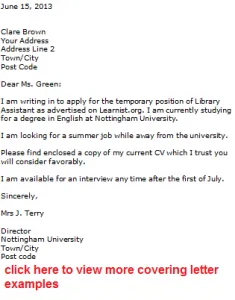
The format of your cover letter is just as important as its content. A well-formatted letter is easy to read and reflects your professionalism. Use a clear, readable font like Arial, Calibri, or Times New Roman, and maintain a consistent font size (usually 11 or 12 points). Keep the margins at one inch on all sides. Aim for a one-page letter, as hiring managers often have limited time to review applications. Use headings, bullet points, and white space strategically to break up large blocks of text and make your letter more visually appealing. Proofread multiple times to ensure there are no typos or grammatical errors; these errors can create a negative impression and undermine your credibility.
Header and Contact Information
Your cover letter should begin with a header that includes your full name, address, phone number, and email address. Directly below your contact information, include the date, and then the hiring manager’s name (if you know it), their title, and the company’s address. If you don’t know the hiring manager’s name, it’s acceptable to address the letter to ‘Hiring Manager.’ Ensuring accurate contact information is essential so that the recruiter or hiring manager can reach you easily. Use a professional email address and a clear font for readability, setting the stage for the rest of your application.
Greeting and Introduction

Start your cover letter with a professional greeting, such as ‘Dear Mr./Ms. [Last Name],’ or ‘Dear Hiring Manager,’ if you don’t know the specific name. Your introduction should immediately grab the reader’s attention. Briefly state the position you are applying for and, if applicable, where you saw the job posting. Then, include a brief statement of why you are interested in the role and the company. This is your chance to show enthusiasm and make a positive first impression. Avoid generic opening lines, and instead, craft a sentence or two that showcases your personality and directly relates to the job and the company’s mission. This will set you apart from the crowd.
Body Paragraphs Strategy
The body of your cover letter is where you showcase your skills, experience, and accomplishments in detail. Use the STAR method (Situation, Task, Action, Result) to provide concrete examples. Describe the situation, the task you were assigned, the actions you took, and the results you achieved. This method helps you structure your responses in a clear and impactful way. Be specific and avoid vague statements. In your body paragraphs, emphasize the skills and experiences most relevant to the job requirements, illustrating how your qualifications align with the company’s needs. Make sure to use keywords from the job description throughout your letter, but avoid keyword stuffing.
Closing and Call to Action
Your closing should reiterate your interest in the position and thank the hiring manager for their time and consideration. Clearly state your availability for an interview and include a call to action. For example, you could write, ‘I am eager to discuss how my skills and experience can benefit your team. Thank you for your time; I look forward to hearing from you soon.’ Finish with a professional closing such as ‘Sincerely’ or ‘Best regards,’ followed by your name. Always proofread the entire letter before submitting it to ensure your professionalism is highlighted from start to finish.
Tailoring Your Cover Letter

The most common mistake people make is sending a generic cover letter. Tailoring your cover letter to each job application is critical for demonstrating your genuine interest and making a strong impression. Begin by researching the company to understand its mission, values, and current projects. Show how your skills and experiences align with their specific needs. Mentioning the company’s recent initiatives or specific projects can demonstrate your thorough research. If you have any connections to the company, such as an employee referral, mention it in your letter. Tailoring your cover letter is not just about changing the company name; it’s about highlighting the elements that are most relevant to that specific role and company.
Researching the Company
Before you write your cover letter, take the time to research the company. Visit their website, read their ‘About Us’ section, and browse their social media profiles. Look for recent news articles or press releases about the company. This research will give you a better understanding of the company’s culture, values, and current priorities. This knowledge is invaluable when tailoring your cover letter. When you understand what the company is trying to achieve, you can better articulate how your skills and experience can help them succeed. This personalized approach is far more compelling than sending a generic cover letter.
Showcasing Enthusiasm and Interest
Your cover letter is the perfect opportunity to express your enthusiasm for the position and the company. Be specific about why you are interested in the role and what attracts you to the company. Highlight something specific that resonated with you, whether a particular project, a company value, or their mission. Avoid generic statements like ‘I am excited about this opportunity.’ Instead, provide specific examples. For instance, mention a recent company initiative that you find particularly interesting or the impact you hope to make. Expressing genuine enthusiasm is memorable and helps you stand out. It shows that you are not just looking for a job, but you are genuinely interested in contributing to the company’s success.
Addressing Common Mistakes

Avoid these common mistakes to ensure your cover letter helps you stand out, not get rejected. These mistakes include grammatical errors, generic language, and a lack of a clear call to action. Proofreading is vital. Addressing these issues will increase the effectiveness of your application.
Grammar and Spelling Errors
One of the most critical aspects of a successful cover letter is ensuring it is free of grammatical errors and spelling mistakes. These errors can make a negative impression on the hiring manager and undermine your credibility. Always proofread your cover letter multiple times, and consider using grammar-checking tools. If possible, have a friend or family member read your letter as a fresh pair of eyes often catches errors you might miss. Thorough proofreading demonstrates your attention to detail and professionalism, which are essential qualities in any temporary role.
Generic and Uninspired Language
Avoid using generic and uninspired language that could be used in any cover letter. Generic phrases don’t showcase your personality or your genuine interest in the position. Instead, use specific examples and tailor your language to the company and the role. Show enthusiasm and highlight what makes you a unique candidate. Using specific, detailed language allows you to connect with the hiring manager on a more personal level. Replace vague statements with concrete achievements, and always provide context. Using personal touches in your language creates a more memorable and effective cover letter.
Overlooking the Call to Action

Failing to include a clear call to action is another common mistake in cover letters. Your call to action should explicitly tell the hiring manager what you want them to do next, such as requesting an interview. Without a clear call to action, the hiring manager may be unsure of the next step. Your call to action should be a concise sentence at the end of the letter. Include a clear statement indicating your availability for an interview and your interest in discussing the opportunity further. A well-written call to action provides the recruiter with a clear path to move forward and increases your chances of getting the job.